This guide contains affiliate links. We may earn a small commission if you purchase through our links, at no extra cost to you.
Your plant is struggling, but you've checked the soil and it's not a watering issue. The culprit? Almost always, it's light. Understanding light requirements is the secret weapon that separates thriving indoor jungles from collections of sad, leggy plants. This guide will teach you to read your home's light like a pro.
How Plants Use Light
Light is food for plants. Through photosynthesis, they convert light energy into sugars that fuel growth. Without adequate light, plants can't produce enough energy to maintain themselves, let alone grow new leaves. This is why a Fiddle Leaf Fig in a dark corner slowly declines while one near a bright window thrives.
Different plants have evolved under different canopy conditions. Forest floor plants like Pothos and Snake Plant adapted to thrive in shade, while sun-lovers like Aloe Vera need several hours of direct sun. Matching plants to your available light is the foundation of successful indoor gardening.
Understanding Light Levels
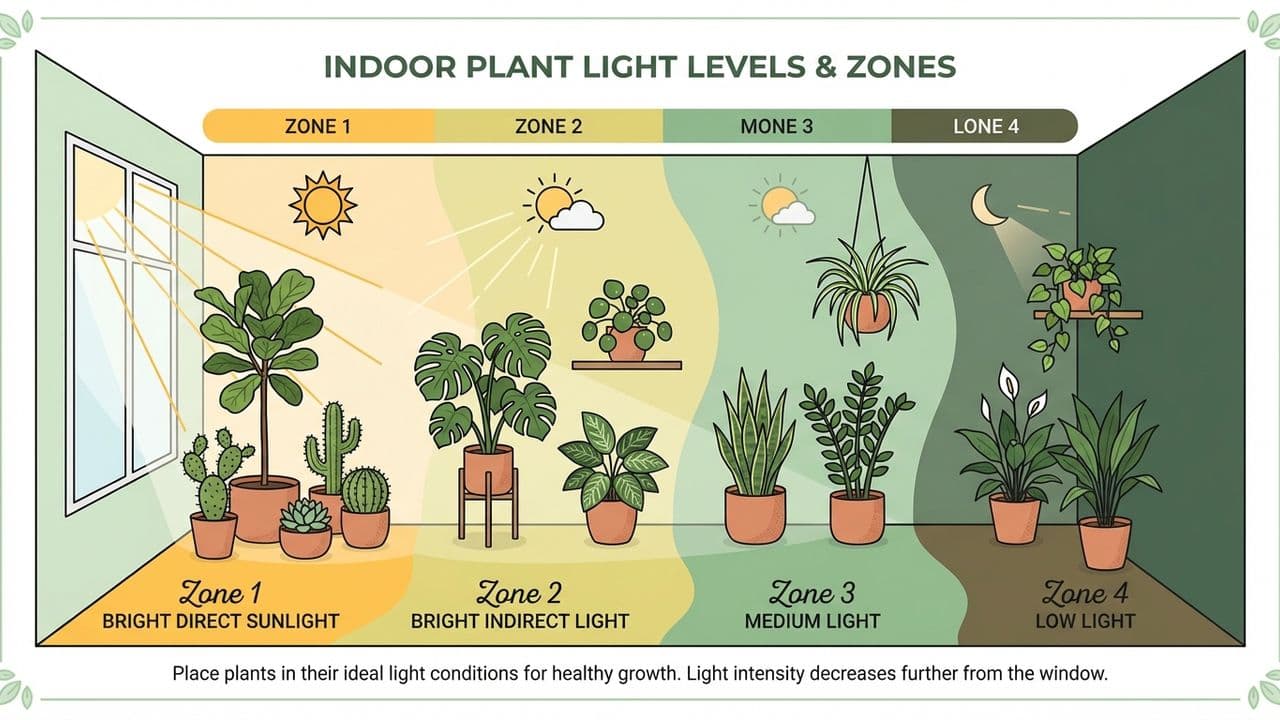
Low light means no direct sun and minimal ambient brightness—typically 3+ feet from windows or north-facing rooms. Plants that tolerate low light include Snake Plant, ZZ Plant, and Pothos. Note that 'tolerates low light' doesn't mean 'prefers' it; these plants will grow faster with more light.
Medium or bright indirect light is the sweet spot for most houseplants. This is the area near east or west-facing windows, or a few feet back from south-facing windows. Monstera Deliciosa, Peace Lily, and Rubber Plant thrive here, producing lush growth without the risk of sun damage.
Bright direct light means unobstructed sun hitting the leaves. Only some houseplants can handle this, including Aloe Vera and some cacti. Most tropical plants will scorch in direct afternoon sun, showing brown, crispy patches on leaves.
Assessing Your Home's Light
A light meter app or smartphone can measure foot-candles precisely, but the shadow test is a quick way to gauge light levels. Hold your hand a foot above a surface where you want to place a plant. A sharp, defined shadow indicates bright light. A soft, fuzzy shadow means medium light. No shadow at all suggests low light conditions.
Direction matters enormously. South-facing windows receive the most intense light throughout the day. East-facing windows get gentle morning sun—perfect for most houseplants. West-facing windows receive hot afternoon sun that can be too intense for sensitive plants. North-facing windows provide consistent but lower light levels.
Signs of Light Problems
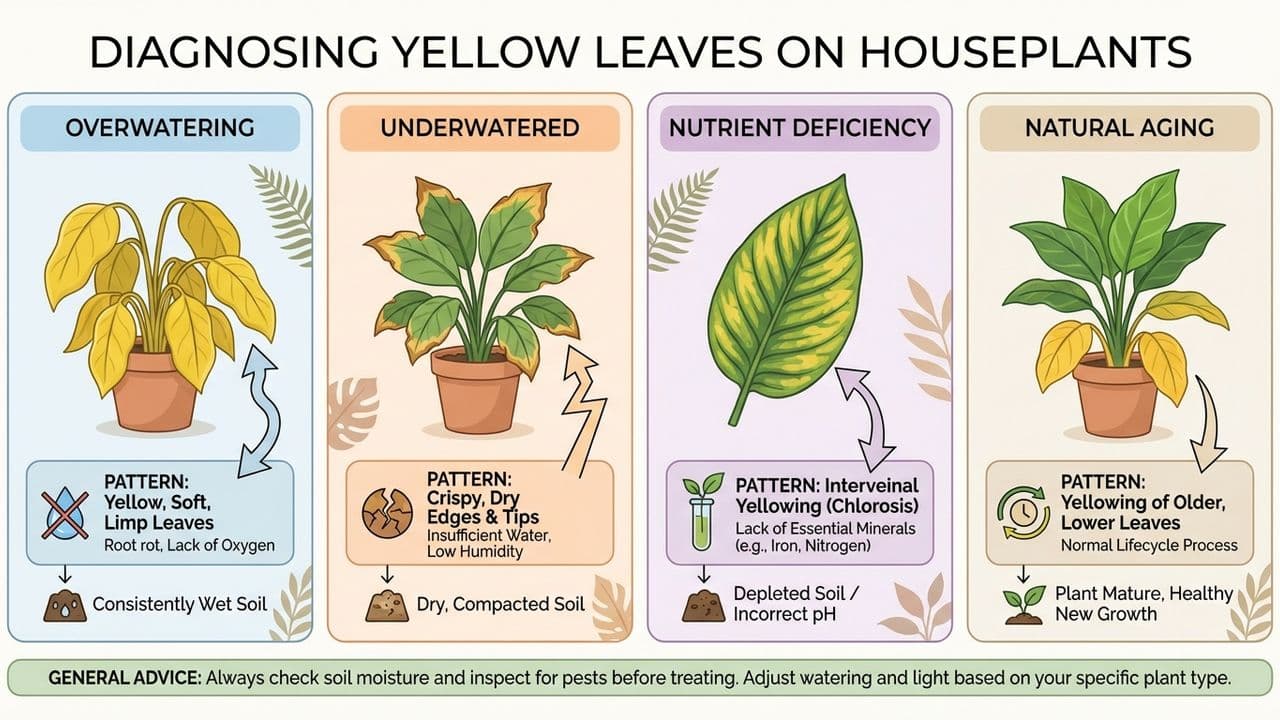
Too little light causes leggy growth—stems stretch toward light sources, becoming long and weak with sparse leaves. Variegated plants like some Pothos varieties may revert to solid green as the plant tries to maximize chlorophyll. Slow or stunted growth, small leaves, and dropping lower leaves are other warning signs.
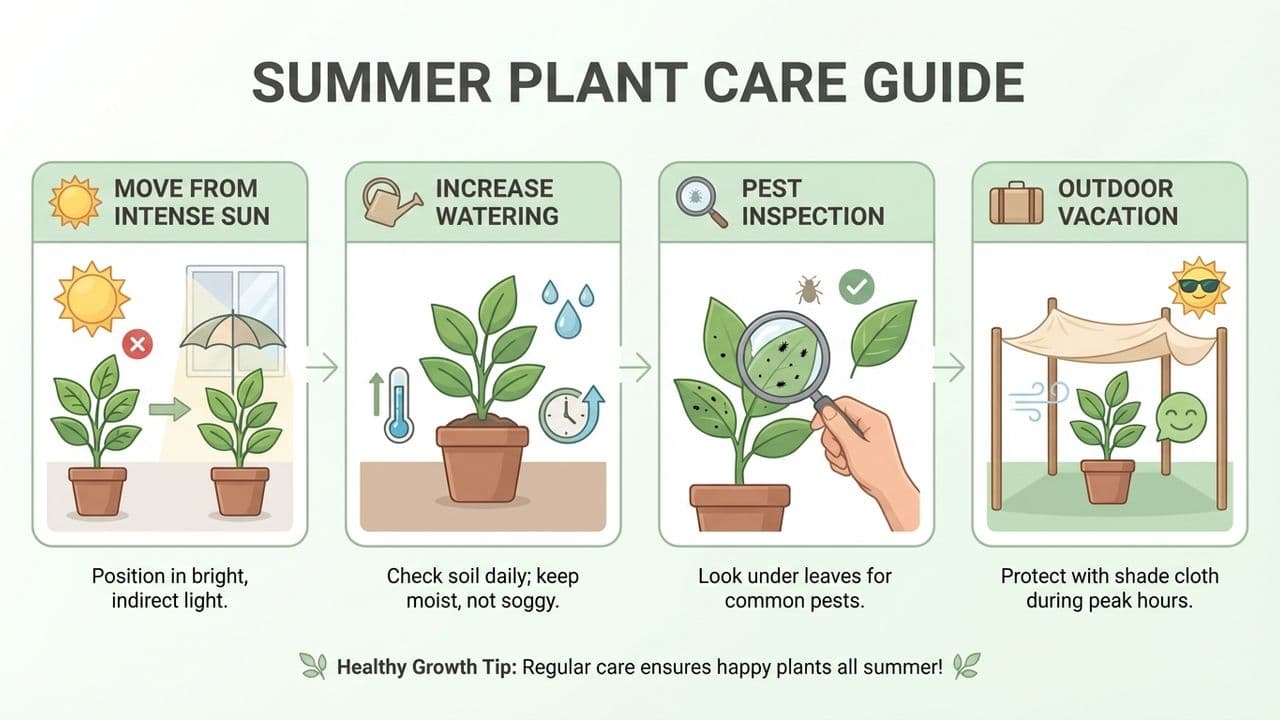
Too much light causes scorching—brown, crispy patches on leaves, especially those facing the light source. Leaves may fade or develop a washed-out appearance. A Peace Lily in direct sun will show brown spots within days. If you see these signs, move your plant back from the window or add a sheer curtain.
Optimizing Light for Common Plants
Monstera Deliciosa thrives in bright, indirect light and develops its characteristic splits and holes only with adequate light. Fiddle Leaf Fig needs the brightest spot you have—near a south or west window—but should be acclimated gradually to avoid shock.
Snake Plant and ZZ Plant are true low-light champions, surviving in offices and bathrooms where other plants would fail. Spider Plant is adaptable to various light conditions but produces the most pups in bright indirect light.
Seasonal Light Changes
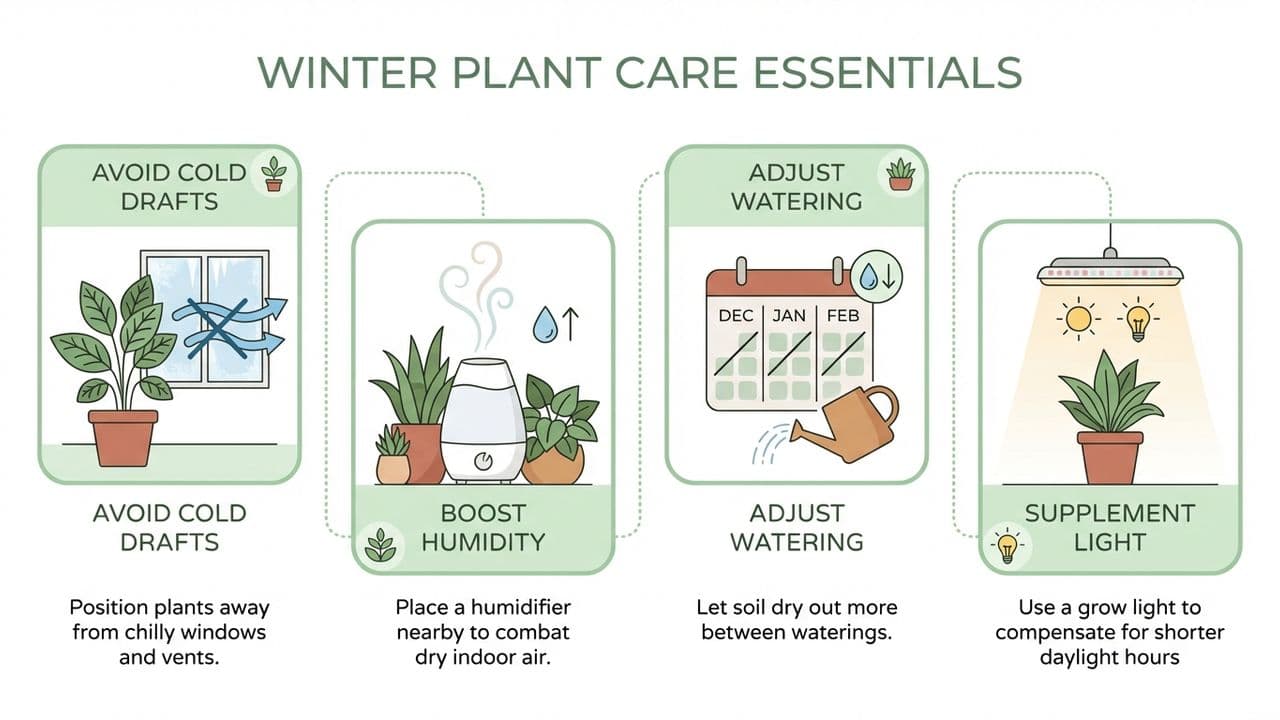
Light intensity and duration change dramatically with seasons. A spot that received bright indirect light in summer may become too dim in winter when the sun is lower. You may need to move plants closer to windows in winter or supplement with grow lights. See our winter care guide for seasonal adjustments.
Conversely, gentle spring sun can become scorching summer sun as the angle intensifies. A Rubber Plant that thrived near a south window in April may need to be moved back or protected with a sheer curtain by July. Monitor your plants and adjust placement seasonally.
Grow Lights: When Natural Light Isn't Enough
If your home lacks adequate natural light, grow lights can fill the gap. LED grow lights are energy-efficient and produce the full spectrum plants need. Position lights according to manufacturer recommendations—distance varies by light intensity and type, typically ranging from 6 inches for low-power LEDs to 24 inches for high-output fixtures. Run them 10-14 hours daily to simulate natural daylight.
Even supplemental lighting for a few hours can make a difference. A low-light tolerant Pothos will produce lusher, faster growth with supplemental lighting. For light-hungry plants like Fiddle Leaf Fig, grow lights can be essential in darker homes or during winter months.