This guide contains affiliate links. We may earn a small commission if you purchase through our links, at no extra cost to you.
Summer is growth season. Your plants are bursting with energy, pushing out new leaves, and—if you're not careful—begging for more water than you realize. It's also the season of sunburn, heat stress, and pest explosions. Here's how to capitalize on summer's benefits while avoiding its pitfalls.
Understanding Summer Growth
Long days and intense light trigger active growth in most houseplants. Your Monstera Deliciosa may produce a new leaf every few weeks. Pothos vines can grow inches in a week. This is the season to take cuttings for propagation (see our propagation guide) and enjoy watching your plants flourish.
But growth requires resources. Plants need more water to fuel new leaves. They're hungrier for nutrients. They're also more vulnerable to problems—pests love summer, and intense sun can damage leaves that thrived in gentle spring light.
Adjust Watering Frequency
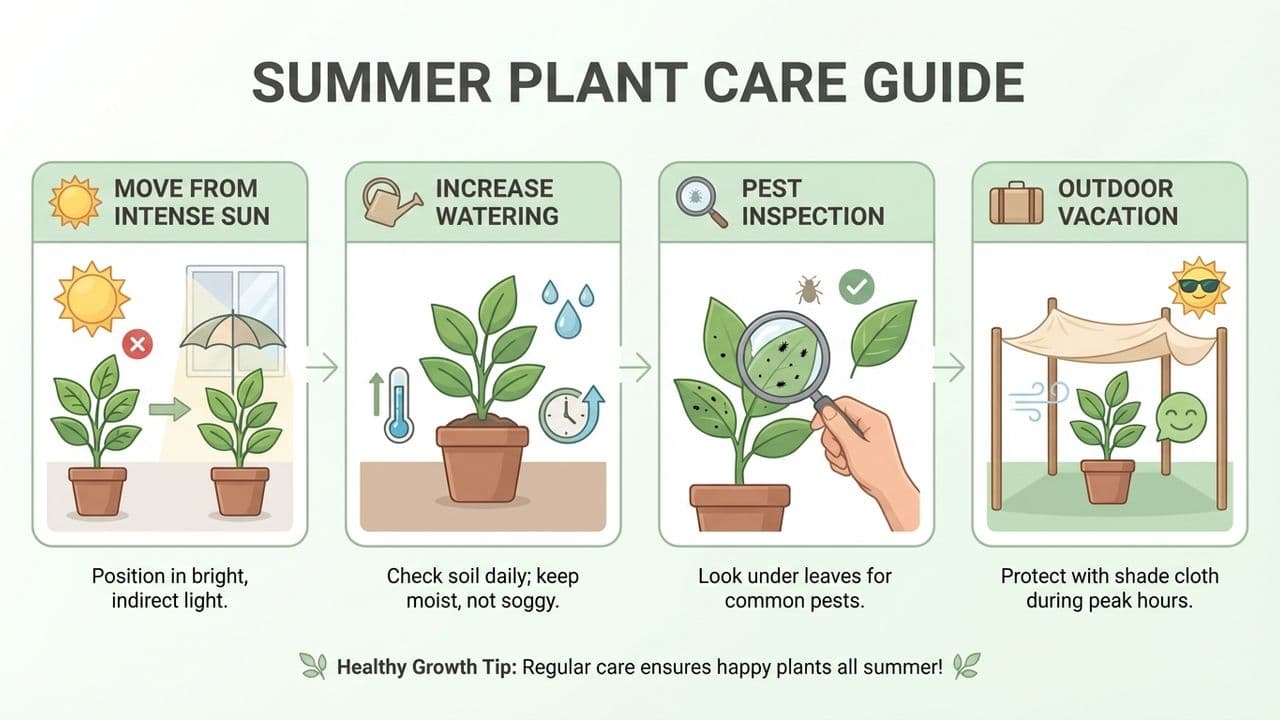
Hot weather and active growth mean plants drink much faster. A Peace Lily that lasted a week between waterings in spring may need water every 3-4 days in summer heat. Spider Plant and other fast growers may need even more frequent attention.
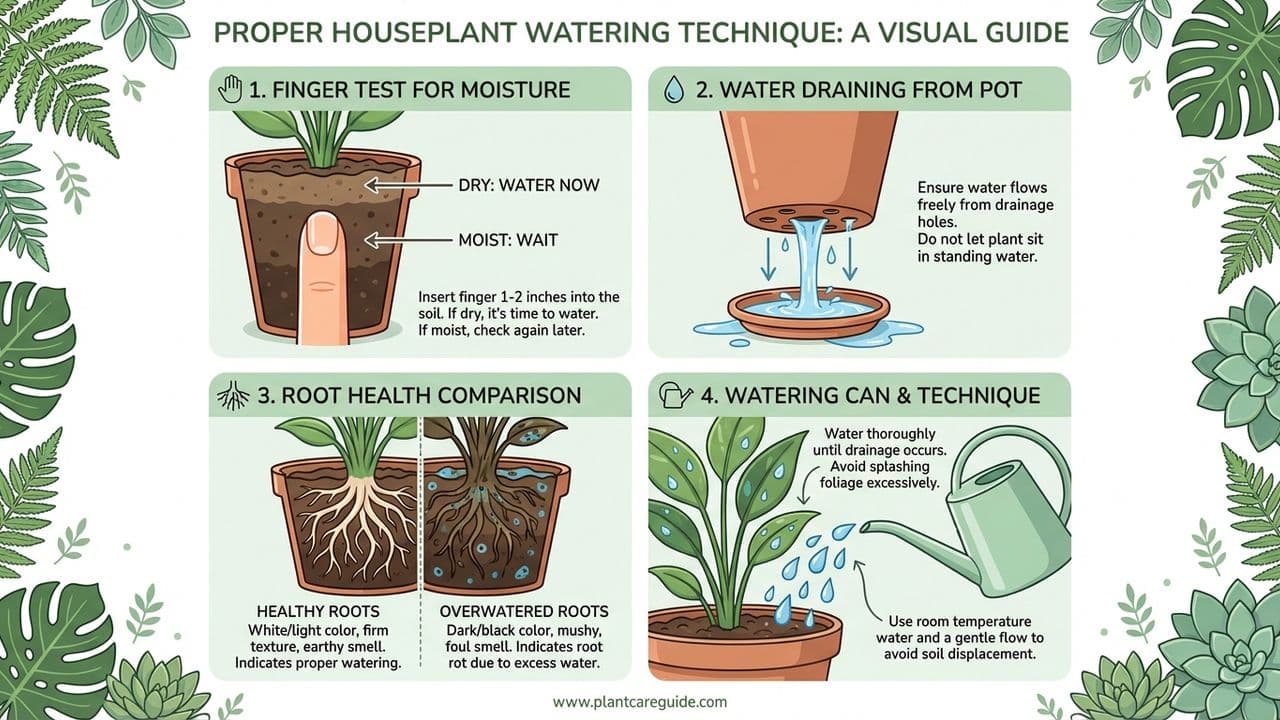
Still use the finger test or a moisture meter rather than a fixed schedule—check soil moisture regularly since drying rates vary with temperature and humidity. Water thoroughly when the top inch is dry. In extreme heat, you may need to water small pots daily. See our watering guide for technique.
Protect from Intense Sun
Summer sun is dramatically more intense than spring sun. Plants that thrived in a south-facing window can suddenly develop scorched, brown patches on leaves. This affects even sun-tolerant plants like Aloe Vera if they weren't acclimated gradually.
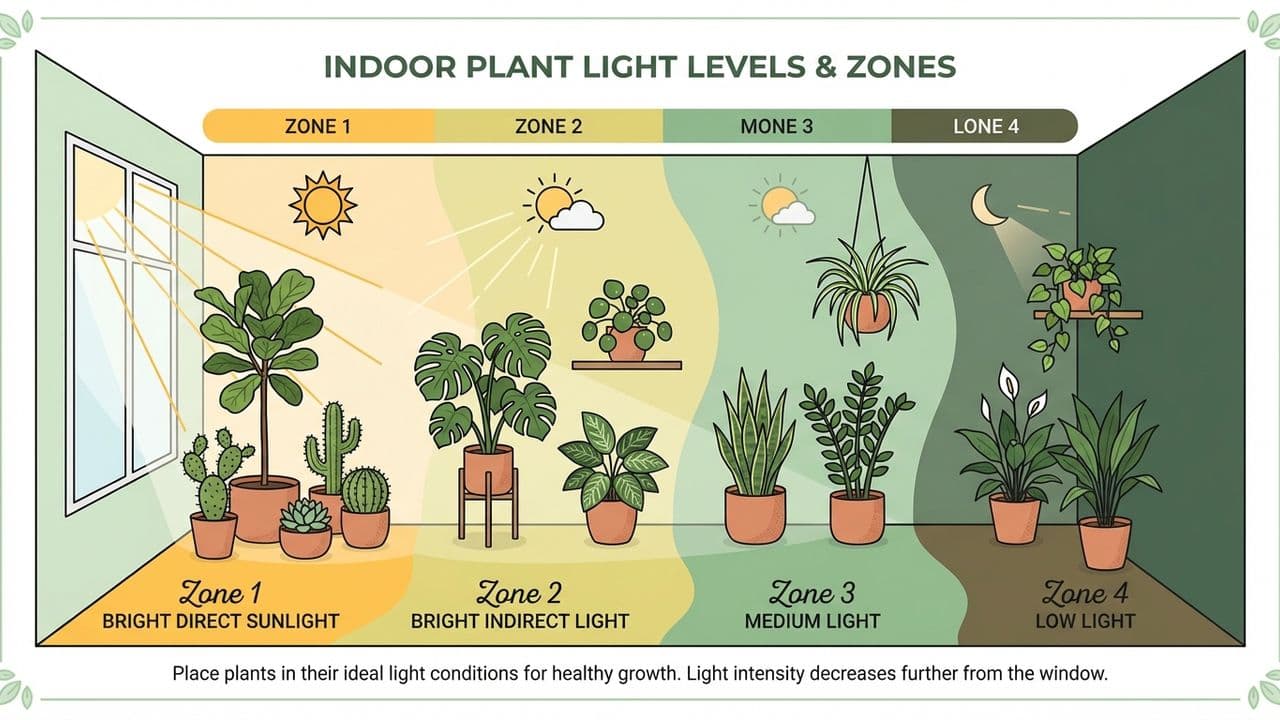
Move sensitive plants back from windows or add sheer curtains to filter intense afternoon sun. Peace Lily, Monstera, and Pothos prefer bright indirect light and will burn in direct summer sun. Watch for bleached or brown patches—these indicate too much light.
Increase Feeding
Growing plants need nutrients. Fertilize every 2-4 weeks with a balanced liquid fertilizer at half to full strength. Heavy feeders like Monstera Deliciosa, Fiddle Leaf Fig, and Pothos can handle more frequent feeding during peak growth.
Light feeders like Snake Plant and ZZ Plant still need less—monthly at half strength is plenty. Watch for signs of over-fertilizing: brown leaf tips, white crust on soil, slowed growth. When in doubt, use less. See our fertilizing guide.
Manage Temperature Extremes
Most houseplants are comfortable in the same temperature range as humans (65-85°F). But summer can bring extremes. Air conditioning can shock plants with cold drafts, while uncooled rooms may exceed comfortable levels. Fiddle Leaf Fig is notoriously sensitive to temperature fluctuations.
Keep plants away from AC vents and drafty windows. In hot rooms, increase humidity and watering frequency. If you don't have AC and temperatures regularly exceed 90°F, move plants to cooler spots and watch for heat stress (wilting, leaf drop, yellowing).
Watch for Summer Pests
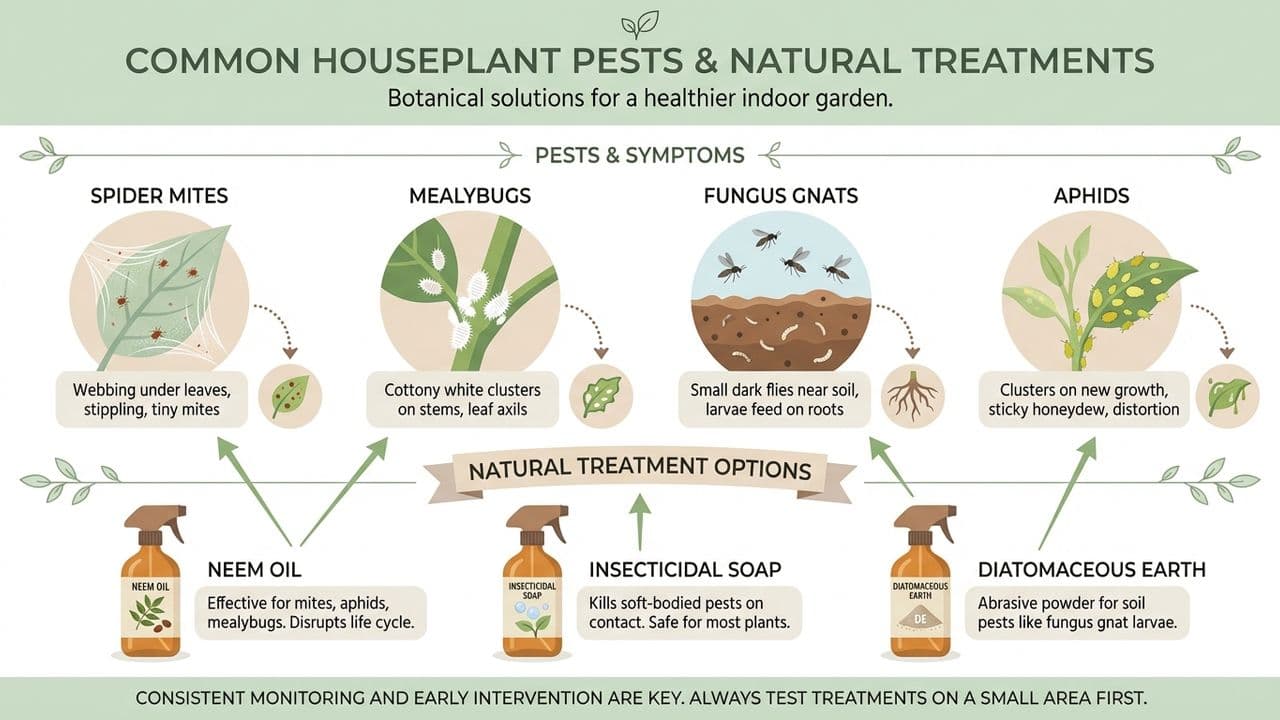
Warm weather is pest paradise. Spider mites, aphids, and mealybugs reproduce rapidly in summer heat. Inspect plants weekly, checking leaf undersides and stem joints. Catching problems early prevents infestations. See our Houseplant Pest Mastery Guide for identification and treatment, and our seasonal pest management guide for summer-specific strategies.
Good air circulation helps prevent pest problems. Avoid crowding plants so tightly that air can't move between them. Healthy, well-watered plants resist pests better—stressed plants from underwatering or heat are more vulnerable.
Summer Repotting
Summer is an excellent time to repot plants that have outgrown their containers. Active growth helps plants recover quickly from the stress of repotting. Signs your Rubber Plant or Monstera needs repotting: roots emerging from drainage holes, water running straight through, or plant drying out unusually fast.
Avoid repotting during the hottest weeks of summer—extreme heat stresses recently repotted plants. Early summer is ideal. Use appropriate soil for your plant type (see our soil guide) and go up only 1-2 inches in pot diameter. See our repotting guide.
Outdoor Summer Vacation
Many houseplants benefit from spending summer outdoors. Natural light, fresh air, and rain can invigorate plants like Monstera, Fiddle Leaf Fig, and Spider Plant. But the transition requires care—plants must be acclimated gradually to avoid sunburn and temperature shock.
Start in deep shade, gradually moving to brighter spots over 2 weeks. Never place houseplants in direct outdoor sun immediately. Inspect carefully for pests before bringing plants back inside in fall—you don't want to introduce outdoor hitchhikers to your indoor collection.