This guide contains affiliate links. We may earn a small commission if you purchase through our links, at no extra cost to you.
You followed all the advice. Quarantined new plants (sort of). Checked leaves occasionally. Maybe even tried some neem oil when things looked suspicious. Yet here you are—spider mites on your Fiddle Leaf Fig, mealybugs colonizing your Monstera, and that sinking feeling that you're always one step behind.
Here's the uncomfortable truth most pest guides won't tell you: reactive pest control is designed to fail. By the time you spot visible damage, populations have exploded. By the time you identify the pest, it's spread to neighboring plants. By the time you order treatment, the infestation has a two-week head start.
There's a better approach—one that professional growers and serious collectors use—called Integrated Pest Management, or IPM. It's not a magic spray or a single product. It's a systematic framework that prioritizes prevention, catches problems early, and uses the least toxic effective treatment when intervention is needed.
This guide will teach you to think about pest control differently. Not as an emergency response, but as an ongoing practice built into your plant care routine.
What you'll learn:
- Why traditional pest advice fails most houseplant owners
- The five pillars of Integrated Pest Management
- How to identify common houseplant pests quickly and accurately
- Prevention strategies that reduce infestations by 90%+
- The treatment escalation ladder: when to use what
- Building a pest response kit that covers all scenarios
- Season-specific pest management strategies
Let's transform you from reactive victim to proactive pest manager.
Table of Contents
- Why Reactive Pest Advice Fails
- Understanding Houseplant Pests
- The IPM Framework
- Pest Identification Quick Reference
- Prevention Strategies That Work
- Treatment Philosophy: The Escalation Ladder
- Common Pest Profiles
- Seasonal Pest Considerations
- Building Your Pest Response Kit
- When to Discard a Plant
- Resources and Next Steps
- Frequently Asked Questions
Why Reactive Pest Advice Fails
Most pest control advice follows a simple pattern: see pest, spray pest. This reactive approach has fundamental problems that doom it to failure.
The Population Math Problem
Consider spider mites. A single female can lay 20 eggs per day. Those eggs hatch in 3 days. New adults begin reproducing within a week. Do the math: one mite becomes hundreds in two weeks, thousands in a month.
By the time you notice stippled leaves and fine webbing—the classic "spider mite signs" in every guide—you're looking at a population explosion that's been building for weeks. That neem oil spray you ordered? It'll arrive when you're fighting generations of mites, not a small founding population.
The Identification Delay
Most houseplant owners aren't pest identification experts. You see something suspicious, Google it, compare photos, read conflicting advice, and eventually narrow it down. This process takes days—days during which pests reproduce, spread, and entrench.
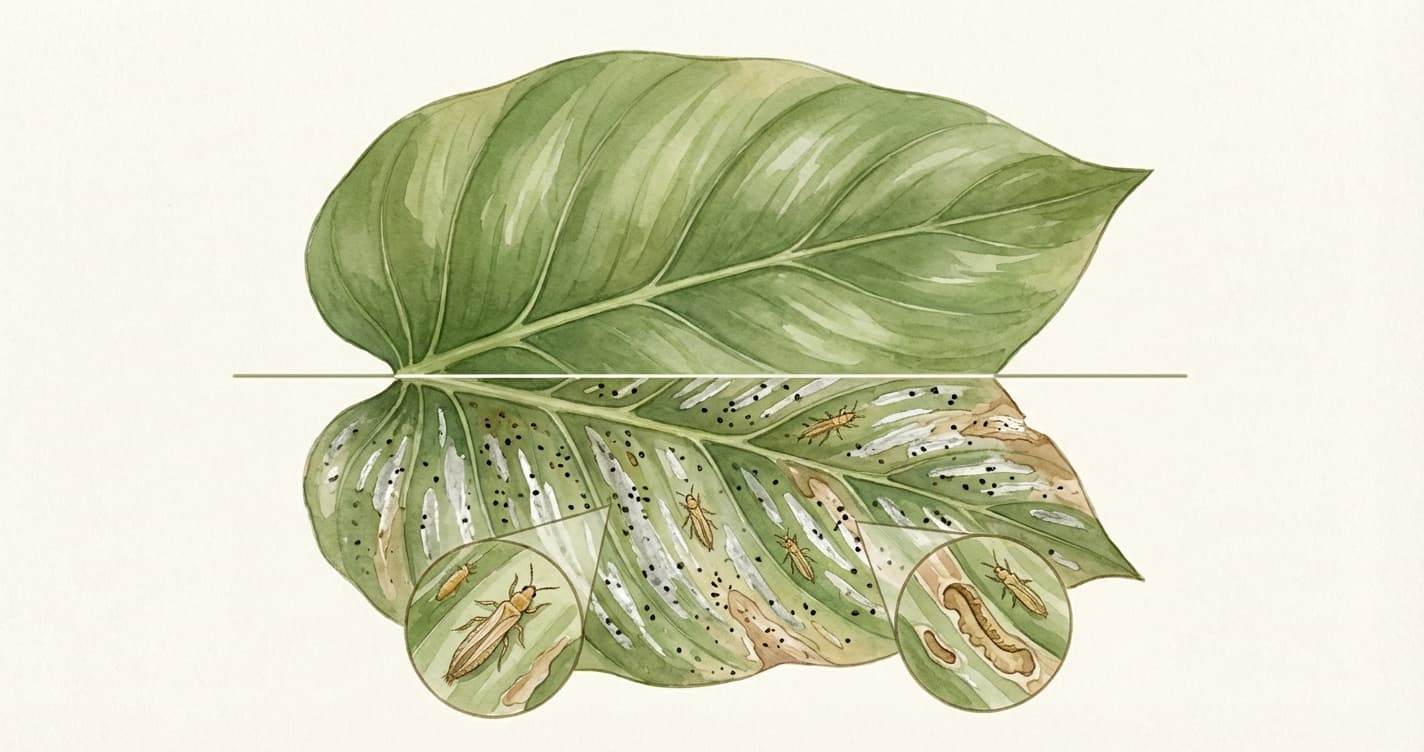
Thrips are particularly problematic because their damage (silvery streaks, stippling) looks similar to several other issues including nutrient deficiency and physical damage. Many people treat the wrong problem entirely.
The Wrong Treatment Problem
Generic "pest spray" advice ignores that different pests require different approaches. Neem oil works well on soft-bodied insects but poorly on scale protected by waxy shells. Insecticidal soap kills on contact but has no residual effect—miss one hiding mealybug and you're back to square one.
Systemic insecticides seem like the easy answer, but they're overkill for fungus gnats and useless for spider mites (which aren't insects). Using the wrong treatment wastes time while populations grow.
The Real Cost
Beyond plant damage, reactive pest control is expensive. Emergency purchases of products you're not sure will work. Replacement plants when infestations get out of control. The psychological toll of constantly fighting fires.
There's a better way.
Understanding Houseplant Pests
Before we can manage pests effectively, we need to understand what we're dealing with. Houseplant pests fall into distinct categories, each with different behaviors, vulnerabilities, and entry points.
Pest Categories
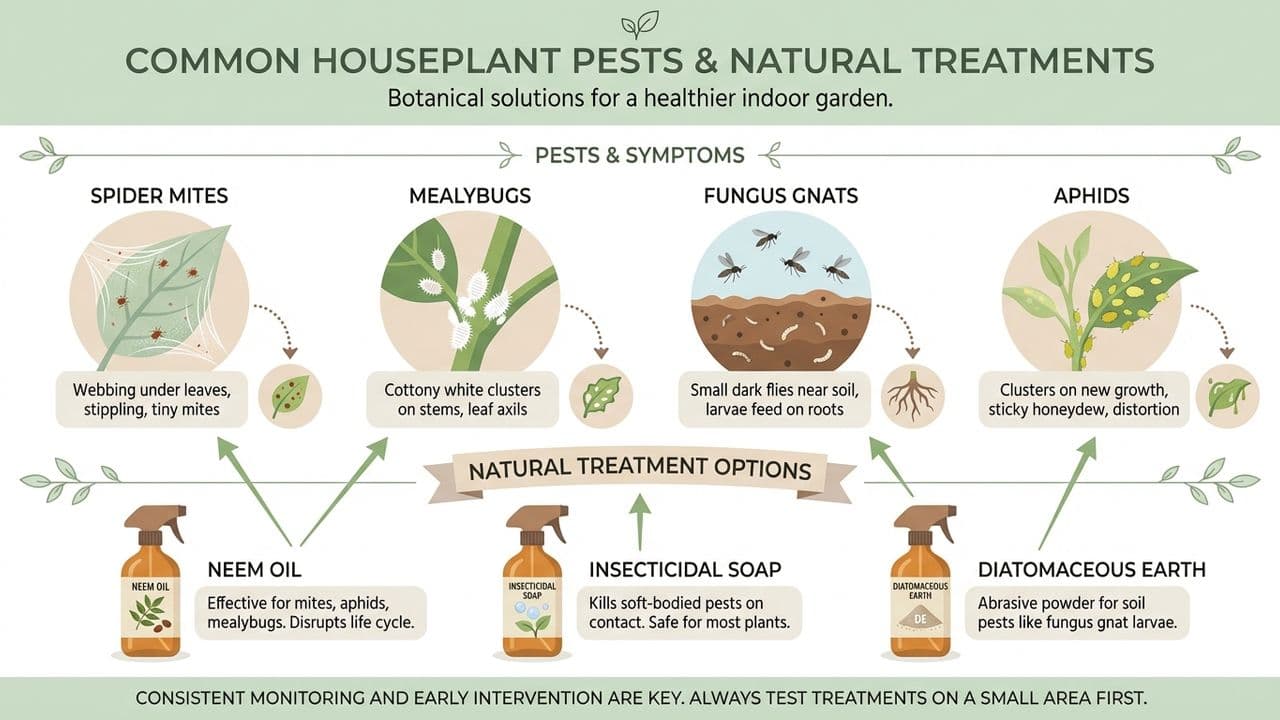
Sucking Insects: Aphids, mealybugs, scale, and whiteflies insert mouthparts into plant tissue and extract sap. They weaken plants, excrete sticky honeydew, and can transmit diseases. These pests reproduce rapidly but are relatively easy to treat when caught early.
Cell Disruptors: Thrips and spider mites don't suck sap—they rupture plant cells and consume the contents. Damage appears as stippling, silvery patches, or bronzing. These pests are harder to control because they're smaller, faster-reproducing, and often resistant to common treatments.
Root Pests: Fungus gnat larvae and root aphids attack below the soil line where you can't see damage until it's severe. Fungus gnats are mostly a nuisance; root aphids are a serious threat.
Occasional Invaders: Springtails, sowbugs, and millipedes occasionally appear in houseplant soil. Most are harmless decomposers that arrived in potting mix. Don't waste treatment on these.
How Pests Enter Your Home
Understanding entry points is crucial for prevention:
New plants: The #1 source of infestations. That beautiful Calathea from the nursery may have hitchhiked pests you won't notice for weeks. Even "reputable" nurseries have pest issues—high plant density makes it impossible to keep everything pest-free.
Open windows: Flying pests like whiteflies, fungus gnats, and thrips enter through open windows and screens, especially if you have plants near windows.
Cut flowers: Fresh flowers frequently carry thrips, aphids, and other pests directly into your home.
Outdoor time: Plants summered outside inevitably encounter pests. Bringing them back inside in fall introduces those pests to your collection.
Potting materials: Bagged soil can harbor fungus gnat eggs and other organisms. Even "sterile" mixes aren't always pest-free.
You: Pests can hitchhike on clothing, especially if you've visited nurseries, gardens, or friends with infested plants.
For detailed guidance on preventing pest introduction, see our quarantine protocols guide.
The IPM Framework
Integrated Pest Management isn't a product—it's a decision-making framework. Originally developed for agriculture, IPM has been adapted for houseplants by collectors who can't afford to lose rare specimens.
The framework has five interconnected pillars:
Pillar 1: Prevention
The most effective pest control happens before pests arrive. Prevention strategies include:
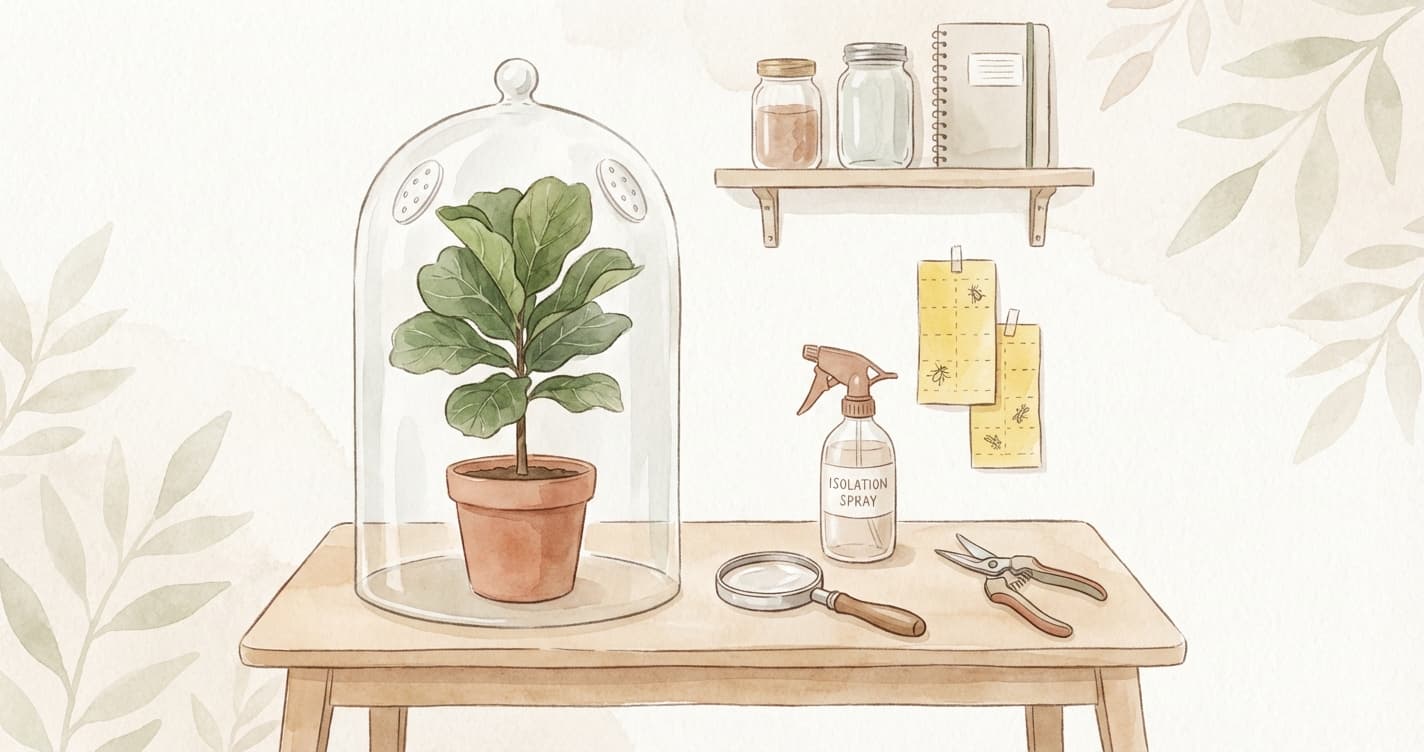
- Quarantine: All new plants spend 2-4 weeks isolated before joining your collection
- Inspection routines: Regular checks catch problems before they spread
- Environmental management: Conditions that stress plants favor pests
- Physical barriers: Screens on windows, bottom watering to discourage fungus gnats
Prevention won't stop every pest, but it dramatically reduces infestation frequency and catches problems when populations are small and manageable.
Pillar 2: Monitoring
You can't manage what you don't measure. Monitoring means systematic observation rather than casual glances:
- Weekly inspections: Dedicated time to examine plants, especially new growth and leaf undersides
- Sticky traps: Yellow traps catch flying pests and serve as early warning systems
- Record keeping: Notes on what you find, when, and where help identify patterns
A yellow sticky trap that suddenly has more fungus gnats tells you something changed—overwatering, new plant, fresh soil—before you see larvae damage.
Pillar 3: Cultural Controls
Cultural controls modify growing conditions to make plants less hospitable to pests:
- Proper watering: Fungus gnats thrive in constantly moist soil. Let the top inch dry between waterings.
- Humidity management: Spider mites love dry conditions. Maintaining humidity above 50% discourages them.
- Air circulation: Stagnant air favors fungal diseases and some pests. Gentle air movement from fans helps.
- Plant health: Stressed plants attract pests and suffer more damage. Address underlying care issues.
Cultural controls alone won't eliminate established infestations, but they reduce pest pressure and make treatments more effective.
Pillar 4: Biological Controls
Biological controls use living organisms to manage pests:
- Predatory mites: Species like Phytoseiulus persimilis consume spider mites
- Parasitic wasps: Tiny Encarsia wasps parasitize whitefly nymphs
- Beneficial nematodes: Microscopic worms that attack fungus gnat larvae
- Ladybugs and lacewings: General predators for aphids and soft-bodied pests
Biological controls work best as preventive measures or for light infestations. They're increasingly popular among collectors who want to avoid chemical treatments.
Pillar 5: Chemical Controls
When prevention and cultural controls aren't enough, chemical treatments become necessary. The IPM approach uses chemicals strategically:
- Start with least toxic options: Insecticidal soap, neem oil, horticultural oil
- Escalate only when needed: Systemic insecticides for persistent problems
- Rotate treatments: Prevents resistance development
- Target accurately: Right product for the specific pest
Chemical controls are tools, not solutions. Used without the other pillars, you'll spray forever. Used as part of IPM, you'll rarely need them.
For detailed comparison of treatment options, see our pest treatment comparison guide.
Pest Identification Quick Reference
Fast, accurate identification is critical. Use this decision tree when you spot something suspicious:
Flying Pests
Small flies near soil → Fungus gnats
- Tiny (2-3mm), mosquito-like flies
- Weak, erratic flight near soil surface
- Larvae are white with black heads, live in moist soil
- See our watering guide for prevention
Small flies near foliage → Whiteflies
- White, moth-like insects (1-2mm)
- Rise in clouds when plants disturbed
- Nymphs are flat, oval, on leaf undersides
- See our whiteflies guide
Tiny elongated insects on flowers/new growth → Thrips
- Slender, barely visible (1-2mm)
- Fast-moving, jump when disturbed
- Adults tan/brown, nymphs pale yellow
- See our thrips guide
Crawling Pests (Visible)
White cottony masses → Mealybugs
- Found in leaf axils, stem joints, under leaves
- Leave sticky honeydew
- Slow-moving when disturbed
Brown bumps that don't move → Scale
- Attached to stems and leaf veins
- Hard or soft depending on species
- Protected by waxy shell
Small pear-shaped insects → Aphids
- Green, black, brown, or red
- Cluster on new growth
- Produce honeydew
Crawling Pests (Barely Visible)
Fine webbing + stippled leaves → Spider mites
- Tiny (< 1mm), often red or brown
- Webbing between leaves and stems
- Worse in dry conditions
Silvery streaks + black dots → Thrips
- Damage appears before you see insects
- Black feces specks on leaves
- Check flowers and new growth
For complete visual diagnosis, see our pest identification guide.
Prevention Strategies That Work
Prevention is the cornerstone of IPM. These strategies, implemented consistently, will reduce your infestation rate dramatically.
The Quarantine Protocol
Every new plant—every single one—needs quarantine. No exceptions for "reputable" sources.
Setup: Designate a quarantine area away from your collection. A separate room is ideal; a corner at least 10 feet away works. The goal is preventing airborne pests and limiting your own transfer via hands and tools.
Duration: Minimum 2 weeks, preferably 4. Most pest life cycles are 2-3 weeks, so a month catches multiple generations.
Protocol:
- Inspect thoroughly on arrival
- Apply preventive treatment (neem oil or insecticidal soap)
- Check every few days for emerging issues
- Treat any problems before integration
For complete protocols including special cases, see our quarantine guide.
Regular Inspection Routine
Set a weekly inspection time. Make it a habit, not an afterthought.
What to check:
- New growth (favorite pest targets)
- Leaf undersides (where many pests hide)
- Stem joints and leaf axils (mealybug hiding spots)
- Soil surface (fungus gnat activity)
- Sticky traps (early warning system)
Tools that help:
- Magnifying glass or jeweler's loupe for tiny pests
- Phone macro lens for photos to aid identification
- Good lighting—pests hide in shadows
Environmental Management
Humidity: Keep humidity above 50% to discourage spider mites. A hygrometer helps you monitor conditions.
Watering practice: Let soil dry appropriately between waterings. Constantly wet soil breeds fungus gnats. Our watering guide covers proper technique.
Air circulation: Gentle air movement from a fan discourages some pests and fungal issues. Don't blast plants directly—subtle circulation is the goal.
Cleanliness: Remove dead leaves and debris where pests shelter. Wipe leaves monthly to remove dust and dislodge any hitchhikers.
Sticky Trap Deployment
Yellow sticky traps aren't just for catching pests—they're monitoring tools.
Placement: Near plants, at plant height. One trap per 3-4 plants or per 10 square feet of growing area.
Monitoring: Check weekly. A sudden increase in catches indicates a problem developing. Identify what you're catching—fungus gnats, whiteflies, and thrips all respond differently.
Blue sticky traps: More attractive to thrips than yellow. Use in areas where thrips are your main concern.
Treatment Philosophy: The Escalation Ladder
When prevention fails and pests establish, treatment becomes necessary. The IPM approach uses a treatment ladder, starting with the least disruptive methods and escalating only when needed.
Level 1: Physical Removal
For light infestations caught early, physical methods often suffice:
Water spray: A strong spray of water dislodges aphids, spider mites, and whiteflies. Take plants to a shower or sink and spray thoroughly, especially leaf undersides. Repeat every few days for 2 weeks.
Manual removal: Pick off visible mealybugs and scale. Use cotton swabs dipped in rubbing alcohol to kill mealybugs on contact. Tedious but effective for small populations.
Sticky traps: Can reduce flying pest populations, though rarely eliminate them alone.
Pruning: Heavily infested plant parts can be removed to reduce population quickly. Dispose of pruned material in sealed bags.
Level 2: Organic Sprays
When physical methods aren't enough, organic sprays are the next step:
Insecticidal soap: Kills soft-bodied insects on contact by disrupting cell membranes. Effective on aphids, mealybugs, whiteflies, and spider mites. No residual effect—you must hit the pest directly. Ready-to-use formulas or concentrate for mixing.
Neem oil: Extracted from neem tree seeds, disrupts pest feeding and reproduction. Effective on most houseplant pests but works slowly. Cold-pressed neem oil contains more active compounds. Apply every 7-14 days.
Horticultural oil: Suffocates pests by coating them. Effective on scale and their eggs. Various formulations available; summer-weight oils are safer for indoor use.
Pyrethrin: Derived from chrysanthemums, kills on contact with quick knockdown. Use for severe infestations when you need immediate population reduction. Breaks down quickly in light.
Level 3: Biological Controls
For ongoing prevention or chemical-sensitive situations:
Beneficial nematodes: Microscopic worms that attack fungus gnat larvae in soil. Steinernema feltiae species works well. Apply to soil as a drench.
Predatory mites: Several species target spider mites. Phytoseiulus persimilis is the most common. Requires humidity above 60% to establish.
Parasitic wasps: Tiny Encarsia formosa wasps parasitize whitefly nymphs. Best for greenhouse-scale problems.
Biological controls require specific conditions and ongoing maintenance. They're most practical for serious collectors or those avoiding all chemical treatments.
Level 4: Systemic Treatments
When infestations resist organic treatments, systemic insecticides become an option:
How they work: Plants absorb systemic insecticides through roots or leaves. The chemicals circulate through plant tissue, killing pests that feed on the plant.
When to use: Persistent scale, severe mealybug infestations, recurring thrips. Not effective on spider mites (which aren't insects).
Options: Imidacloprid-based products are most common. Spinosad is derived from soil bacteria and effective on thrips.
Cautions: Systemics persist in plant tissue for weeks. Don't use on edible plants. Keep treated plants away from pets that might chew leaves.
For detailed treatment comparisons, see our pest treatment comparison guide.
Common Pest Profiles
Here's what you need to know about the pests you'll most likely encounter:
Spider Mites
Identification: Tiny (< 1mm), often red or brown. Create fine webbing on leaf undersides and between stems. Leaves develop stippled, dusty appearance.
Why they're problematic: Reproduce rapidly—populations can double every 3 days in warm, dry conditions. Resistant to many treatments.
Best treatment: Increase humidity, spray thoroughly with water, apply insecticidal soap or neem oil. Repeat treatments essential to break reproductive cycle.
Prevention: Maintain humidity above 50%. Regularly wipe leaves. Quarantine new plants.
Mealybugs
Identification: White, cottony masses in leaf joints, stem crevices, and leaf undersides. Slow-moving. Produce sticky honeydew.
Why they're problematic: Hide in crevices where sprays don't reach. Multiple egg sacs can hatch over time.
Best treatment: Rubbing alcohol on cotton swab kills on contact. Follow with insecticidal soap. For severe cases, systemic insecticides.
Prevention: Inspect new plants carefully, especially in crevices. Pothos, Peace Lily, and soft-stemmed plants are common targets.
Thrips
Identification: Slender, barely visible insects (1-2mm). Silvery streaks on leaves, black feces dots. Fast-moving adults that jump.
Why they're problematic: Difficult to see until damage is extensive. Resistant to many common treatments. Can transmit plant viruses.
Best treatment: Blue sticky traps for adults. Spinosad is the most effective spray option. Systemic insecticides for severe cases.
Prevention: Quarantine aggressively. Keep cut flowers away from houseplants. Thrips especially target Monstera and Calathea.
For complete thrips information, see our thrips guide.
Whiteflies
Identification: Small (1-2mm), white, moth-like insects. Rise in clouds when disturbed. Flat, oval nymphs on leaf undersides.
Why they're problematic: Reproduce rapidly. Produce honeydew that promotes sooty mold. Can be difficult to eliminate completely.
Best treatment: Yellow sticky traps for adults. Vacuum adults off plants. Insecticidal soap for nymphs (multiple applications needed).
Prevention: Screen windows. Inspect hibiscus and other flowering plants carefully.
For complete whitefly information, see our whiteflies guide.
Fungus Gnats
Identification: Tiny flies (2-3mm) hovering near soil. Larvae are white with black heads, live in top inch of moist soil.
Why they're problematic: Mostly a nuisance, though larvae can damage roots of seedlings and sensitive plants. Indicate overwatering.
Best treatment: Let soil dry between waterings. Yellow sticky traps for adults. Mosquito Bits (BTI) for larvae.
Prevention: Proper watering technique. Bottom watering. Top dress soil with sand or perlite.
Scale
Identification: Brown or tan bumps along stems and leaf veins. Immobile as adults. Hard scale has shell-like covering; soft scale is more waxy.
Why they're problematic: Protected covering makes them resistant to contact sprays. Often overlooked as part of the plant.
Best treatment: Scrape off physically. Apply horticultural oil to suffocate. Systemic insecticides for severe infestations.
Prevention: Quarantine new plants. Common on Fiddle Leaf Fig, Rubber Plant, and woody-stemmed plants.
Aphids
Identification: Small, pear-shaped insects. Green, black, brown, or red. Cluster on new growth. Produce honeydew.
Why they're problematic: Reproduce rapidly—populations explode within days. Distort new growth.
Best treatment: Strong water spray. Insecticidal soap. Neem oil. Often the easiest pest to eliminate.
Prevention: Standard quarantine. Aphids prefer stressed plants—maintain good plant health.
Seasonal Pest Considerations
Pest pressure varies throughout the year. Understanding seasonal patterns helps you anticipate problems.
Spring (March-May)
As temperatures warm and plants resume active growth, pests that overwintered begin reproducing.
Key concerns:
- Overwintered spider mites awakening
- Aphid populations building on new growth
- Fungus gnats increasing with more frequent watering
Actions:
- Inspect plants that seemed pest-free in winter
- Deploy fresh sticky traps
- Consider preventive neem oil applications
Summer (June-August)
Peak pest season. Warm temperatures accelerate reproduction. Open windows introduce outdoor pests.
Key concerns:
- Spider mites thrive in hot, dry conditions
- Thrips enter through windows
- Scale populations at maximum
- Plants outdoors acquire pests
Actions:
- Increase humidity to discourage spider mites
- Check window screens for holes
- More frequent inspections
- Begin treating plants summering outdoors before bringing them in
Fall (September-November)
Critical season. Plants coming inside bring hitchhikers. Decreasing light stresses plants.
Key concerns:
- Outdoor plants bringing pests indoors
- Stressed plants more vulnerable
- Whiteflies escaping cold seek indoor refuge
Actions:
- Treat all outdoor plants before bringing inside
- Quarantine returning plants like new purchases
- Inspect thoroughly, especially leaf undersides
- Apply preventive treatments before integration
Winter (December-February)
Lower pest pressure overall, but problems persist. Heating creates dry conditions that favor spider mites.
Key concerns:
- Spider mites love dry heated air
- Plants stressed by low light are more vulnerable
- Reduced growth means slower recovery
Actions:
- Maintain humidity to discourage spider mites
- Continue inspections (pests don't hibernate)
- Treatments work more slowly; be patient
- Address care issues that stress plants
For detailed month-by-month guidance, see our seasonal pest management guide.
Building Your Pest Response Kit
Don't wait for an infestation to acquire supplies. Build your kit now so you can respond immediately.
Basic Kit ($25-30)
Essential supplies for most common situations:
- Yellow sticky traps (20-pack) - $8
- Insecticidal soap spray - $10
- Isopropyl alcohol 70% - $5
- Cotton swabs - $3
- Fine mist spray bottle - $6
This handles fungus gnats, light mealybug infestations, aphids, and monitoring.
Standard Kit ($60-75)
Everything above plus:
- Neem oil concentrate - $15
- Blue sticky traps (for thrips) - $10
- Mosquito Bits (BTI for larvae) - $12
- Magnifying loupe - $8
- Pump sprayer (for larger collections) - $15
This handles most common infestations with multiple treatment options.
Pro Kit ($100+)
Everything above plus:
- Systemic insecticide granules - $15
- Spinosad spray - $15
- Horticultural oil - $12
- Beneficial nematodes - $15
- Digital hygrometer - $12
This provides full treatment capabilities for serious collectors or persistent problems.
When to Discard a Plant
Sometimes the best pest management is knowing when to cut your losses.
Consider discarding when:
- Infestation is severe and the plant is common/inexpensive
- Treatment would cost more than plant replacement
- The plant has been struggling anyway
- Risk of spread to valuable specimens is high
- You've treated repeatedly without success
It's not giving up—it's protecting your collection. One infested plant can spread pests to a dozen others. A $15 plant isn't worth risking your $200 Fiddle Leaf Fig.
Proper disposal: Seal in a plastic bag before placing in trash. Don't compost infested plant material. Clean the area where the plant sat.
Resources and Next Steps
Deep-Dive Guides
Explore specific topics in detail:
- Thrips on Houseplants: Complete Guide - Identification, treatment, prevention
- Whiteflies on Indoor Plants - Everything about whitefly control
- Houseplant Quarantine Protocols - Complete quarantine procedures
- Seasonal Pest Management - Month-by-month guidance
- Pest Treatment Comparison - Neem vs soap vs systemic vs more
- Advanced Pest Identification - Visual diagnosis guide
Related Guides
- Natural Pest Control - Quick reference for common pests
- Plant Diseases - When it's not pests
- Yellow Leaves Diagnosis - Ruling out pest damage
- Brown Leaf Tips - When brown tips aren't thrips
- Watering 101 - Prevent fungus gnats
- Humidity Management - Prevent spider mites
Local Resources
Find quality plants from reputable sources at our nursery finder. Local nurseries often have staff who can help identify pests and recommend treatments specific to your area.
Frequently Asked Questions
How often should I inspect my plants for pests?
Weekly is ideal. Set a specific time—Sunday morning coffee and plant inspection, for example. This consistency catches problems early when they're easiest to treat.
Can I prevent pests entirely?
Not completely, but IPM practices can reduce infestations by 90% or more. The goal isn't zero pests—it's catching problems early and managing them effectively.
Should I quarantine plants from big-box stores?
Yes. All new plants, regardless of source. Big-box stores often have worse pest pressure due to high volume and rapid turnover, but even specialty nurseries can have issues.
How long do I need to quarantine new plants?
Minimum 2 weeks, ideally 4 weeks. Most pest life cycles complete within this timeframe, so you'll catch any issues that emerged from eggs present at purchase.
Is neem oil or insecticidal soap better?
They work differently. Insecticidal soap kills on contact but has no residual effect. Neem oil disrupts feeding and reproduction but works more slowly. Use soap for immediate knockdown, neem for ongoing control. See our treatment comparison guide.
Are systemic insecticides safe for indoor use?
When used as directed, yes. However, they persist in plant tissue for weeks. Don't use on edible plants, and keep treated plants away from children and pets who might mouth leaves.
Why do I keep getting spider mites?
Usually dry conditions. Spider mites thrive in low humidity, which is common in heated/air-conditioned homes. Increasing ambient humidity above 50% significantly reduces spider mite problems.
Can pests build resistance to treatments?
Yes, especially with repeated exposure to the same active ingredient. Rotate between different treatment types. This is one reason the IPM approach uses treatments strategically rather than as routine prevention.
Should I treat all my plants if one has pests?
Not necessarily. Isolate the infested plant, treat it, and increase monitoring of nearby plants. Treating everything wastes product and can stress healthy plants. Exception: for thrips and spider mites, which spread rapidly, preventive treatment of nearby plants may be justified.
When should I give up on a plant?
When treatment cost exceeds replacement cost, when repeated treatments haven't worked, or when the plant poses significant risk to your collection. It's okay to discard a plant—protecting your other plants matters more.
Putting It All Together
Effective pest management isn't about perfect prevention or magical treatments. It's about building systems that catch problems early and address them effectively.
The IPM mindset:
- Prevention first: Quarantine, inspect, maintain good conditions
- Monitor constantly: Sticky traps, weekly checks, early detection
- Treat appropriately: Right treatment for the specific pest at the right time
- Learn and adapt: Each experience teaches you something
Start with the basics—quarantine new plants, check them weekly, deploy sticky traps. When problems arise, identify accurately, choose appropriate treatment, and follow through consistently.
You'll still encounter pests. Every plant owner does. But with IPM principles guiding your approach, you'll catch them earlier, treat them more effectively, and spend less time in reactive emergency mode.
Your plants—and your peace of mind—will thank you.