This guide contains affiliate links. We may earn a small commission if you purchase through our links, at no extra cost to you.
Plant diseases strike fast and spread faster. Unlike pest infestations, which you can often see crawling around, fungal and bacterial infections work invisibly until significant damage is done. Early detection is everything.
The Most Common Houseplant Diseases
Root Rot (Fungal)
The #1 killer of houseplants. Caused by multiple fungal species that thrive in waterlogged soil.
Symptoms:
- Yellowing leaves (often lower leaves first)
- Soft, mushy stems at soil line
- Foul smell from soil
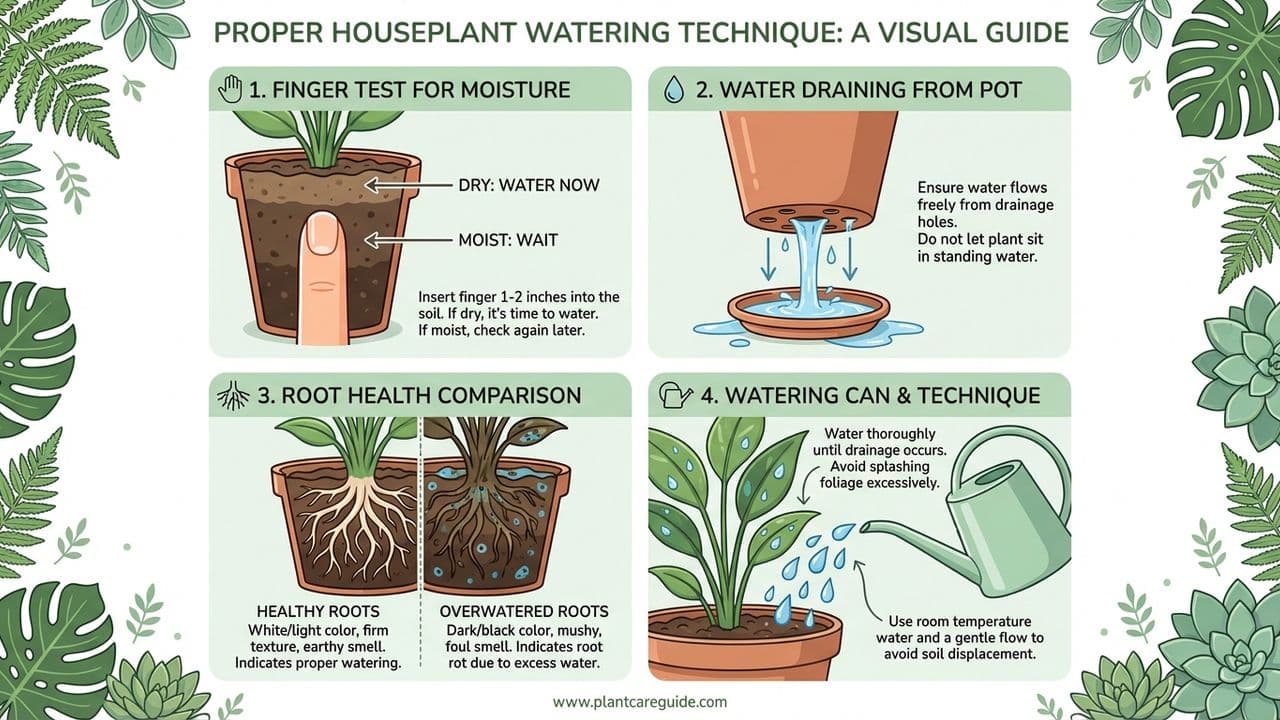
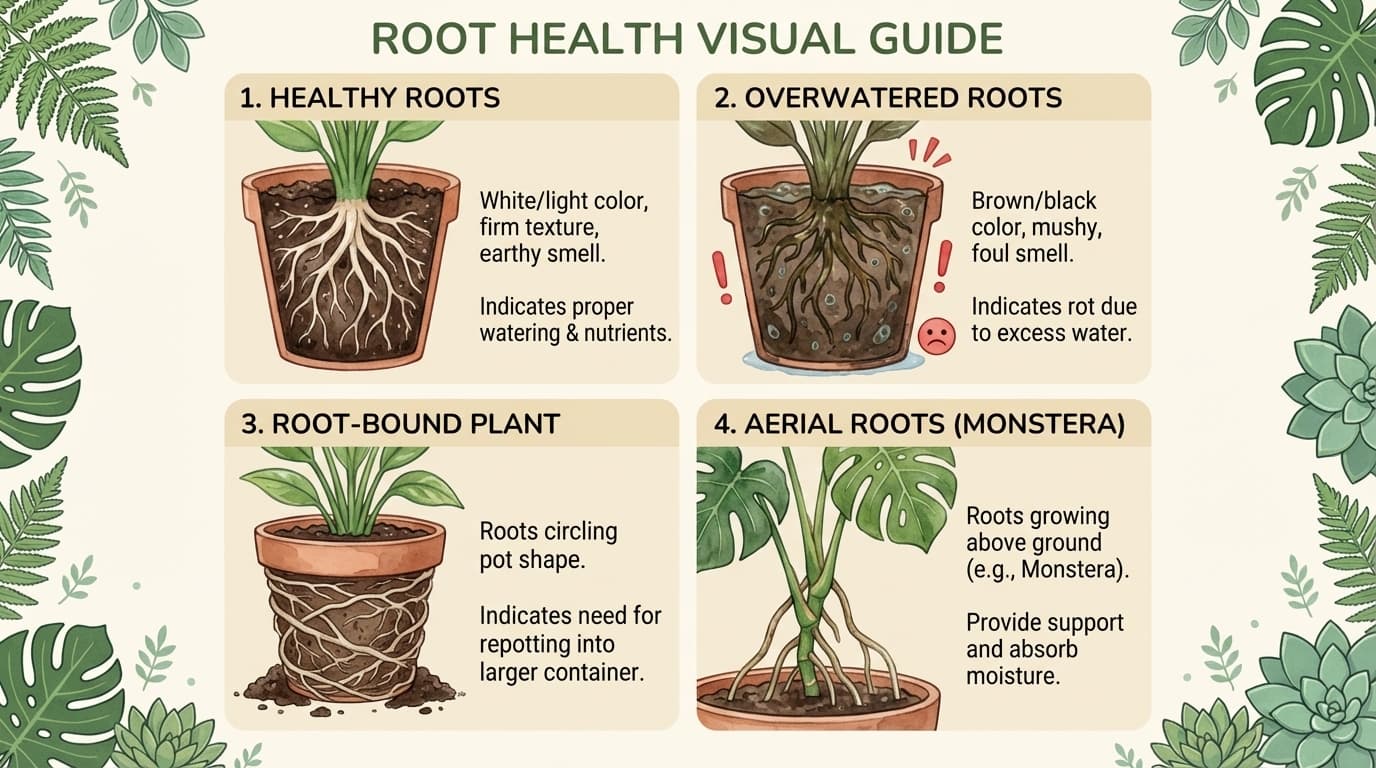
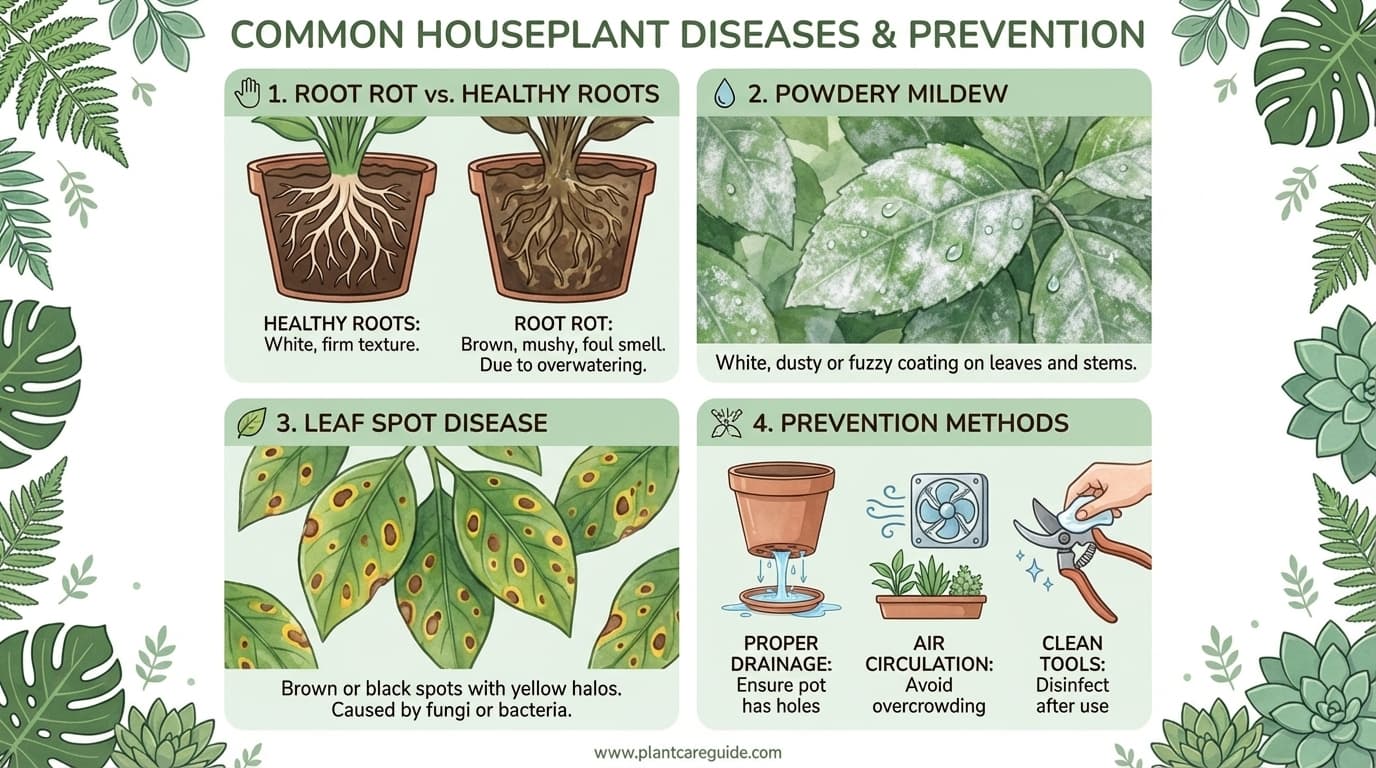
- Brown, mushy roots (healthy roots are white/tan and firm)
- Plant wilts despite wet soil
Causes:
- Overwatering (most common)
- Poor drainage
- Pots without drainage holes
- Compacted, old soil
Treatment:
- Remove plant from pot immediately
- Wash away all soil from roots
- Cut off all brown/mushy roots with sterile pruning shears
- Let roots air dry for 24 hours
- Repot in fresh, well-draining soil
- Reduce watering dramatically
See our root health guide for detailed root assessment.
Powdery Mildew (Fungal)
A white, powdery coating that spreads across leaves.
Symptoms:
- White or gray powdery patches on leaves
- Starts as small spots, spreads quickly
- Leaves may yellow and drop
- Distorted new growth
Causes:
- High humidity + poor air circulation
- Crowded plants
- Cool temperatures
Treatment:
- Isolate affected plant immediately
- Remove heavily infected leaves
- Spray with neem oil or fungicidal soap
- Improve air circulation around plants
- Avoid wetting leaves when watering
Leaf Spot Diseases (Fungal/Bacterial)
Various pathogens that cause spots on foliage.
Fungal leaf spot symptoms:
- Brown or tan spots with yellow halos
- Spots may have concentric rings
- Usually starts on lower, older leaves
- May have fuzzy growth in humid conditions
Bacterial leaf spot symptoms:
- Dark, water-soaked spots
- Spots may ooze or have wet appearance
- Leaves may develop rotten smell
- Rapid spread in warm, moist conditions
Treatment:
- Remove and destroy affected leaves
- Avoid overhead watering
- Improve air circulation
- Apply copper-based fungicide for persistent problems
- For bacterial: no chemical treatment—focus on prevention and removal
Botrytis (Gray Mold)
A fuzzy gray fungus that attacks damaged tissue.
Symptoms:
- Gray, fuzzy mold on leaves, stems, or flowers
- Often starts on dead or damaged tissue
- Brown, water-soaked patches underneath
- Common in cool, humid conditions
Treatment:
- Remove all affected material immediately
- Improve ventilation
- Lower humidity if possible
- Remove dead plant debris promptly
- Apply fungicide in severe cases
Stem Rot
Similar to root rot but attacks the stem above soil line.
Symptoms:
- Soft, mushy stem base
- Plant may topple or lean
- Dark discoloration spreading upward
- Often accompanies root rot
Treatment:
- If caught early, cut stem above rot and propagate healthy section
- If extensive, plant may not be salvageable
- Check and treat root rot simultaneously
Disease Prevention Strategies
Cultural Prevention (Most Important)
Proper watering:
- Let soil dry appropriately between waterings—see our watering guide
- Water at soil level, not on leaves
- Use room-temperature water
- Empty saucers after watering
Good air circulation:
- Don't crowd plants
- Use fans in humid environments
- Open windows when weather permits
Sanitation:
- Remove dead leaves promptly
- Clean pruning tools between plants
- Quarantine new plants for 2-3 weeks
- Use sterile potting soil
Environmental Management
| Factor | Disease-Promoting | Disease-Preventing |
|---|---|---|
| Humidity | Consistently high (80%+) | Moderate with air flow (50-60%) |
| Air circulation | Stagnant | Gentle movement |
| Watering | Wet foliage, soggy soil | Soil-level, proper drainage |
| Temperature | Cool + wet | Appropriate for species |
| Light | Too dark, weak growth | Appropriate to species needs |
Treatment Products
Natural/Organic Options
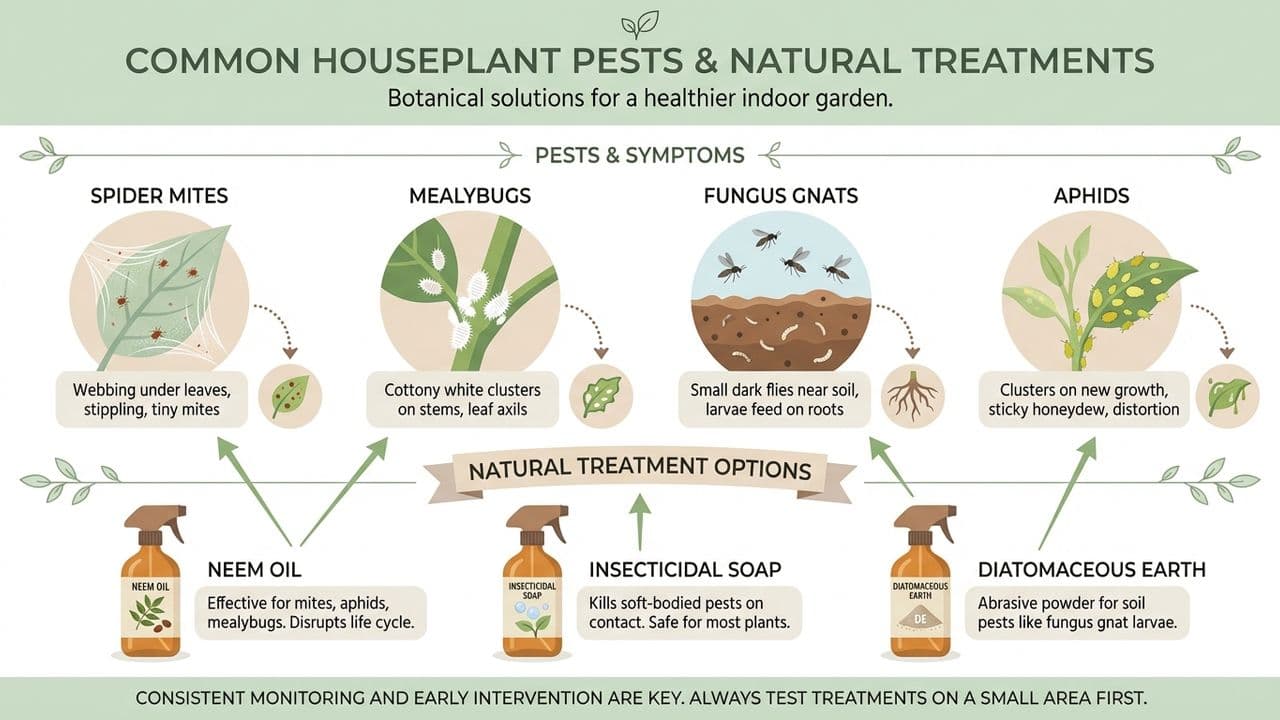
Neem oil:
- Effective against many fungal diseases
- Also works on pests
- Apply weekly as preventive
- Dilute according to package directions
Baking soda spray:
- Mix 1 tablespoon baking soda + 1 teaspoon dish soap + 1 gallon water
- Effective for powdery mildew
- Test on one leaf first
Cinnamon:
- Natural antifungal
- Dust on cut surfaces to prevent rot
- Sprinkle on soil surface
Commercial Fungicides
- Effective against many fungal and bacterial diseases
- Apply according to label
- Safe for most houseplants
Systemic fungicides:
- Absorbed by plant, protection from within
- Use for persistent, recurring problems
- Follow label carefully
When to Give Up
Some plants aren't worth saving. Consider discarding if:
- Root rot has destroyed 80%+ of root system
- Disease has spread to stem core
- Multiple diseases present simultaneously
- Same plant has recurring infections
- Disease threatens your other plants
Don't feel guilty. Experienced plant owners lose plants to disease too. Protect your healthy collection by removing severe infections promptly.
Disease vs. Pest vs. Cultural Problems
Misdiagnosis leads to wrong treatment. Quick comparison:
| Symptom | Likely Disease | Likely Pest | Likely Cultural |
|---|---|---|---|
| Brown spots with halos | Leaf spot | — | Sun scorch |
| Sticky residue | — | Scale, aphids | — |
| White powder on leaves | Powdery mildew | Mealybugs | — |
| Yellow leaves + wet soil | Root rot | — | Overwatering |
| Curling leaves | Possible | Spider mites | Underwatering |
| Fuzzy gray growth | Botrytis | — | — |
For pest identification and treatment, see our Houseplant Pest Mastery Guide or our detailed pest identification guide.
After Recovery
Once a plant recovers from disease:
- Continue preventive treatments for several weeks
- Monitor closely for recurrence
- Address underlying causes (overwatering, poor circulation)
- Consider preventive neem oil applications
Visit local nurseries for disease-resistant plant varieties and professional advice on persistent problems. When in doubt, bring a sample (in a sealed bag) for identification.