This guide contains affiliate links. We may earn a small commission if you purchase through our links, at no extra cost to you.
You've perfected your watering schedule and found the ideal light spot, but your plant is still struggling. The problem might be underground. The right soil makes the difference between a plant that survives and one that thrives. Here's how to match soil to plant for optimal health.
Why Soil Matters
Soil does three critical jobs: it anchors roots, holds moisture, and provides nutrients. But it also needs to drain well enough that roots can breathe. Standard garden soil is too dense for containers—it compacts, holds too much water, and suffocates roots. That's why we use specialized potting mixes for houseplants.
Different plants evolved in different soil conditions. Monstera Deliciosa grows as an epiphyte, climbing trees with roots that grip bark. Aloe Vera comes from sandy, fast-draining desert soil. Understanding these origins helps you choose the right mix.
Understanding Soil Components
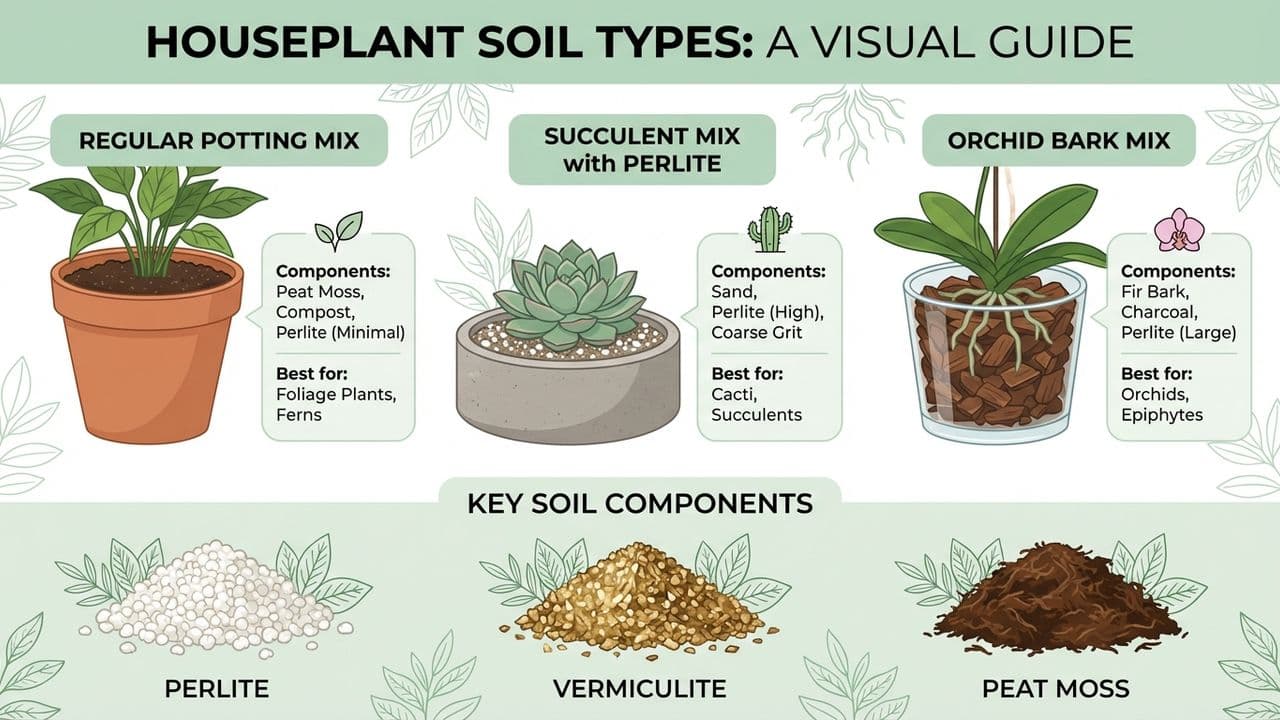
Peat moss or coco coir provides water retention and a slightly acidic pH that most houseplants prefer. Perlite—those white, popcorn-like bits—creates air pockets and improves drainage. Orchid bark adds structure and drainage, particularly important for plants like Monstera Deliciosa that don't like wet feet.
Vermiculite holds moisture longer than perlite, useful for plants that like consistent dampness. Pumice is a durable alternative to perlite that doesn't float to the surface. Horticultural sand improves drainage for succulents and cacti. Activated charcoal helps prevent root rot and odors.
Soil Types for Different Plants
Standard potting mix works for most tropical houseplants like Pothos, Peace Lily, and Spider Plant. Look for mixes containing peat or coco coir, perlite, and some bark. These plants want moisture retention with good drainage—not soggy, not bone dry.
Succulent and cactus mix is sharply draining with extra sand or perlite. Aloe Vera, Snake Plant, and ZZ Plant need this fast-draining mix that mimics their native arid conditions. You can make your own by mixing standard potting soil with equal parts perlite or coarse sand.
Aroid mix is chunky and airy, perfect for aroids like Monstera Deliciosa and Pothos. Combine orchid bark, perlite, peat moss, and charcoal in roughly equal parts. This mimics the loose, organic debris these plants grow in naturally.
When to Change Soil
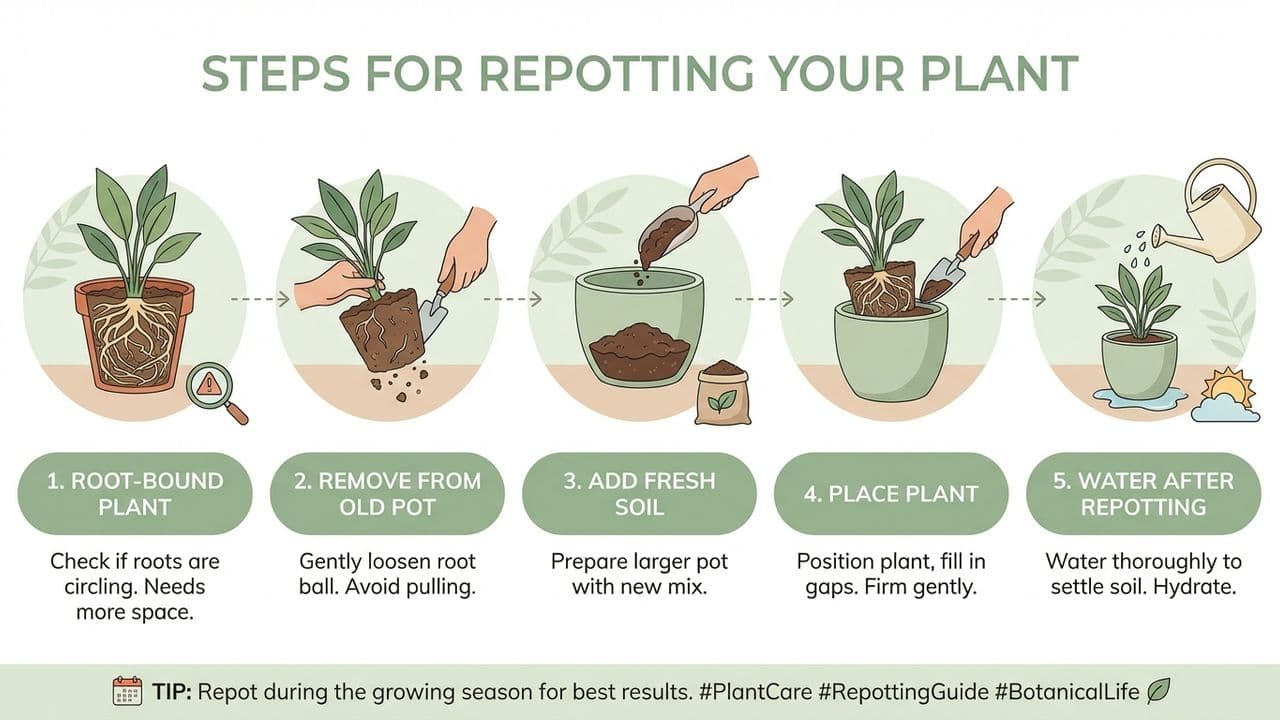
Repot with fresh soil every 1-2 years for actively growing plants. Over time, organic matter breaks down, drainage decreases, and nutrients deplete. If you notice water sitting on the surface rather than soaking in, or if roots are circling the pot, it's time. See our repotting guide for the full process.
New plants from nurseries often come in soil that's been optimized for quick growth, not long-term health. If your new Fiddle Leaf Fig seems to stay wet too long, consider repotting into an appropriate mix once it's acclimated to your home.
DIY Soil Recipes
For tropical plants (Monstera, Pothos, Peace Lily): Mix 2 parts quality potting soil, 1 part perlite, and 1 part orchid bark. This provides moisture retention with excellent drainage and aeration.
For succulents (Aloe Vera, Snake Plant, ZZ Plant): Mix 1 part potting soil with 1 part perlite and 1 part coarse sand. This fast-draining mix prevents the root rot that kills succulents in standard soil.
Common Soil Mistakes
Using garden soil in pots is the most common error. It compacts, drains poorly, and may contain pests or diseases. Always use potting mix formulated for containers. Similarly, reusing old potting soil can spread disease—start fresh with each repotting.
Ignoring soil pH affects nutrient availability. Most houseplants prefer slightly acidic soil (pH 6.0-7.0). If leaves yellow despite proper watering (see our yellow leaves guide), pH issues might be preventing nutrient uptake. Peat-based mixes naturally provide the right acidity.