This guide contains affiliate links. We may earn a small commission if you purchase through our links, at no extra cost to you.
You've mastered basic propagation—pothos cuttings root without fail, spider plant babies practically plant themselves. But what about the failures? The cuttings that rot, refuse to root, or die mysteriously after transplanting? Let's diagnose and fix your propagation problems.
Why Cuttings Fail: The Root Causes
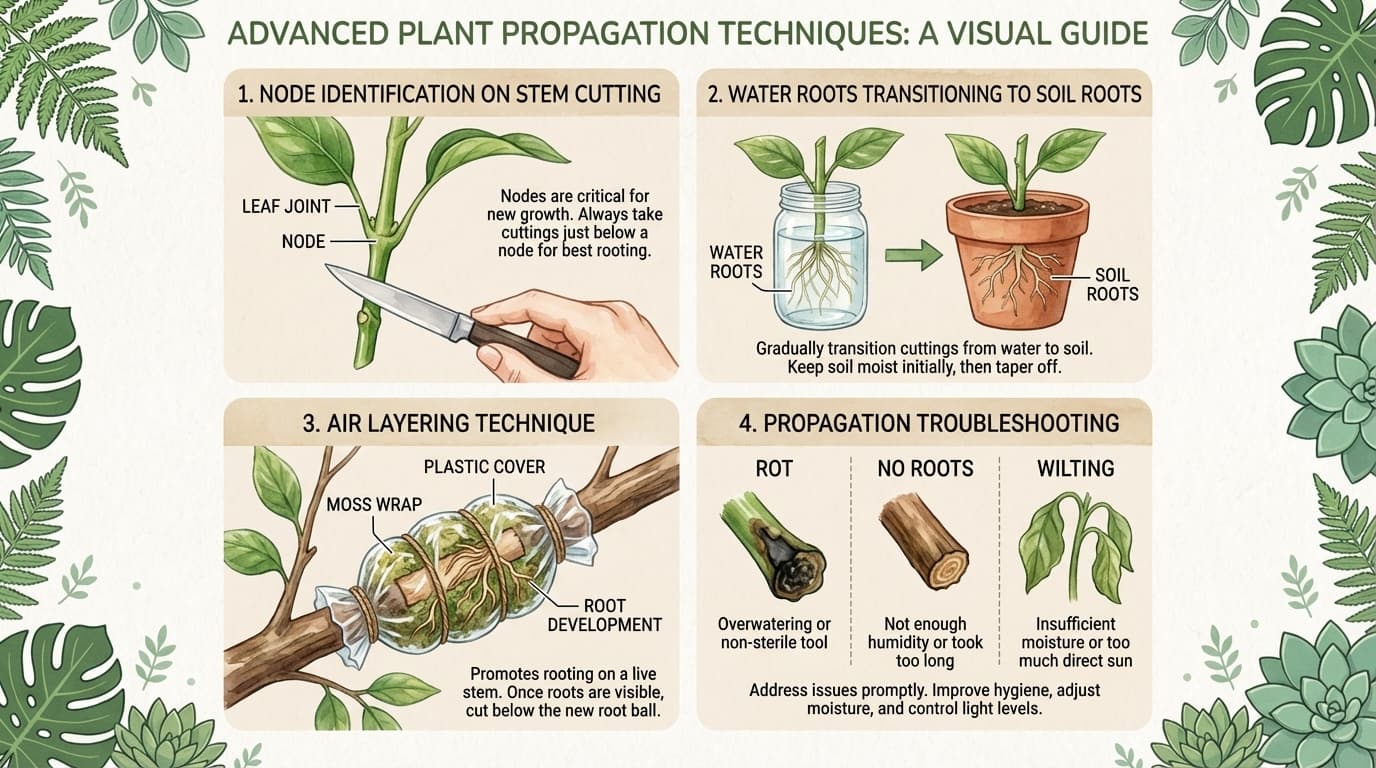
1. Stem Rot Before Rooting
What happens: Cutting turns brown and mushy at the base before roots develop.
Causes:
- Water too deep (submerging nodes + stem)
- Dirty water or container
- Temperature too cold
- Cutting taken from unhealthy plant
- Cut made in wrong location
Prevention:
- Submerge only the node, not excessive stem
- Change water every 3-5 days
- Keep cuttings warm (65-80°F)
- Only propagate from healthy parent plants
- Cut just below a node with clean, sharp tools
2. Failure to Root
What happens: Cutting stays alive but never develops roots, eventually weakens and dies.
Causes:
- Wrong cutting type for species
- Insufficient light
- Node buried in soil (for water-to-soil)
- Rooting hormone needed but not used
- Wrong season (dormant plant)
Prevention:
- Research species-specific requirements
- Provide bright, indirect light
- Expose nodes to water or air
- Use rooting hormone for difficult species
- Propagate during active growing season
3. Post-Transplant Death
What happens: Cutting roots successfully in water but dies after moving to soil.
Causes:
- Water roots not adapted to soil
- Transplanted too roughly
- Soil too wet or too dry
- Shock from environmental change
Prevention:
- Transition gradually (see below)
- Handle roots gently
- Keep soil consistently moist (not wet) for first weeks
- Maintain stable environment
The Water-to-Soil Transition
Water roots are structurally different from soil roots. They're more fragile and adapted to constant moisture. Sudden transition to soil often kills otherwise healthy cuttings.
Gradual Transition Method
Week 1-2: Once roots reach 2-3 inches, start adding small amounts of soil to the water. Let it settle on the bottom.
Week 3: Increase soil amount so roots are partially in soil, partially in water.
Week 4: Transplant to soil, but keep very moist—almost muddy.
Week 5-6: Gradually reduce watering to normal schedule.
Direct Soil Rooting (Alternative)
For many plants, rooting directly in soil avoids transition stress entirely. Use well-draining propagation mix and maintain consistent moisture.
Best candidates for direct soil rooting:
- Pothos
- Philodendron
- Snake Plant (division)
- Succulents
- Most stem cuttings
Node Identification: The Critical Skill
The node is everything in propagation. No node = no roots = no new plant.
Identifying Nodes
What to look for:
- Bump or ridge on stem where leaf attaches
- Small aerial root bumps (on aroids)
- Growth ring or color change on stem
- Old leaf scar
Plants with obvious nodes:
- Monstera — large aerial roots at nodes
- Pothos — visible bumps opposite leaf attachment
- Philodendron — similar to pothos
Plants with subtle nodes:
- Dracaena — rings around stem
- Rubber plant — slight ridge below leaf
- Peace Lily — propagate by division instead
Node Mistakes to Avoid
- Cutting between nodes: No rooting capability
- Damaged nodes: Won't develop properly
- Too many nodes per cutting: Dilutes energy
- Burying nodes too deep in soil: Prevents air access
Difficult Species: Special Techniques
Fiddle Leaf Fig
Challenge: Slow rooter, prone to rot
Technique:
- Take 6-8 inch tip cuttings with 2-3 leaves
- Remove lower leaves, keep 1-2 at top
- Use rooting hormone (important)
- Root in perlite/water mix for oxygen
- Be patient—can take 6-8 weeks
Rubber Plant
Challenge: Thick stems prone to infection
Technique:
- Air layering works better than cuttings for large plants
- For cuttings: single-leaf with attached node
- Dust cut end with rooting hormone
- Let cut callous for 1-2 hours before water
- Root in bright, indirect light
Calathea
Challenge: Cannot propagate from cuttings
Technique:
- Division only—separate rhizomes during repotting
- Each division needs roots and at least 1-2 leaves
- Keep humidity high after dividing (60%+)
- Reduce light slightly during recovery
Succulents
Challenge: Rot easily in moisture
Technique:
- Let cuts callous 3-7 days before planting
- Use dry, gritty mix
- Don't water until roots appear (gentle tug test)
- Bottom watering once established
Advanced Propagation Methods
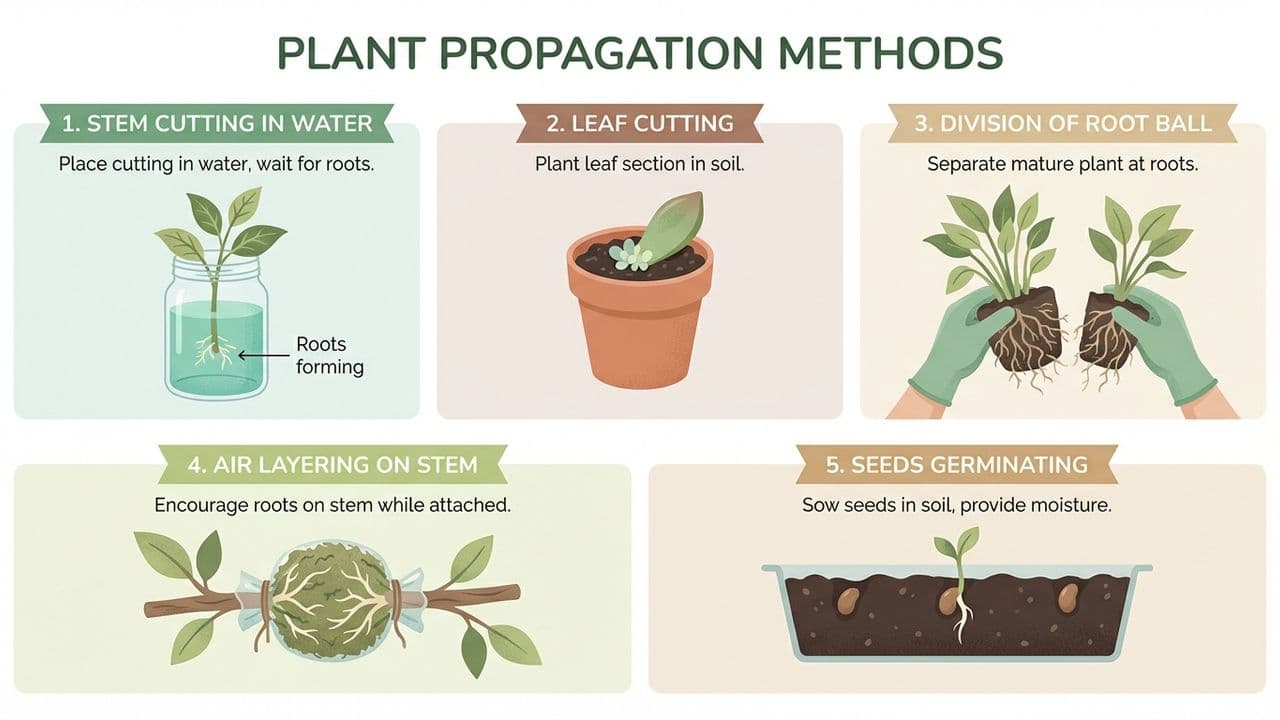
Air Layering
Root a cutting while still attached to parent plant—perfect for large specimens.
Process:
- Select a healthy stem section with nodes
- Make shallow cuts around stem or remove bark ring
- Apply rooting hormone to wound
- Wrap with moist sphagnum moss
- Cover with plastic wrap, secure ends
- Wait 4-8 weeks for roots
- Cut below roots, pot new plant
Best for: Fiddle Leaf Fig, Rubber Plant, Monstera, Dracaena
Division
Separate root systems to create multiple plants.
Best for: Peace Lily, Snake Plant, ZZ Plant, Prayer Plant, ferns
Key tips:
- Divide during repotting
- Each section needs roots + growth points
- Don't divide too small
- Keep humidity high during recovery
Propagation Troubleshooting Chart
| Problem | Likely Cause | Solution |
|---|---|---|
| Cutting wilts immediately | Excessive transpiration | Remove lower leaves, reduce light |
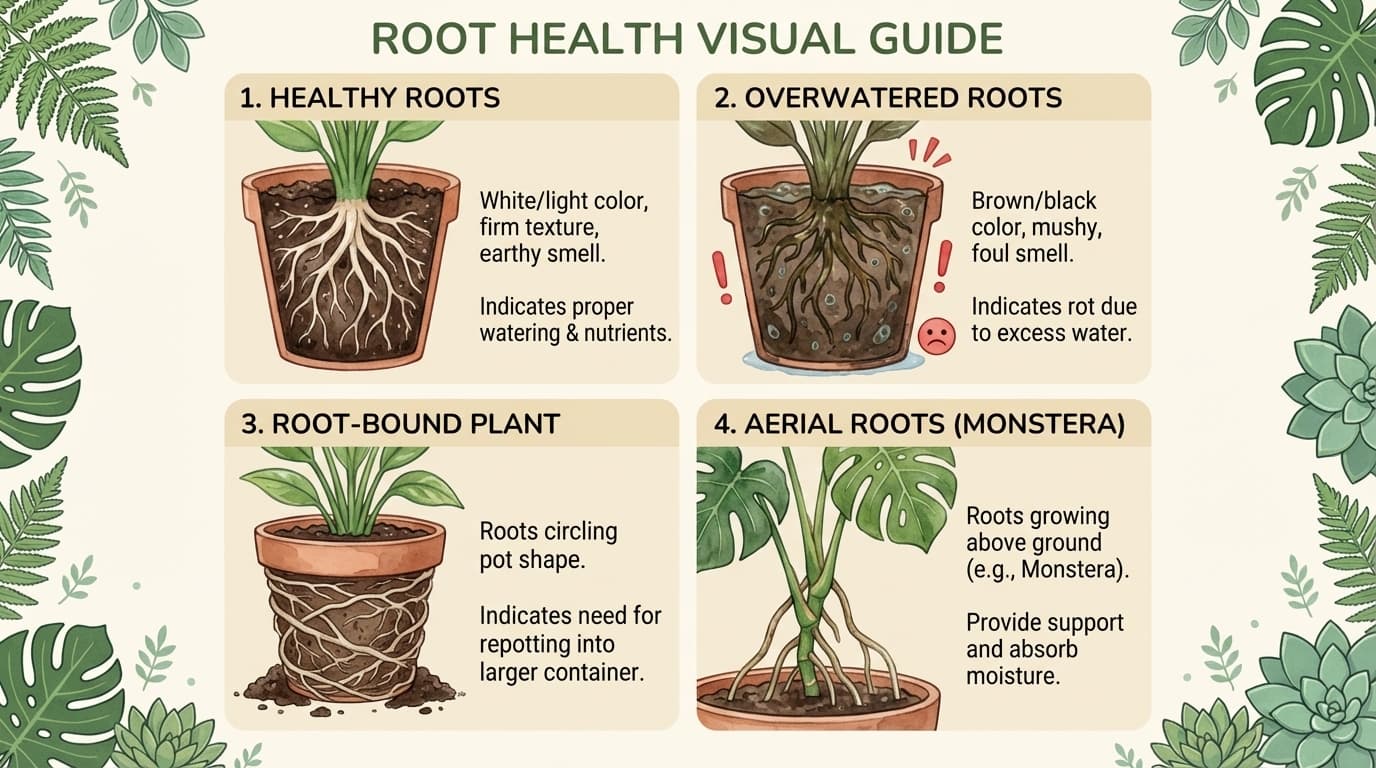
| Brown, mushy base | Rot from too much moisture | Fresh cutting, change water more often |
| Yellow leaves on cutting | Normal energy redistribution | Usually fine—focus on node health |
| Slow rooting | Cold temps, wrong season | Increase warmth, wait for growing season |
| Roots but won't grow new leaves | Energy depleted | Patient waiting, ensure adequate light |
| New growth then death | Root rot after transplant | Better transition, check root health |
Tools for Success
Essential:
- Sharp pruning shears or blade
- Clean containers (glass propagation stations work great)
- Rooting hormone (optional but helpful)
- Quality propagation soil mix
Helpful:
- Heat mat (speeds rooting)
- Humidity dome or plastic bag
- Perlite for aeration
- Sphagnum moss for air layering
Visit local nurseries for propagation supplies and species-specific advice. Many offer workshops on advanced techniques.
Building Your Propagation Routine
Propagation is a skill that improves with practice. Start with easy plants (Pothos, Spider Plant), document what works, and gradually tackle more challenging species.
Keep notes on:
- Date of cutting
- Parent plant health
- Method used
- Time to root
- Transition success/failure
This data helps you refine technique and identify patterns specific to your environment.
For basic propagation methods and getting started, see our propagation methods guide.