This guide contains affiliate links. We may earn a small commission if you purchase through our links, at no extra cost to you.
This guide is part of our comprehensive Tropical Houseplant Guide.
You've mastered the basics. Your Monstera is thriving, your Philodendrons are flourishing, and you've kept a Calathea alive for more than a month. Now what?
For many growers, the next step is advanced tropical care—creating controlled environments for demanding species, exploring semi-hydroponic growing methods, and venturing into rare and collector plants.
This guide covers techniques and setups that take tropical growing to the next level.
Table of Contents
- When You're Ready for Advanced Care
- Creating Controlled Environments
- Semi-Hydroponic Growing (LECA)
- Humidity Automation
- Rare Aroid Care
- Import Acclimation
- Investment Considerations
- Frequently Asked Questions
When You're Ready for Advanced Care
Consider advancing your setup when:
- You've successfully grown tropicals for 1+ years—you understand the basics
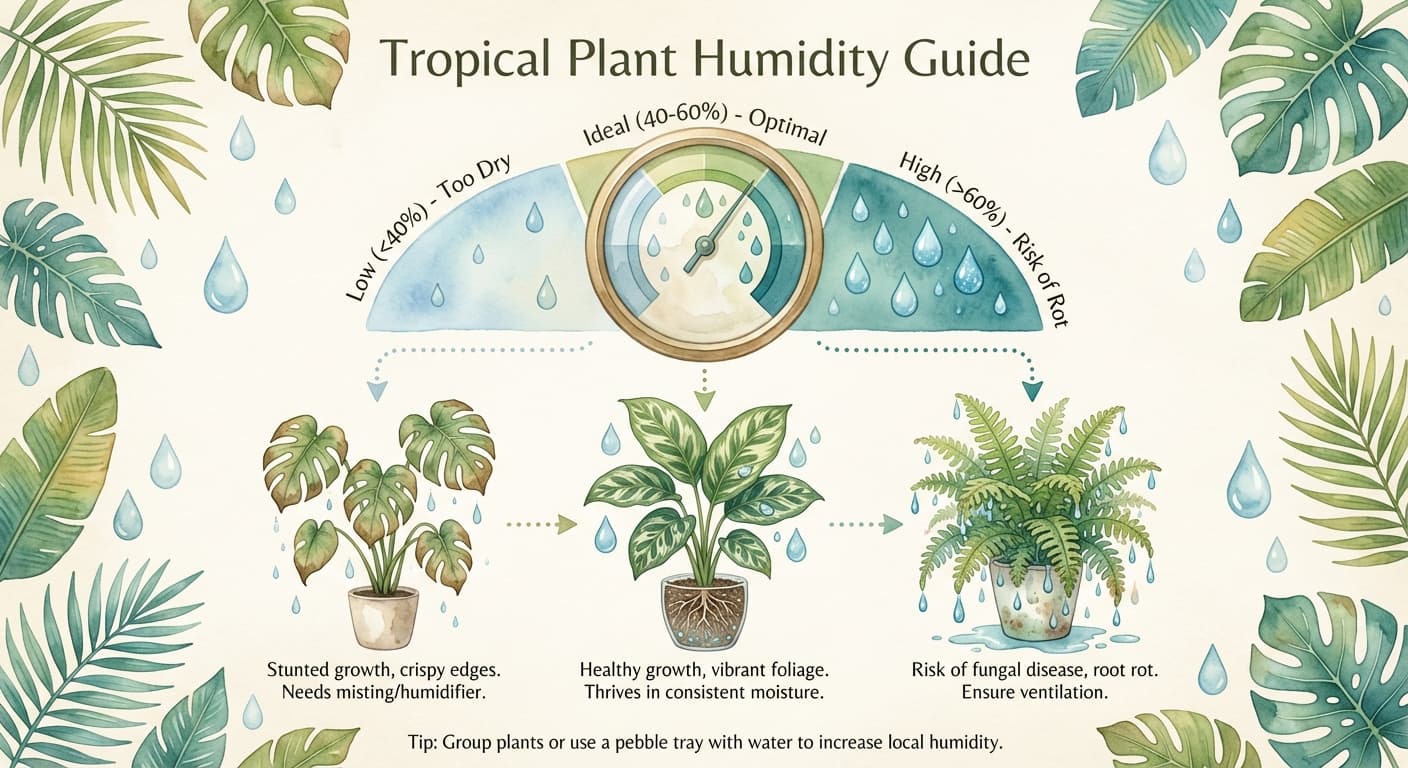
- You consistently maintain good humidity—you've solved this for existing plants
- You're interested in plants requiring 60%+ humidity—Calathea, rare aroids, velvet-leaved varieties
- You want to grow rare or expensive plants—protecting investments justifies setups
- You have space for dedicated growing areas—cabinet, shelf, or room
You don't need advanced setups for common tropicals. A Pothos or Monstera will be perfectly happy without a humidity cabinet. Advanced care is for plants that demand it—or for growers who want optimal conditions for any plant.
Creating Controlled Environments
The most significant upgrade for demanding tropicals is an enclosed or semi-enclosed growing space where you control humidity, temperature, and lighting.
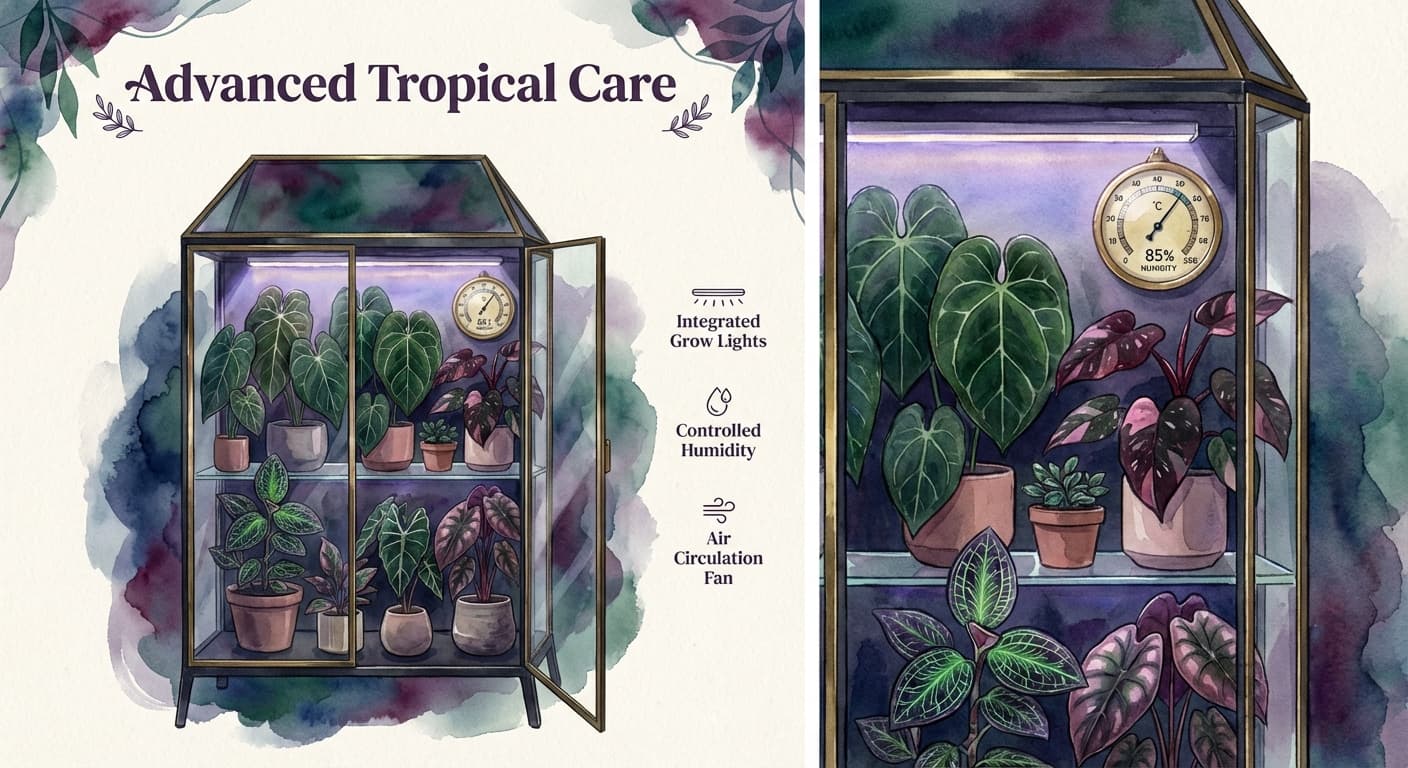
IKEA Greenhouse Cabinets
The most popular DIY approach: converting glass-fronted cabinets into plant habitats.
Popular cabinet choices:
- IKEA Milsbo (tall or wide): Most popular, good visibility, reasonable size
- IKEA Rudsta: Similar to Milsbo with different styling
- IKEA Fabrikör: Metal frame, industrial aesthetic
- IKEA Detolf: Narrow footprint, good for small spaces
Basic conversion includes:
- LED grow lights: Mounted inside the top or on shelves
- Small humidifier: Fits inside the cabinet
- Hygrometer: To monitor conditions
- Small fan: For air circulation (prevents fungal issues)
- Waterproof lining: For the bottom in case of spills
Benefits:
- Achieves 70-90% humidity easily
- Stable temperature
- Controlled lighting
- Protects plants from household air fluctuations
- Creates a beautiful display
Considerations:
- Airflow needs attention (open doors periodically or add vents)
- Heat from lights can raise temperature
- Initial setup cost ($200-500+ depending on cabinet and accessories)
Grow Tents
Originally for indoor gardening, grow tents offer complete environmental control.
Advantages:
- Designed for growing—reflective interior maximizes light
- Ventilation ports built in
- Various sizes available
- Easy to control temperature and humidity
- Higher plant capacity than cabinets
Disadvantages:
- Not decorative—most people keep them out of living spaces
- Requires more setup (lighting, ventilation)
- Can be overkill for houseplants unless you have a large collection
Dedicated Plant Rooms
For serious collectors, converting a spare room or closet into a plant space.
Considerations:
- Run multiple humidifiers for room-level humidity
- Install grow lights (ceiling-mounted or on shelving)
- Add supplemental heating if needed
- Consider a small exhaust fan for air exchange
- Protect floors and walls from moisture
Semi-Hydroponic Growing (LECA)
LECA (Lightweight Expanded Clay Aggregate) is a semi-hydroponic growing method that eliminates soil while providing consistent moisture.
What Is LECA?
Small, clay balls that absorb and wick water. Plants grow with roots among the LECA, drawing water from a reservoir at the bottom of the container.
How It Works
- Plants are removed from soil, roots cleaned
- Placed in LECA in a container without drainage holes (or with a reservoir)
- Water level maintained at the bottom (roots reach down to it)
- Nutrients added to the water (since there's no soil nutrition)
Benefits of LECA
No soil pests: Fungus gnats and other soil-dwelling pests eliminated.
Consistent moisture: Water level is visible and predictable.
Root visibility: You can see root health through clear containers.
Reduced overwatering risk: Water level is controlled, not guessed.
Clean: No soil mess, easier to maintain.
LECA Considerations
Learning curve: Transitioning plants can be tricky. Not all plants convert easily.
Nutrient requirements: You must fertilize differently—hydroponic nutrients work best.
Not for all plants: Some adapt well (Pothos, Philodendron, Monstera); others struggle.
Initial investment: LECA, appropriate pots, and nutrients cost more than soil upfront.
Conversion Process (Basic)
- Remove plant from soil
- Gently wash all soil from roots (important—soil residue causes problems)
- Trim any dead or rotting roots
- Place in container with LECA, positioning roots among the balls
- Add water to create a reservoir (typically 1/4-1/3 up the container)
- Let plant acclimate—expect some adjustment stress
Transition tip: Water roots (from water propagation) adapt to LECA more easily than soil roots. Consider water-rooting cuttings before converting to LECA.
Humidity Automation
For serious growers, automated humidity control maintains perfect conditions without constant attention.
Smart Humidifiers
Humidifiers with built-in humidity sensors or app control:
- Set target humidity levels
- Automatic on/off based on readings
- Some track data over time
Humidity Controllers
External controllers that plug into any humidifier:
- Sensor measures ambient humidity
- Turns humidifier on/off to maintain target
- Works with any basic humidifier
- More reliable than built-in sensors (sensor away from humidifier is more accurate)
Misting Systems
For larger setups:
- Timer-controlled misting nozzles
- Can maintain very high humidity in enclosed spaces
- Requires more setup but less maintenance than refilling humidifiers
Monitoring
Smart hygrometers with app connectivity let you:
- Check conditions remotely
- Set alerts for out-of-range humidity
- Track patterns over time (identify when humidity drops)
- Monitor multiple locations
Rare Aroid Care
Aroids (Araceae family) include many collector favorites: Philodendron, Anthurium, Monstera, Alocasia. Rare varieties require more attention.
What Makes Rare Aroids Demanding
- Higher humidity needs: Many need 60-80%
- Slower growth: Mistakes stay visible longer
- Less resilient: Can't bounce back from stress like common varieties
- Import stress: Many arrive from overseas in rough condition
- Investment value: Expensive plants heighten the stakes
General Care Principles
Environment first: Set up proper conditions before buying expensive plants.
Quarantine new arrivals: 2-4 weeks minimum to catch pests before they spread.
Patience: Rare plants often grow slowly. Pushing growth with excess fertilizer causes problems.
Root health priority: Good drainage, appropriate watering, and airy soil.
Anthurium Care (Collector Varieties)
Collector Anthuriums (velvet-leaved varieties, species like A. clarinervium, A. crystallinum) need:
- High humidity: 70%+ ideal, minimum 60%
- Bright indirect light: More light than many realize
- Excellent drainage: Open, airy mix (often orchid bark, perlite, sphagnum)
- Air circulation: Prevents fungal issues in humid conditions
- Warmth: Prefer 70-80°F, sensitive to cold
Philodendron Species Care
Rare Philodendrons vary in difficulty, but generally:
- Higher humidity helps: Even varieties that "tolerate" less do better with more
- Support for climbing types: Larger leaves when climbing
- Patience with gloriosum: Crawls along soil surface, needs shallow pot
- Protect variegated varieties: Need more light, grow slower
Monstera Species Care
Beyond deliciosa:
- Monstera adansonii varieties: Some forms more demanding than others
- Monstera dubia: Requires climbing surface, shingle-style growth
- Variegated Monstera: More light, slower growth, protect from stress
Import Acclimation
Many rare plants are imported from overseas growers, often arriving stressed from shipping.
What to Expect
Imported plants may arrive:
- With no soil (shipped bare-root or in sphagnum)
- With some leaf damage from transit
- In low energy state from dark shipping conditions
- Potentially with pests (hence quarantine)
Acclimation Process
1. Immediate care (Day 1)
- Unpack carefully
- Inspect for pests or rot
- If roots look dry, soak briefly in water
- Pot in appropriate medium (often sphagnum moss for recovery)
- Place in high humidity (70%+) with moderate light
2. Recovery period (Weeks 1-4)
- Keep humidity very high
- Don't fertilize yet—let roots establish
- Moderate light (not too bright initially)
- Keep soil/medium consistently moist
- Expect some leaf loss—it's normal
3. Gradual transition (Weeks 4-8)
- Slowly reduce humidity to target levels
- Increase light gradually
- Begin light fertilization once new growth appears
- Transition to final growing medium if needed
Signs of Successful Acclimation
- New root growth
- New leaf emerging
- Existing leaves staying firm
- Overall plant remaining turgid
Signs of Trouble
- Progressive leaf yellowing
- Root rot (check if leaves decline)
- No new growth after 8+ weeks
- Pest outbreak
Investment Considerations
Advanced care often involves expensive plants. Think strategically.
Before Buying Expensive Plants
Can you provide conditions? A $500 plant in wrong conditions will decline. Set up first, buy second.
Do you have backup knowledge? Research the specific plant extensively before purchasing.
Is the source reputable? Buy from established sellers with good reviews.
Is the price sustainable? Markets change. Buy plants you want to grow, not just for potential value.
Protecting Your Investment
Quarantine: Never skip it. One pest outbreak can devastate a collection.
Multiple cuttings: If your expensive plant grows well, propagate. Never keep all your eggs in one pot.
Document conditions: Know what's working so you can troubleshoot when things change.
Insurance photos: For truly valuable plants, keep dated photos as documentation.
The Value Question
Plant values fluctuate. The variegated Monstera that sold for thousands might be $100 in a few years as production increases. Buy plants because you want to grow them, not as investments.
Frequently Asked Questions
Do I need a greenhouse cabinet for rare plants?
Not always, but enclosed environments make high-humidity plants much easier. If your home is dry (below 50%), a cabinet significantly improves success with demanding species.
Is LECA better than soil?
Different, not better. LECA offers consistency and pest reduction but requires learning and isn't suitable for all plants. Soil works perfectly well for most growers.
How much should I spend on setups before expensive plants?
It depends on what you want to grow. A basic cabinet conversion runs $200-400. This is worthwhile if you're aiming for plants needing 60%+ humidity. For easier rare plants, a good humidifier ($50-100) might be enough.
What's the most important factor for rare aroids?
Humidity and root health, usually in that order. Get humidity right, then ensure excellent drainage and appropriate watering.
How long does import acclimation take?
Typically 4-8 weeks before plants stabilize, sometimes longer for heavily stressed specimens. Patience is essential.
Are rare plants worth the difficulty?
Subjective. If you enjoy the challenge and beauty of rare varieties, yes. If you prefer easy-care greenery, common plants are equally beautiful and far less stressful.
Should I start with rare plants as a beginner?
No. Master common varieties first. The skills you develop with Pothos, Philodendron, and Monstera directly apply to rare varieties—but rare plants don't forgive the learning curve.
Key Takeaways
- Advanced care serves demanding plants: Don't over-engineer setups for plants that don't need them
- Environment first: Create proper conditions before acquiring expensive plants
- Controlled environments work: Cabinet conversions and humidity automation make difficult plants achievable
- LECA is a tool, not magic: It solves some problems while creating new learning curves
- Rare plants reward patience: Slow growth and acclimation are normal—rushing causes problems
Advanced tropical care opens access to stunning plants that most growers can't maintain. The investment in setups and knowledge pays off in specimens that truly make your collection unique.
For complete tropical plant care, return to our Complete Guide to Tropical Houseplants.