This guide contains affiliate links. We may earn a small commission if you purchase through our links, at no extra cost to you.
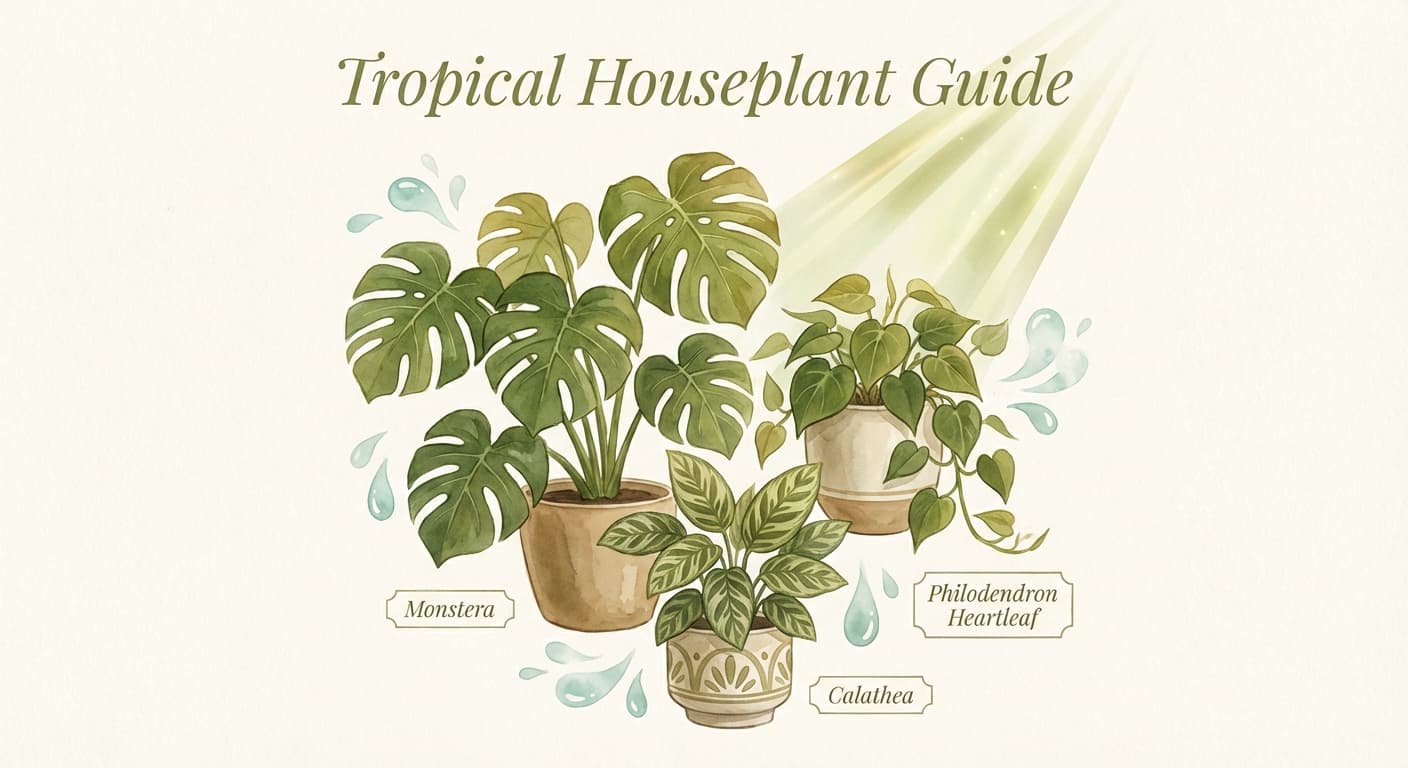
There's something almost magical about walking into a room filled with tropical houseplants. Those massive Monstera leaves with their distinctive splits, the intricate patterns on Calathea foliage, the lush trailing vines of a well-grown Philodendron—these plants transform ordinary spaces into living, breathing sanctuaries.
But if you've ever tried to grow tropical plants indoors, you know the frustration. That beautiful Calathea from the nursery? Crispy edges within a week. The Monstera that looked so healthy in the store? Yellow leaves and drooping stems a month later. It's enough to make anyone believe they just can't grow these plants.
Here's what most people don't realize: tropical plants aren't inherently difficult. They're just different. They evolved in environments nothing like our climate-controlled homes, and when we understand what they actually need—not what we assume they need—keeping them thriving becomes surprisingly straightforward.
This guide is your complete roadmap to tropical houseplant success. We'll cover everything from understanding why these plants behave the way they do, to creating the right environment, to troubleshooting problems when they arise. Whether you're eyeing your first Monstera or trying to finally crack the code on Calathea care, you'll find the answers here.
What you'll learn:
- Why tropical plant care is fundamentally different from other houseplants
- The "Big Three" factors that determine tropical plant success
- How to assess and optimize your home environment for tropical plants
- Species-specific care for the most popular tropical varieties
- How to troubleshoot and solve common tropical plant problems
- When you're ready to level up to rare and challenging species
Let's turn your home into the indoor jungle you've always wanted.
Table of Contents
- Why Tropical Plants Are Different
- Understanding Tropical Plant Origins
- The Big Three: Humidity, Light, and Water
- Choosing the Right Tropical Plants
- Creating the Right Environment
- Watering Tropical Houseplants
- Light Requirements for Tropicals
- Soil and Potting
- Fertilizing Tropical Plants
- Seasonal Care
- Common Problems and Solutions
- Pests That Love Tropical Plants
- Propagating Your Tropicals
- Popular Tropical Plant Profiles
- Advanced Tropical Care
- Resources and Next Steps
- Frequently Asked Questions
Why Tropical Plants Are Different
Before we dive into care specifics, let's address the fundamental question: what makes tropical houseplants different from other indoor plants?
The answer lies in evolution. Most common houseplants—Pothos, Snake Plants, ZZ Plants—come from regions with distinct dry seasons. They evolved to survive periods of drought, which is why they're so forgiving of inconsistent watering and low humidity. These are the "starter plants" that tolerate apartment conditions without complaint.
True tropical plants evolved in equatorial rainforests where conditions stay remarkably consistent year-round. Temperatures hover between 70-85°F, humidity rarely drops below 60%, and rainfall is frequent but drainage is excellent. There's no winter dormancy, no dry season survival mode—just consistent growth in a consistently favorable environment.
When we bring these plants into our homes, we're asking them to adapt to conditions their biology never prepared them for. Central heating dries the air to desert-like 20-30% humidity. Air conditioning creates temperature swings. Winter brings shorter days with weaker light. No wonder they struggle.
The good news? Once you understand what these plants actually experience in nature, creating suitable conditions becomes a solvable problem rather than a mystery.
Key differences from non-tropical houseplants:
| Factor | Non-Tropical (Pothos, Snake Plant) | Tropical (Monstera, Calathea) |
|---|---|---|
| Humidity tolerance | Adapts to 30-50% easily | Prefers 50-70%+, some need 60%+ |
| Watering forgiveness | Survives missed waterings | More sensitive to dry-out |
| Light adaptation | Extremely flexible | Moderate flexibility |
| Temperature sensitivity | Tolerates wide range | Prefers consistent 65-80°F |
| Growth pattern | Slows/stops easily | Wants to grow year-round |
Understanding these differences is the first step to tropical plant success. You're not failing—you're just learning a different set of rules.
Understanding Tropical Plant Origins
To truly master tropical plant care, it helps to picture where these plants actually come from. Most popular tropical houseplants originate from the understory of rainforests—the shadowy lower levels beneath the towering canopy trees.
Rainforest Floor Dwellers
Plants like Calathea, Maranta, and many Philodendrons grow on the forest floor where direct sunlight rarely penetrates. They receive bright but diffused light filtered through multiple layers of leaves above. This is why they burn when placed in direct sun but thrive in what we'd consider "medium" indoor light.
The forest floor is also constantly moist but never waterlogged. Fallen leaves create a spongy, well-draining layer that holds moisture while allowing roots to breathe. This explains why tropical plants need soil that retains moisture but drains freely—heavy, compacted soil suffocates their roots.
Epiphytes and Climbers
Monstera, many Philodendrons, and plants like Hoya grow as epiphytes or climbers. They start on the forest floor but climb tree trunks toward the light, sending aerial roots into tree bark and accumulated debris in branch crotches. Some never touch soil at all as mature plants.
These climbing tropicals have evolved aerial roots that absorb moisture directly from humid air. When humidity drops too low, these roots desiccate and can't serve their function. This is why climbers often benefit from moss poles and higher humidity more than floor-dwelling tropicals.
What This Means for Your Care
Understanding origins transforms how you think about tropical plant care:
- "Bright indirect light" mimics dappled forest light, not a sunny windowsill
- High humidity isn't a luxury—it's baseline environmental conditions
- Chunky, airy soil replicates the forest floor's loose organic layer
- Consistent watering reflects rainfall patterns, not drought cycles
- Stable temperatures match the equatorial climate's consistency
For a deep dive into matching specific plants to your skill level, see our guide on choosing tropical plants by difficulty.
The Big Three: Humidity, Light, and Water
Every tropical plant problem ultimately traces back to one of three factors: humidity, light, or water. Master these, and you'll solve 90% of the issues tropical plant owners face.
Humidity: The Hidden Factor
Humidity is the factor most people underestimate. Your home's humidity likely hovers around 30-40% in winter (with heating) and 40-50% in summer. Most tropical plants prefer 50-70%, with some divas like Calathea needing 60%+ consistently.
Signs of low humidity include:
- Crispy leaf edges and tips (especially on thin-leaved plants)
- Leaves that curl inward to conserve moisture
- New leaves that emerge deformed or stunted
- Aerial roots that dry out and become papery
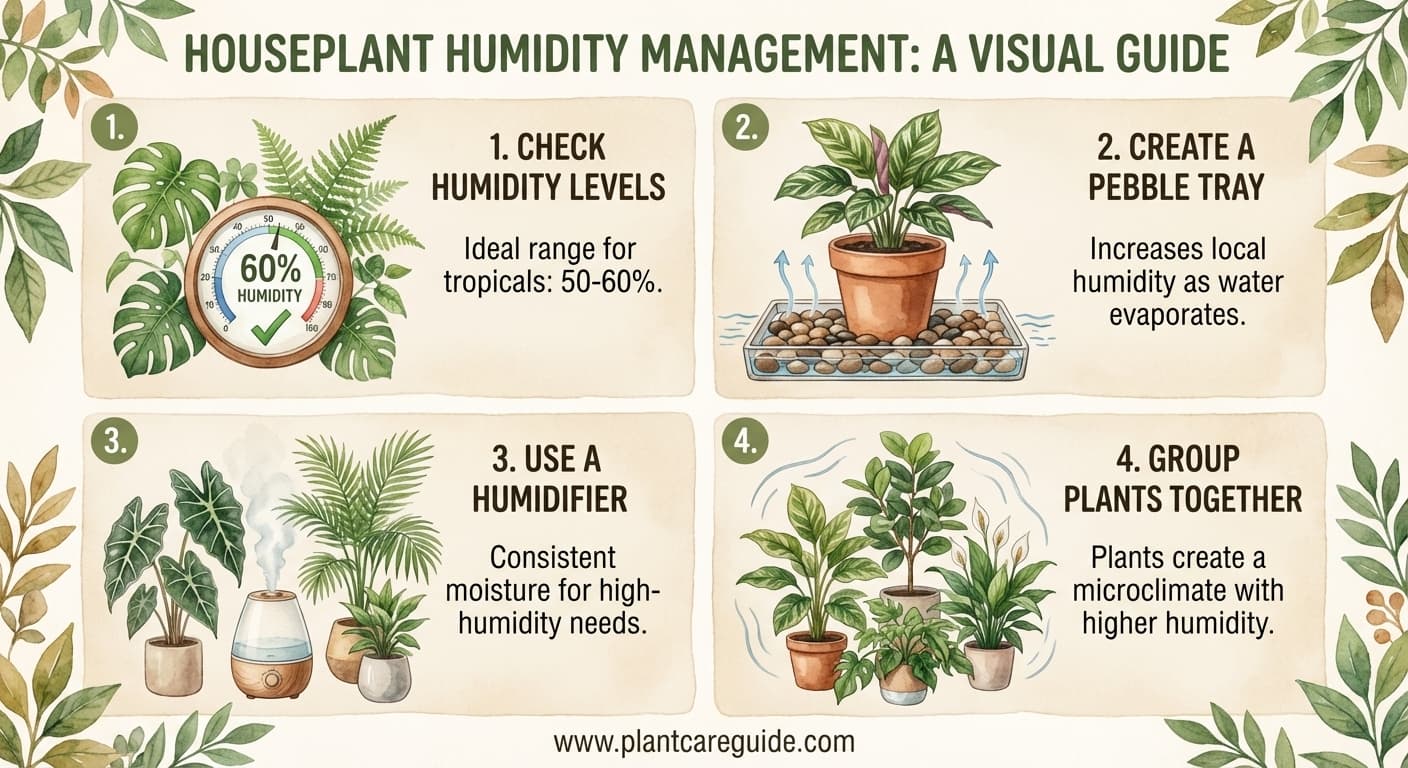
We've written an entire guide on humidity management for tropical plants, but the short version: invest in a hygrometer, consider a humidifier, and group plants together to create humidity microclimates.
Light: Quality Over Quantity
"Bright indirect light" is the most common care instruction—and the most commonly misunderstood. What does it actually mean?
Imagine standing under a tree on a sunny day. You're in shade, but it's bright shade—you could easily read a book. Occasional sun flecks dance across you as leaves move in the breeze, but you're not in sustained direct sunlight. That's bright indirect light.
Most tropical plants want this level of brightness for several hours daily. They'll tolerate lower light but grow slowly and may become leggy. Direct sun (unobstructed sunlight hitting leaves) causes bleaching and brown patches on most tropical foliage.
The exception: some tropicals can handle morning sun from east-facing windows. The gentler morning rays rarely cause damage. Afternoon sun from west or south windows is harsher and more likely to burn.
For specific guidance on natural light versus grow lights, see our tropical plant lighting guide.
Water: The Balancing Act
If there's one thing that kills more tropical plants than any other factor, it's watering mistakes—usually overwatering, but sometimes letting them dry out completely.
The goal is consistent moisture without soggy soil. Most tropical plants want their soil to stay lightly moist, drying slightly between waterings but never bone dry. Think of a wrung-out sponge: damp but not dripping.
How often this means watering depends entirely on:
- Your pot size and material
- Your soil composition
- Your home's humidity and temperature
- The season and your plant's growth rate
Rather than following a schedule, learn to check soil moisture. Stick your finger an inch or two into the soil. If it feels dry at that depth, most tropicals are ready for water. If it's still moist, wait a few more days.
Our comprehensive tropical plant watering guide covers techniques, troubleshooting, and species-specific advice.
Choosing the Right Tropical Plants
Not all tropical plants are equally demanding. Starting with forgiving species builds your confidence before tackling challenging varieties that punish every mistake.
Beginner-Friendly Tropicals
These plants have earned their reputation for tolerating the typical indoor environment:
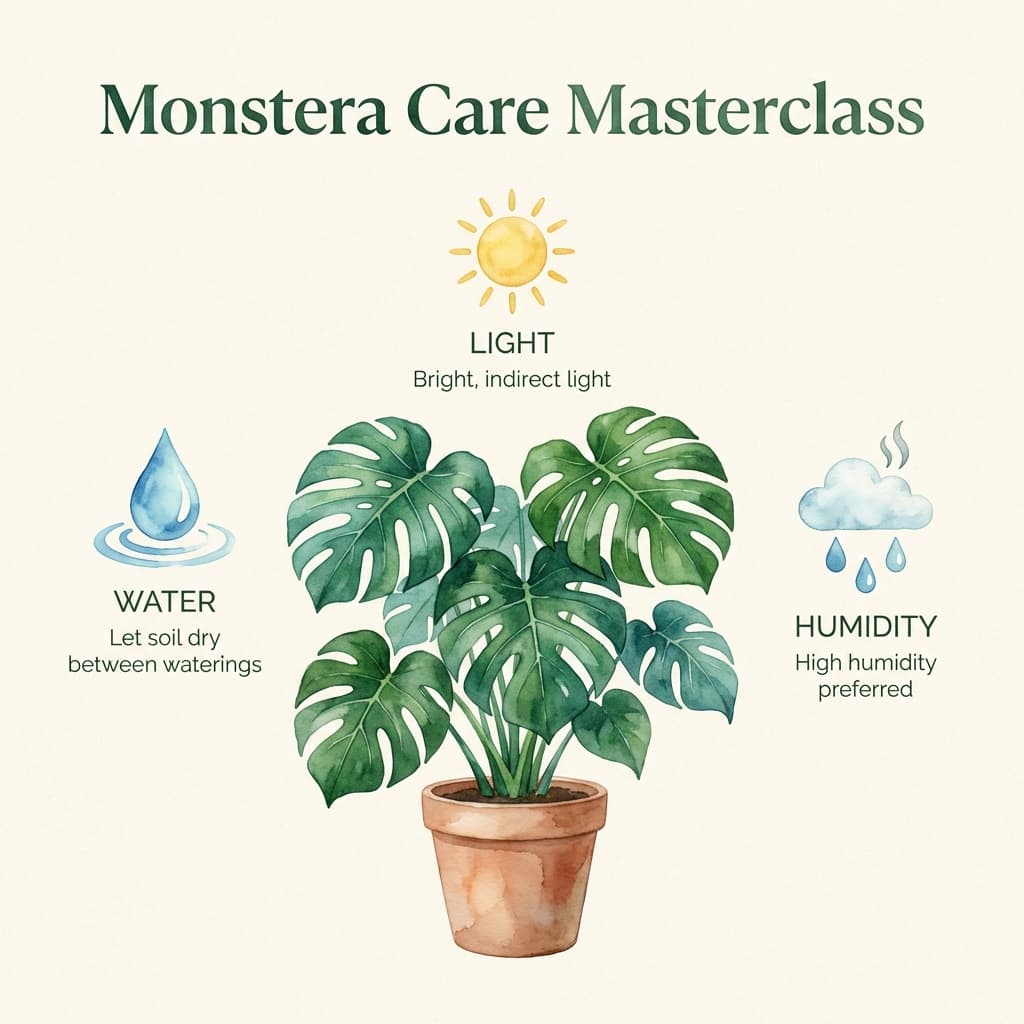
Monstera deliciosa (Swiss Cheese Plant): Despite its dramatic appearance, Monstera is surprisingly adaptable. It tolerates lower humidity than most tropicals, handles inconsistent watering reasonably well, and grows happily in medium to bright indirect light. The main challenge is providing adequate support as it grows.
Pothos (Epipremnum aureum): Technically tropical, Pothos has become the ultimate beginner plant because it tolerates almost anything. It's the perfect gateway plant before moving to more demanding tropicals.
Heart-leaf Philodendron: A close relative of Pothos with similar tolerance. Heart-leaf Philodendrons handle lower light, irregular watering, and average humidity better than most tropicals.
Bird of Paradise (Strelitzia): This architectural plant tolerates lower humidity and can handle some direct sun. It's slow-growing but incredibly resilient once established.
Intermediate Tropicals
Once you've succeeded with beginners, these plants offer more reward for more attention:
Philodendron varieties (Pink Princess, Birkin, Brasil): While harder than heart-leaf, most Philodendrons remain relatively forgiving. They appreciate higher humidity but adapt to moderate levels.
Alocasia: These striking plants with their arrow-shaped leaves need higher humidity and consistent moisture but aren't as finicky as their reputation suggests. They do go dormant in winter, which panics new owners who think they're dying.
Fiddle Leaf Fig: Actually a Ficus, not a true tropical, but culturally grouped with them. Fiddle Leaf Figs demand consistency—same location, same watering schedule, same conditions. They protest change dramatically but settle into routine care once established.
Advanced Tropicals
These plants require specific conditions and punish inconsistency:
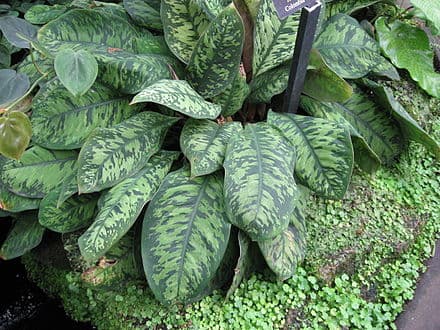
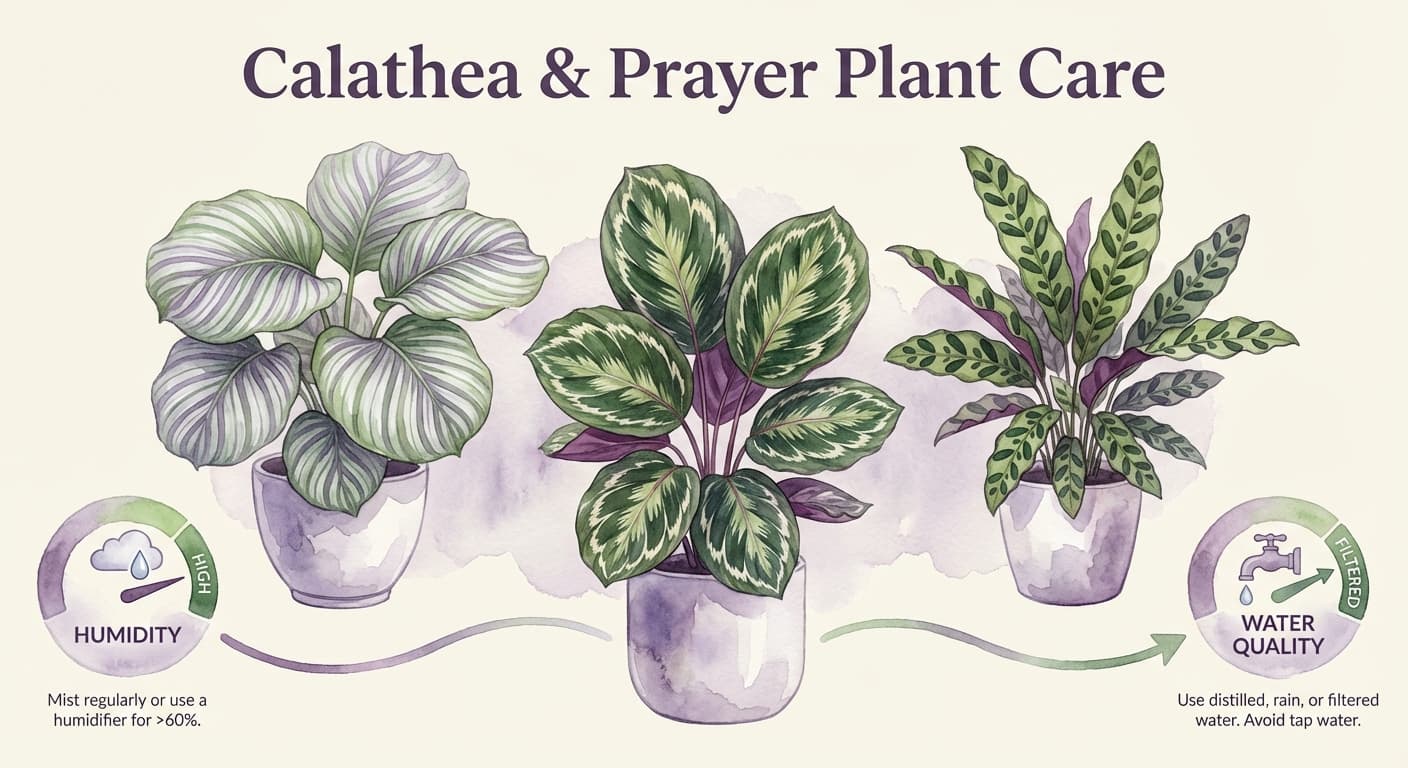
Calathea and Maranta (Prayer Plants): The poster children for "beautiful but difficult." They need 60%+ humidity, filtered or distilled water (they're sensitive to minerals and chlorine), consistent moisture, and protection from drafts. Their stunning patterned leaves make them worth the effort for dedicated growers.
Anthurium: While some Anthuriums are fairly easy, many of the collector varieties need greenhouse-like conditions—high humidity, warmth, and excellent air circulation.
Rare Aroids: Variegated Monstera, Philodendron gloriosum, and similar collector plants often require controlled environments with consistently high humidity, carefully managed watering, and protection from pests.
For complete breakdowns by skill level, see our guide on tropical plants by difficulty.
Creating the Right Environment
The single biggest thing you can do for tropical plants is create an environment that meets their needs, rather than fighting their nature with intensive care.
Room Selection
Not all rooms are created equal for tropical plants. Consider:
Bathrooms: The humidity from showers makes bathrooms ideal for humidity-loving tropicals—if they have adequate light. A bathroom with a window can host Calathea, ferns, and air plants beautifully.
Kitchens: Steam from cooking boosts humidity, and many kitchens have good natural light. Just keep plants away from stove heat and cold drafts from frequently opened doors.
Living areas: Most living rooms have moderate light and average humidity. These work well for beginner and intermediate tropicals but may need humidity supplementation for demanding species.
Bedrooms: Often similar to living areas. If your bedroom has a humidifier running overnight (common for sleep quality), it might be your best tropical plant location.
The Tropical Corner Strategy
Rather than scattering plants throughout your home, consider creating a dedicated tropical corner or plant grouping. Here's why this works:
Humidity pooling: Plants release moisture through transpiration. Group plants together, and they create a humid microclimate that benefits everyone. A corner with 10 plants has noticeably higher humidity than a single plant isolated in a room.
Care efficiency: When all your tropical plants are in one area, you can run a single humidifier that benefits them all. You check moisture levels in one spot during your care routine.
Visual impact: A grouping of tropical plants creates a lush, jungle-like display that a single plant can't match.
For a complete setup guide, see how to create a tropical plant corner.
Humidity Solutions
If your home's humidity stays below 50%, you have several options:
Humidifiers: The most effective solution. A good humidifier in your plant area can raise humidity 10-20% or more. Cool mist and warm mist types both work; choose based on your preferences and climate.
Pebble trays: Shallow trays filled with pebbles and water, placed beneath plants. As water evaporates, it raises immediate humidity slightly. Effective for mild boosts, not sufficient for humidity-demanding plants.
Grouping: As mentioned, grouping plants together raises the local humidity through combined transpiration.
Terrariums and cabinets: For the most demanding tropicals, enclosed or semi-enclosed growing environments maintain very high humidity. IKEA cabinet conversions have become popular for rare plant collections.
Temperature Considerations
Most tropical plants prefer temperatures between 65-80°F (18-27°C). They can handle brief excursions outside this range but protest sustained cold or heat.
Watch out for:
- Cold drafts: Windows in winter, air conditioning vents, exterior doors
- Heat sources: Radiators, heating vents, fireplaces
- Temperature swings: Don't place tropicals where temperatures vary dramatically between day and night
Calathea and other prayer plants are particularly sensitive to cold—they'll show their displeasure with curled leaves and brown spots.
Watering Tropical Houseplants
Watering seems simple until you're staring at a yellow-leaved Monstera wondering what went wrong. Let's break down tropical plant watering properly.
The Moisture Sweet Spot
Most tropical plants want soil that stays consistently moist but never waterlogged. Picture that wrung-out sponge: damp throughout but not dripping wet.
Too wet (overwatering):
- Soil stays soggy for days after watering
- Yellowing leaves, especially lower leaves
- Soft, mushy stems at soil level
- Fungus gnats (they love wet soil)
- Root rot (brown, mushy roots when you check)
Too dry (underwatering):
- Soil pulls away from pot edges when dry
- Drooping, wilting leaves
- Crispy brown leaf edges
- Leaves that feel thin or papery
- Slow or stunted growth
Checking Before You Water
Never water on a schedule. Check first, every time.
The finger test: Stick your finger 1-2 inches into the soil. If it feels dry at that depth, water. If it's still moist, wait.
The lift test: After a while, you'll know how heavy your pots feel when wet versus dry. A light pot usually needs water.
Moisture meters: Helpful for large pots where you can't easily reach deep soil. Insert the probe into the root zone (not just the surface) for accurate readings.
Watering Techniques
Top watering: The standard approach—pour water onto the soil surface until it drains from the bottom. Ensure all the soil gets wet, not just one spot. Empty saucers after 30 minutes; plants shouldn't sit in standing water.
Bottom watering: Place the pot in a basin of water and let the soil absorb moisture from below. This ensures thorough hydration and encourages roots to grow downward. Particularly good for plants prone to crown rot.
Soaking: For very dry soil that's become hydrophobic (water runs right through), soak the entire pot in water for 15-30 minutes until the soil is rehydrated.
Water Quality Matters
Some tropical plants are sensitive to minerals and chemicals in tap water:
Calathea, Maranta, and Dracaena develop brown leaf tips from fluoride and chlorine in tap water. Use filtered water, rainwater, or let tap water sit overnight to off-gas chlorine.
Most other tropicals tolerate normal tap water fine, though very hard water can build up mineral deposits on soil over time.
For complete watering guidance, see our tropical plant watering guide.
Light Requirements for Tropicals
Light is energy for plants. Get it wrong, and even perfect watering and humidity won't save your tropicals.
Understanding Light Levels
Bright indirect light: 10,000-20,000 lux or 400-800+ foot-candles. Near a window but not in direct sun. Bright enough to read comfortably without straining.
Medium light: 2,500-10,000 lux or 100-400 foot-candles. Several feet from a bright window, or directly at a north-facing window (in the Northern Hemisphere).
Low light: Under 2,500 lux or 100 foot-candles. Far from windows, in hallways, in rooms with small or obstructed windows. Few tropicals thrive here.
Window Direction Guide
East-facing windows: Gentle morning sun. Many tropicals can handle direct morning light here, making east windows excellent for most species.
North-facing windows: Consistent indirect light, no direct sun. Good for low-to-medium light tropicals like Calathea, but may be too dim for high-light plants.
West-facing windows: Hot afternoon sun. Keep most tropicals back from the glass or filtered by sheer curtains. The intense afternoon light can burn sensitive leaves.
South-facing windows: Brightest but also harshest direct sun (in the Northern Hemisphere). Excellent for tropical plants if positioned a few feet back from the glass or filtered.
When to Add Grow Lights
Consider supplemental lighting when:
- Your plant is stretching toward light or growing leggy
- New leaves are smaller than older ones
- Variegated plants are reverting to all-green (the plant prioritizes chlorophyll)
- Winter significantly reduces available natural light
- You want to grow tropicals in rooms without good natural light
Modern LED grow lights can supplement or replace natural light effectively. They're particularly valuable during winter months when natural light diminishes.
For detailed grow light recommendations and setup advice, see our tropical plant lighting guide.
Soil and Potting
Tropical plants need soil that does two seemingly contradictory things: retain moisture while draining quickly. Here's how to achieve that balance.
The Ideal Tropical Soil Mix
Standard potting soil is usually too dense and moisture-retentive for tropical plants. It compacts over time, stays wet too long, and suffocates roots.
A good tropical mix includes:
Base (40-50%): Quality potting soil or coco coir Drainage amendments (30-40%): Perlite, pumice, or orchid bark Organic matter (10-20%): Worm castings, compost, or aged bark
This creates a soil that holds moisture in the organic matter while excess water drains quickly through the amendments. Roots get both the moisture and oxygen they need.
DIY Tropical Soil Recipe
A simple, effective mix:
- 2 parts indoor potting soil
- 1 part perlite
- 1 part orchid bark (medium grade)
- Optional: handful of horticultural charcoal (reduces fungal issues)
For epiphytes like Monstera and Philodendron, increase the bark and perlite for even chunkier drainage.
Pot Selection
Material matters:
- Terracotta: Porous, allows soil to dry faster. Good for plants prone to overwatering. May dry out too quickly in low-humidity environments.
- Plastic: Retains moisture longer. Good for humidity-loving tropicals and forgetful waterers.
- Ceramic (glazed): Similar to plastic in moisture retention. Heavier and more decorative.
Drainage is non-negotiable: Always use pots with drainage holes. No layer of rocks at the bottom can substitute for actual drainage. Decorative cache pots without holes are fine if you remove the plant to water and drain.
Size appropriately: Pots only slightly larger than the root ball (1-2 inches wider) are ideal. Too-large pots hold excess moisture that roots can't use, leading to root rot.
For more on soil selection, see our soil selection guide.
Fertilizing Tropical Plants
Tropical plants evolved in nutrient-cycling environments where decomposing organic matter constantly replenished soil nutrition. In pots, that cycling doesn't happen—we have to provide nutrients.
When to Fertilize
Growing season (spring through early fall): Most tropical plants are actively growing and benefit from regular feeding. Every 2-4 weeks with a balanced liquid fertilizer works well for most species.
Winter/dormancy: Growth slows dramatically, and nutritional needs decrease. Reduce or stop fertilizing from late fall through early spring. Continuing to fertilize plants that aren't growing can lead to salt buildup and root damage.
What to Feed
Balanced fertilizers (like 10-10-10 or 20-20-20) work well for most tropical foliage plants. The three numbers represent nitrogen (leaf growth), phosphorus (root and flower development), and potassium (overall plant health).
Foliage-focused fertilizers with higher nitrogen (like 3-1-2 ratio) encourage lush leaf growth—perfect for tropicals grown for their foliage rather than flowers.
Dilution is key: It's better to fertilize weakly but regularly than strongly but occasionally. Most growers dilute to half the recommended strength and feed more frequently. This provides steady nutrition without the risk of fertilizer burn.
Signs of Fertilizer Issues
Under-fertilized:
- Pale, yellowing leaves (especially older leaves)
- Slow growth despite good light and water
- Smaller new leaves than expected
Over-fertilized:
- Brown leaf edges and tips
- White crusty buildup on soil surface
- Wilting despite moist soil
- Root burn (brown, damaged roots)
For complete fertilizing guidance, see our fertilizing houseplants guide.
Seasonal Care
While tropical plants don't experience true dormancy like temperate species, they do respond to seasonal changes in your home—even if those changes are subtle.
Spring Awakening (March-May)
As days lengthen and light increases, tropical plants ramp up growth. This is the time to:
- Resume or increase fertilizing
- Check if plants need repotting (roots circling the pot or emerging from drainage holes)
- Take cuttings for propagation—plants root faster during active growth
- Increase watering frequency as plants use more water
- Inspect carefully for overwintering pests that multiply as warmth returns
Summer Growth (June-August)
Peak growing season for most tropicals. They'll be at their most vigorous but also most demanding:
- Water more frequently as warmth and growth increase water needs
- Watch for heat stress if your home gets hot (wilting, leaf drop)
- Protect from intense afternoon sun which is stronger in summer
- Fertilize regularly to support active growth
- Consider moving plants outdoors to a shaded patio if temperatures allow
Fall Transition (September-November)
As days shorten, plants prepare for slower growth:
- Reduce watering frequency as growth slows
- Taper off fertilizing by late October
- Move any plants summering outdoors back inside before nights drop below 55°F
- Check for pests before bringing plants indoors—treat any issues first
- Reposition plants to capture maximum light as the sun angle changes
Winter Survival (December-February)
The most challenging season for tropical plants in most homes:
- Watering needs decrease significantly—check soil carefully before watering
- Stop fertilizing completely
- Boost humidity as heating dries the air (humidifiers become essential)
- Maximize light exposure—move plants closer to windows if needed
- Protect from cold drafts near windows and exterior doors
- Don't panic if growth stops or slows dramatically—it's normal
For detailed seasonal guidance, see our guides on winter care, summer care, and spring/fall transitions.
For a month-by-month breakdown specific to tropical plants, see our tropical plant care calendar.
Common Problems and Solutions
Even well-cared-for tropical plants encounter problems. Here's how to diagnose and fix the most common issues.
Yellow Leaves
On older/lower leaves: Usually normal aging. Plants shed older leaves to redirect energy to new growth. If it's just one or two lower leaves occasionally, don't worry.
On multiple leaves or new growth: Indicates a problem. Most commonly:
- Overwatering (check soil moisture, roots)
- Underwatering (severe drought stress)
- Nutrient deficiency (especially nitrogen)
- Root rot (from prolonged overwatering)
See our yellow leaves troubleshooting guide for detailed diagnosis.
Brown Leaf Tips and Edges
The most common tropical plant complaint, usually caused by:
Low humidity: The most frequent culprit, especially in winter. Thin-leaved plants like Calathea show this first.
Water quality: Fluoride and chlorine in tap water cause tip burn on sensitive species.
Underwatering: Inconsistent moisture leads to tip dieback.
Fertilizer burn: Too much fertilizer damages leaf edges.
For complete diagnosis, see our brown leaf tips guide.
Drooping Leaves
If soil is dry: The plant needs water. Tropical plants droop dramatically when thirsty but usually recover quickly after watering.
If soil is wet: Possible root rot. Roots damaged by rot can't transport water, causing wilting even in wet soil. Remove the plant, check roots, and trim any that are brown and mushy.
Stunted or Slow Growth
Low light: The most common cause. Plants need adequate light energy to grow.
Root-bound: If roots have filled the pot, the plant may stall until repotted.
Wrong season: Growth naturally slows in fall/winter.
Nutrient deficiency: Lack of fertilizer limits growth during growing season.
Leggy Growth
Stems stretching toward light with large gaps between leaves indicates insufficient light. Move to a brighter location or add grow lights. You can prune leggy plants and propagate the cuttings.
For comprehensive problem-solving, see our tropical plant troubleshooting guide.
Pests That Love Tropical Plants
The same conditions tropical plants love—warmth and humidity—also attract pests. Regular inspection catches problems early.
Spider Mites
Tiny arachnids that thrive in hot, dry conditions. You might notice:
- Fine webbing on leaf undersides
- Stippled, pale patches on leaves
- Leaves that look dusty
Prevention: Keep humidity high. Spider mites hate humidity. Treatment: Spray with water to dislodge, then treat with neem oil or insecticidal soap.
Thrips
Slender insects that rasp plant cells, causing:
- Silvery streaks or patches on leaves
- Black dots (feces) on leaf surfaces
- Deformed new growth
Treatment: Blue sticky traps catch adults. Spinosad or neem oil for infestations.
Fungus Gnats
Small flies that hover around soil. Larvae live in moist soil and feed on organic matter (and occasionally roots):
- Adult gnats flying near soil surface
- Larvae visible as tiny white worms in soil
- More annoying than damaging unless severe
Prevention: Let soil dry more between waterings. Use bottom watering. Treatment: Sticky traps for adults. BTI (Mosquito Bits) kill larvae.
Mealybugs
White, cottony masses in leaf axils and on stems. They suck sap and excrete sticky honeydew.
Treatment: Dab with rubbing alcohol, spray with insecticidal soap. Quarantine infected plants.
Scale
Immobile bumps on stems and leaves that look like part of the plant. They suck sap and weaken plants over time.
Treatment: Scrape off with fingernail or soft brush. Apply neem oil or horticultural oil.
For complete pest management strategies, see our Houseplant Pest Mastery Guide. For thrips—a common tropical pest—see our dedicated thrips guide.
Propagating Your Tropicals
One of the joys of tropical plants is how easily many propagate. With basic technique, you can multiply your collection for free or share with friends.
Water Propagation
The easiest method for most tropical vines and aroids:
- Cut a stem section with at least one node (the bumpy joint where leaves emerge)
- Remove leaves from the bottom portion that will be submerged
- Place in clean water, node submerged
- Change water weekly to prevent bacteria
- Wait for roots to develop (usually 2-4 weeks)
- Pot in soil once roots are 2-3 inches long
Works beautifully for: Pothos, Philodendron, Monstera, Tradescantia
Soil Propagation
Some plants root directly in moist soil:
- Take cutting as above
- Dip cut end in rooting hormone (optional but helps)
- Plant in moist, well-draining soil
- Cover with plastic bag or place in high-humidity environment
- Keep soil consistently moist but not soggy
- Wait for new growth to confirm rooting (usually 3-6 weeks)
Better for: Ficus, some Philodendron varieties, plants that rot easily in water
Division
For clumping plants that produce multiple growing points:
- Remove plant from pot
- Gently separate root masses at natural division points
- Pot divisions in appropriate-sized containers
- Keep moist and warm until established
Works for: Calathea, Maranta, Bird of Paradise, many ferns
Air Layering
For large plants where you want to propagate without cutting:
- Select a node on the stem
- Make a small wound and apply rooting hormone
- Wrap with moist sphagnum moss and plastic wrap
- Wait for roots to develop (visible through plastic)
- Cut below the new roots and pot
Best for: Large Monstera, Ficus, mature climbing Philodendrons
For complete propagation techniques, see our tropical plant propagation guide and our advanced propagation guide.
Popular Tropical Plant Profiles
Let's look at the most popular tropical houseplants in more detail.
Monstera (Swiss Cheese Plant)
The iconic tropical houseplant, beloved for its dramatic split leaves.
Light: Bright indirect. Tolerates medium light but won't develop as many splits. Water: Let top inch dry between waterings. Humidity: Prefers 50%+ but tolerates average household humidity. Special needs: Provide a moss pole or support for climbing. Splits develop on mature leaves with adequate light.
Monstera is more forgiving than its exotic appearance suggests, making it an excellent first "statement" tropical.
For complete care, see our Monstera care guide.
Calathea and Prayer Plants
Stunning patterned foliage that moves throughout the day (leaves fold up at night).
Light: Medium indirect. Too much light fades patterns; too little slows growth. Water: Keep consistently moist. Sensitive to drying out. Humidity: High (60%+). This is non-negotiable for most Calathea. Special needs: Use filtered or distilled water. Avoid drafts. Provide stable temperatures.
Calathea rewards attention with some of the most beautiful foliage in the plant kingdom.
For complete care, see our Calathea and prayer plant guide.
Philodendron
A massive genus ranging from easy trailing types to challenging rare varieties.
Light: Medium to bright indirect, depending on variety. Water: Let top inch or two dry between waterings. Humidity: 50%+ preferred; most tolerate average humidity. Special needs: Climbing types benefit from support. Watch for leggy growth indicating insufficient light.
With hundreds of species and cultivars, there's a Philodendron for every skill level.
For variety breakdowns, see our Philodendron guide.
Bird of Paradise
Architectural statement plants with banana-like leaves.
Light: Bright, can handle some direct sun. Water: Let top few inches dry between waterings. Tolerates slight drought. Humidity: Adaptable to average humidity. Special needs: Large pots for stability. Rarely flowers indoors but stunning for foliage alone.
Alocasia
Striking arrow-shaped leaves in dramatic forms.
Light: Bright indirect. Some tolerate medium light. Water: Keep consistently moist during growth. Reduce in winter. Humidity: Prefers 50%+. Special needs: Goes dormant in winter (may lose all leaves). Don't discard—it returns in spring.
Advanced Tropical Care
Ready to level up? Here's what separates casual tropical growers from serious collectors.
Creating Controlled Environments
When ambient humidity isn't enough, dedicated growers create controlled growing spaces:
IKEA cabinet conversions: Modified IKEA glass cabinets (like the Milsbo or Rudsta) with added LED lights and humidifiers create greenhouse-like conditions. Perfect for Calathea, rare aroids, and humidity-demanding species.
Grow tents: Originally for indoor gardening, grow tents offer complete environmental control for serious collectors.
Dedicated plant rooms: Some growers convert spare rooms into plant rooms with multiple humidifiers, grow lights, and controlled temperatures.
Semi-Hydroponic Growing
LECA (Lightweight Expanded Clay Aggregate) and other semi-hydro methods eliminate soil while providing consistent moisture:
- No risk of overwatering (water level is controlled)
- No soil pests like fungus gnats
- Easy to monitor root health
- Great for rare plants where consistency is critical
Learning curve exists, but many collectors swear by semi-hydro for their most valuable plants.
Rare Plant Care
Collector varieties like variegated Monstera, Philodendron gloriosum, or Anthurium clarinervium require extra attention:
- Quarantine new arrivals: 2-4 weeks minimum to catch any pests or diseases before they spread
- Import acclimation: Imported plants need gradual adjustment to your conditions
- Higher humidity requirements: Many rare tropicals evolved in consistently humid environments
- Careful watering: Variegation means less chlorophyll, which means slower growth and less water use
For complete guidance on advanced techniques, see our advanced tropical care guide.
Resources and Next Steps
Essential Tools
Every tropical plant owner should have:
- Hygrometer: Monitor humidity levels ($10-20)
- Moisture meter: Take the guesswork out of watering ($10-15)
- Spray bottle: For misting and pest treatment ($5)
- Pruning shears: Clean cuts for propagation and maintenance ($15-25)
- Well-draining soil mix: Pre-made or DIY components
Where to Find Healthy Plants
Check our local nursery finder to locate quality plant shops near you. Local nurseries often have healthier, better-acclimated plants than big-box stores.
Building Your Collection
Start with forgiving tropicals and gradually add more challenging species as your skills grow. There's no rush—part of the joy is the learning process.
Consider joining local plant groups or online communities. Fellow plant people offer advice, share cuttings, and help troubleshoot problems. The tropical houseplant community is remarkably generous.
Further Reading
Explore our detailed guides for specific topics:
- Tropical Plant Humidity Guide
- Tropical Plant Watering Mastery
- Tropical Plant Lighting
- Setting Up a Tropical Corner
- Tropical Plant Troubleshooting
- Monstera Care Masterclass
- Calathea and Prayer Plant Care
- Philodendron Varieties Guide
- Tropical Plant Propagation
- Advanced Tropical Care
- Tropical Care Calendar
Frequently Asked Questions
Why are my tropical plant's leaves turning yellow?
The most common causes are overwatering (check if soil is consistently soggy) or natural aging of lower leaves. If multiple leaves yellow simultaneously, investigate your watering routine and check for root rot.
How often should I water tropical houseplants?
There's no universal schedule—it depends on your plant, pot, soil, and environment. Check soil moisture before watering. When the top 1-2 inches feel dry, most tropicals are ready for water.
Can tropical plants survive in low light?
Some tropicals tolerate low light (like certain Philodendrons), but most prefer medium to bright indirect light. In low light, expect slower growth and potentially leggy plants. Consider grow lights for dim spaces.
What's the ideal humidity for tropical houseplants?
Most tropical plants prefer 50-70% humidity. Some, like Calathea, need 60%+ consistently. If your home stays below 50%, consider a humidifier, grouping plants, or creating a humidity cabinet for sensitive species.
Why do my Calathea leaves have brown edges?
Calathea are notorious for crispy edges. Common causes: low humidity (the most frequent culprit), tap water sensitivity (use filtered water), or inconsistent watering. Increasing humidity usually helps most.
Should I mist my tropical plants?
Misting provides a brief humidity boost but doesn't significantly raise ambient humidity. It's better than nothing but shouldn't be your only humidity strategy. Humidifiers and plant grouping are more effective.
Can I put tropical plants outside in summer?
Many tropicals thrive outdoors in warm weather, but acclimate them gradually to prevent sunburn. Start in full shade and slowly increase light exposure. Bring them back indoors before nights drop below 55°F.
How do I know if my tropical plant needs repotting?
Signs include: roots circling inside the pot, roots emerging from drainage holes, water running straight through without absorbing, slowed growth despite good care, or the plant becoming top-heavy and unstable.
Why won't my Monstera's leaves split?
Fenestrations (splits) develop on mature plants with adequate light. Young plants and those in low light produce smaller, unsplit leaves. Increase light and be patient—splits come with maturity.
What's the best fertilizer for tropical houseplants?
A balanced liquid fertilizer (10-10-10 or 20-20-20) diluted to half strength works well for most tropicals. Feed every 2-4 weeks during the growing season (spring through early fall), and stop in winter.
How do I increase humidity without a humidifier?
Group plants together (they raise local humidity through transpiration), use pebble trays, place plants in naturally humid rooms like bathrooms, or create a humidity cabinet from an enclosed glass case.
Are tropical houseplants safe for pets?
It varies widely. Calathea and many ferns are pet-safe. Monstera, Philodendron, and Pothos are toxic if ingested. Always check specific plant toxicity before bringing new plants into homes with curious pets. See our pet safety guide for details.
Growing tropical houseplants is an ongoing journey of observation and adjustment. You'll have successes and failures, but each experience teaches you something new. The plants that challenge you most often become your favorites once you crack their code.
Start with forgiving species, pay attention to the Big Three (humidity, light, water), and don't be afraid to experiment. Before you know it, you'll have transformed your space into the indoor tropical paradise you've always wanted.
Welcome to the world of tropical houseplants. Your jungle awaits.