This guide contains affiliate links. We may earn a small commission if you purchase through our links, at no extra cost to you.
This guide is part of our comprehensive Tropical Houseplant Guide.
Not all tropical plants are created equal when it comes to care requirements. Some shrug off neglect, inconsistent watering, and less-than-ideal conditions. Others protest every imperfection with crispy leaves, dropped foliage, or mysterious decline.
Matching plants to your skill level and environment is the secret to tropical plant success. This guide breaks down popular tropicals by difficulty, so you can choose plants that will thrive—not just survive—in your care.
Table of Contents
- What Makes a Plant "Difficult"
- Beginner Tropicals
- Intermediate Tropicals
- Advanced Tropicals
- Expert/Collector Tropicals
- Matching Plants to Your Environment
- Progression Path
- Frequently Asked Questions
What Makes a Plant "Difficult"
Before diving into specific plants, understand what factors make some tropicals more challenging:
Humidity Requirements
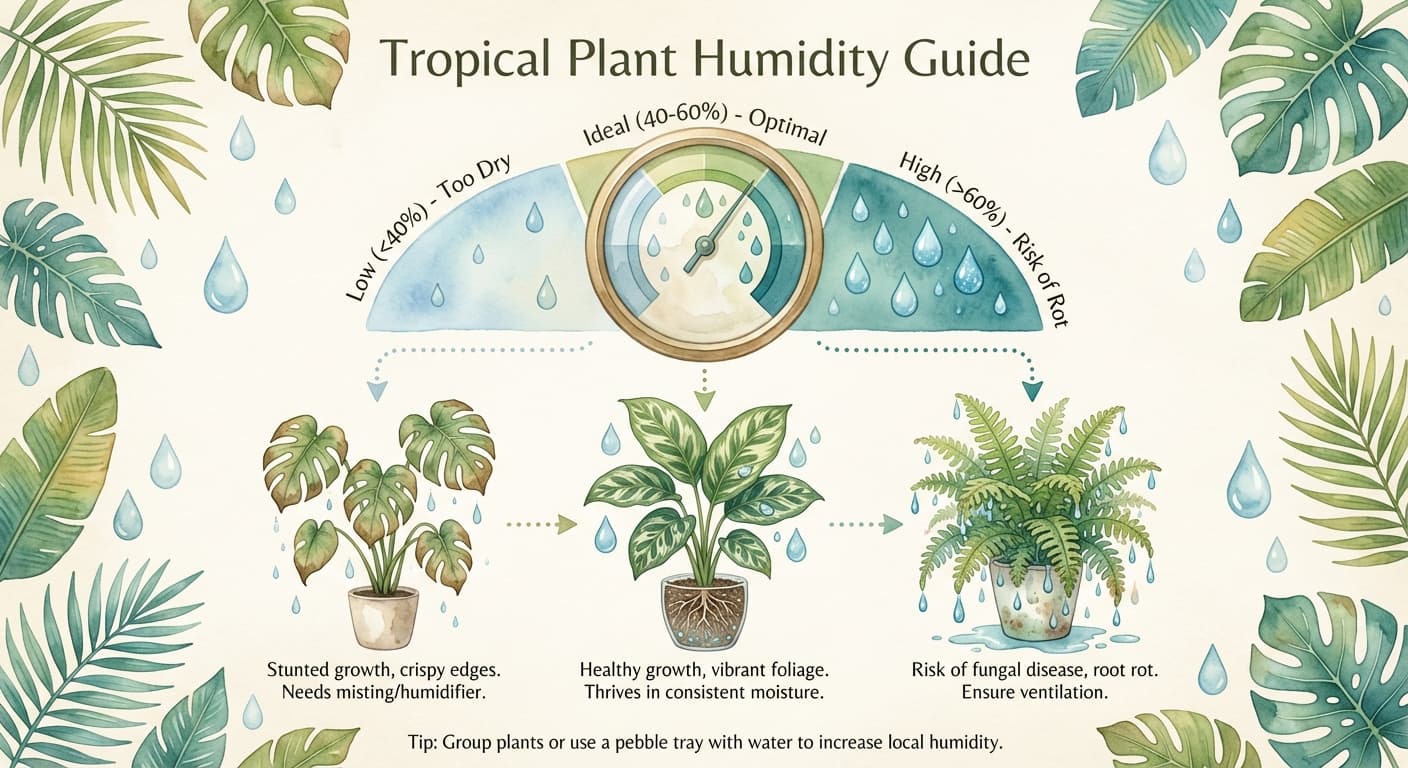
Plants needing 60%+ humidity consistently are harder to grow in typical homes (30-50% humidity). Those tolerating average humidity are much easier.
Light Sensitivity
Some plants adapt to a range of light levels. Others need precise conditions—too much or too little causes problems.
Watering Tolerance
Forgiving plants bounce back from missed waterings or occasional overwatering. Sensitive plants develop root rot quickly or show immediate drought stress.
Temperature Sensitivity
Some tropicals tolerate temperature fluctuations and cooler conditions. Others need consistent warmth and suffer from drafts.
Water Quality Sensitivity
Certain plants react to minerals, chlorine, or fluoride in tap water. Others drink whatever you give them.
Growth Rate
Fast growers are forgiving because they quickly replace damaged growth. Slow growers show every mistake for months.
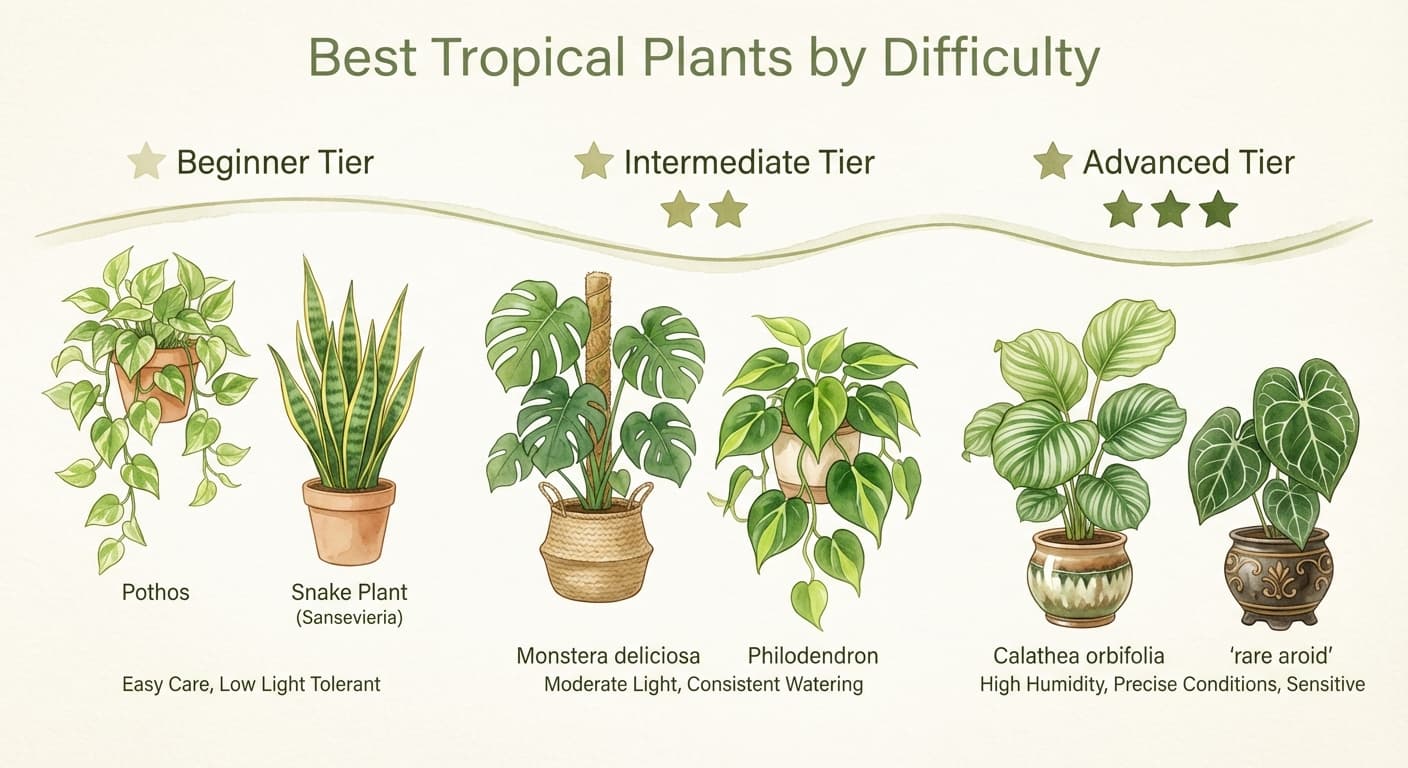
Beginner Tropicals
These plants forgive mistakes, adapt to various conditions, and bounce back from neglect. Perfect for building confidence.
Pothos (Epipremnum aureum)
Why it's easy: Tolerates low light, inconsistent watering, and average humidity. Communicates needs clearly (droops when thirsty, perks up after water). Nearly indestructible.
Care basics: Water when soil dries. Adaptable to light levels. Average humidity fine.
Varieties to try: Golden Pothos, Marble Queen, Neon, N'Joy
Snake Plant (Sansevieria)
Why it's easy: Stores water in leaves, surviving weeks without water. Thrives on neglect. Tolerates low light and low humidity. Actually prefers to dry out between waterings.
Care basics: Water every 2-4 weeks. Low to bright light. Low humidity fine.
Varieties to try: Sansevieria trifasciata, Sansevieria cylindrica
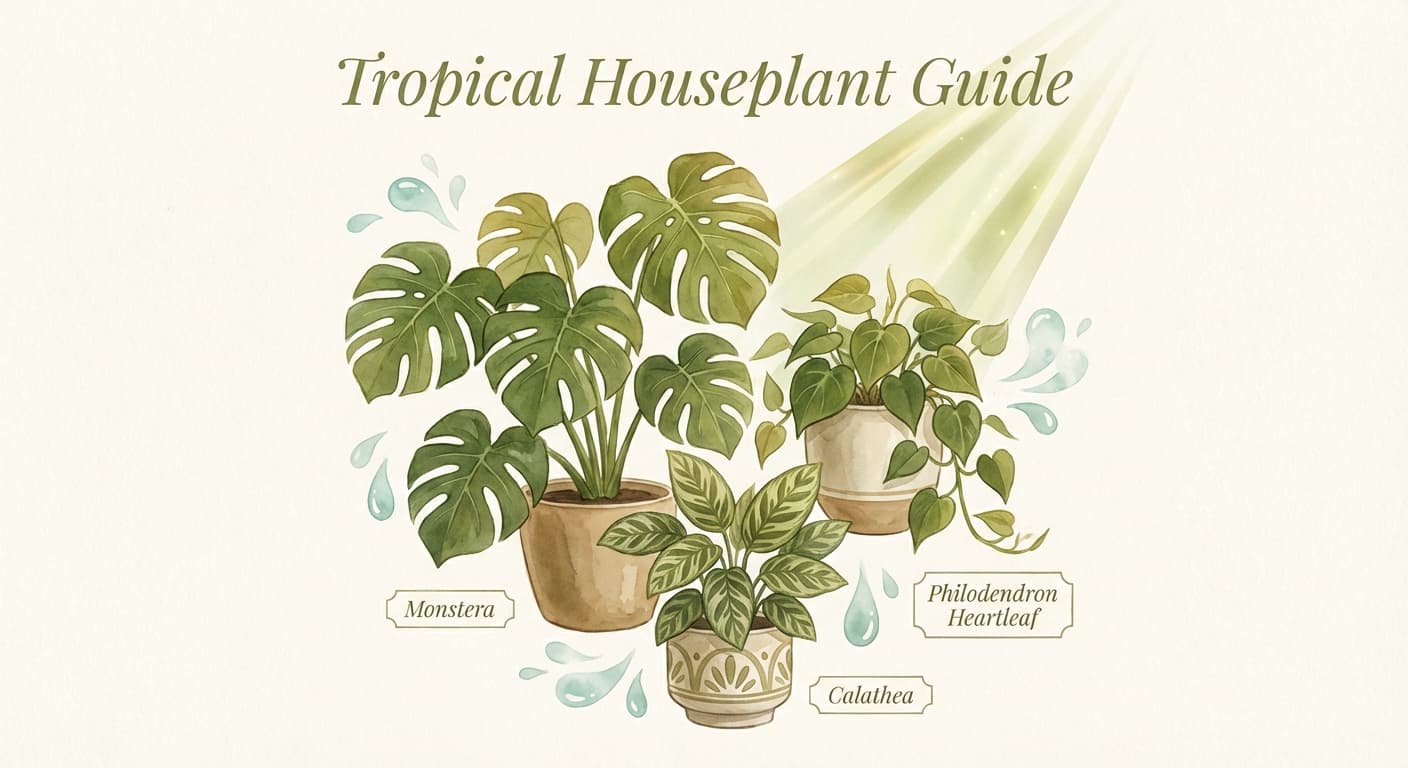
Heartleaf Philodendron
Why it's easy: Very forgiving of watering mistakes. Tolerates low light. Grows quickly, replacing any damaged leaves. Easy to propagate.
Care basics: Water when top inch dries. Adaptable to light. Average humidity.
Varieties to try: Standard green, Brasil (variegated), Lemon Lime
Spider Plant (Chlorophytum comosum)
Why it's easy: Extremely adaptable. Clearly signals thirst (browning tips). Produces babies prolifically. Non-toxic to pets.
Care basics: Water when soil partly dry. Moderate light. Average humidity.
ZZ Plant (Zamioculcas zamiifolia)
Why it's easy: Drought-tolerant rhizomes store water. Grows slowly but steadily with minimal care. Tolerates low light and neglect.
Care basics: Water every 2-3 weeks. Low to bright light. Low humidity fine.
Cast Iron Plant (Aspidistra elatior)
Why it's easy: Named for its toughness. Handles low light, drought, temperature fluctuations, and neglect. Extremely resilient.
Care basics: Water when dry. Low to medium light. Very adaptable.
Intermediate Tropicals
These plants reward attention but still forgive occasional mistakes. Good for growers who've mastered the basics.
Monstera deliciosa
What makes it intermediate: More particular about light (needs bright indirect for good growth and fenestrations). Benefits from support. Larger size requires more attention.
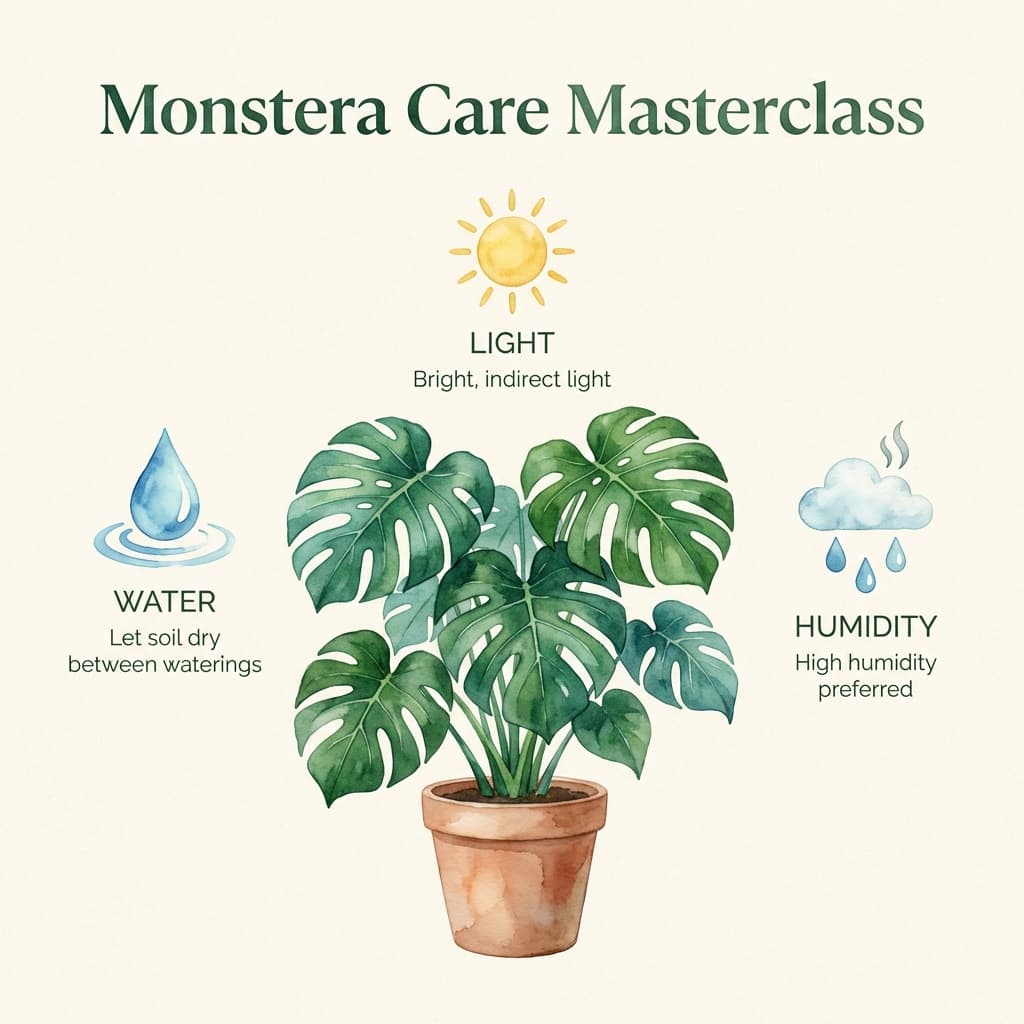
Care basics: Bright indirect light. Water when top 1-2 inches dry. 50%+ humidity preferred. See our Monstera guide.
Bird of Paradise (Strelitzia)
What makes it intermediate: Needs bright light—struggles in dim conditions. Large size and watering needs. Rarely flowers indoors.
Care basics: Bright light (some direct sun OK). Water when top few inches dry. Tolerates average humidity.
Fiddle Leaf Fig (Ficus lyrata)
What makes it intermediate: Sensitive to change—protests by dropping leaves. Needs consistent conditions once established. Can be dramatic.
Care basics: Bright consistent light. Even watering. Don't move once happy. Average humidity.
Rubber Plant (Ficus elastica)
What makes it intermediate: Needs brighter light than some. Can drop leaves if overwatered or stressed. Less forgiving than Pothos/Philodendron.
Care basics: Medium to bright light. Let soil dry between waterings. Average humidity.
Philodendron (Most Varieties)
What makes it intermediate: Generally easy, but some varieties need higher humidity or specific care. Larger varieties need space and support.
Care basics: Medium to bright indirect light. Water when top 1-2 inches dry. See our Philodendron guide.
Alocasia
What makes it intermediate: Goes dormant (loses leaves) in winter—startles new owners. Needs consistent moisture and humidity. Spider mite prone.
Care basics: Bright indirect light. Consistent moisture. 50%+ humidity. Don't panic at winter dormancy.
Peace Lily
What makes it intermediate: Dramatic wilting when thirsty (recovers quickly). Communicates needs clearly. Brown tips if humidity too low.
Care basics: Medium light. Water when soil feels dry. Higher humidity reduces brown tips.
Advanced Tropicals
These plants have specific requirements and punish care mistakes. For growers ready for a challenge.
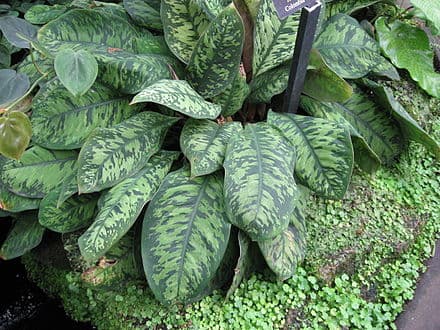
Calathea (Most Varieties)
What makes it advanced: Requires 60%+ humidity consistently. Sensitive to tap water (fluoride). Needs filtered light. Brown tips are common struggle.
Care basics: Medium indirect light. Keep soil moist. High humidity (60%+). Use filtered/distilled water. See our Calathea guide.
Stromanthe Triostar
What makes it advanced: Same requirements as Calathea. Stunning but demanding. Needs high humidity, proper water, and protection from direct light.
Care basics: Medium indirect light. Moist soil. High humidity. Filtered water.
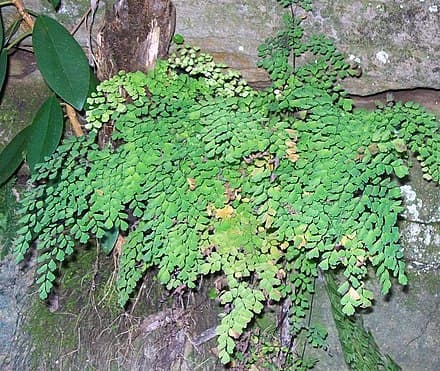
Ferns (Most Tropical Varieties)
What makes them advanced: Need consistent high humidity and moisture. Quickly show stress from dry conditions. Brown fronds are common.
Care basics: Indirect light. Constantly moist soil. High humidity. Good bathroom plants.
Alocasia (Rarer Varieties)
What makes them advanced: More demanding than common Alocasia. Higher humidity requirements. Pest prone. Dramatic response to stress.
Care basics: Bright indirect light. Consistent moisture and humidity (60%+). Warm temperatures.
Philodendron Verrucosum
What makes it advanced: Needs higher humidity (60%+) than most Philodendrons. Velvety leaves mark easily. Slower to recover from stress.
Care basics: Bright indirect light. High humidity. Consistent moisture. Warm temperatures.
Expert/Collector Tropicals
These plants require controlled environments, careful attention, or significant experience. For dedicated enthusiasts.
Anthurium (Collector Varieties)
What makes them expert-level: Velvet-leaved and rare Anthuriums need greenhouse-like conditions. High humidity, specific watering, and protection from pests.
Care basics: Bright filtered light. High humidity (70%+). Well-draining mix. Warm temperatures.
Variegated Monstera (Albo, Thai Constellation)
What makes them expert-level: Expensive (losing one hurts). Variegation can be unstable. Slower growing than regular Monstera. Higher light needs for variegation.
Care basics: Bright light essential. Careful watering. Higher humidity helps. Protect your investment.
Philodendron gloriosum
What makes it expert-level: Terrestrial crawling habit (doesn't climb). Needs shallow, wide pot. Slower growth. More particular about conditions.
Care basics: Bright indirect light. High humidity. Shallow pot. Patience.
Calathea White Fusion
What makes it expert-level: Considered one of the hardest Calathea. Extreme humidity sensitivity. Fragile variegation. Expert-level Calathea care required.
Care basics: Medium light. Very high humidity (65%+). Distilled water only. Stable environment.
Rare Aroids (Philodendron, Anthurium species)
What makes them expert-level: Often require import acclimation. Need controlled environments. High cost means mistakes are expensive.
Care basics: Research specific species. Often need humidity cabinets. Quarantine new arrivals.
Matching Plants to Your Environment
Low Light Homes
Good choices: Pothos, Snake Plant, ZZ Plant, Cast Iron Plant, Heartleaf Philodendron Avoid: Bird of Paradise, Fiddle Leaf Fig, most variegated plants
Low Humidity Homes (Below 40%)
Good choices: Snake Plant, ZZ Plant, Pothos, most Philodendrons, Spider Plant Avoid: Calathea, Stromanthe, ferns, Alocasia, velvet-leaved varieties
Bright Light Homes
Good choices: Bird of Paradise, Monstera, Fiddle Leaf Fig, Alocasia, variegated varieties Avoid: Calathea (too bright causes fading), some ferns
Inconsistent Waterers
Good choices: Snake Plant, ZZ Plant, Pothos (forgiving either way) Avoid: Calathea, ferns (need consistent moisture), Alocasia
Pet Owners (Non-Toxic Options)
Good choices: Spider Plant, Calathea/Maranta family, some ferns, Peperomia Avoid: Pothos, Philodendron, Peace Lily, Monstera (all toxic)
Progression Path
A suggested journey from beginner to advanced grower:
Stage 1: Foundation (Months 1-6)
Start with 2-3 beginner plants:
- Pothos (teaches watering, light observation)
- Snake Plant (teaches restraint with watering)
- Heartleaf Philodendron (teaches propagation)
Goals: Learn to read your plants, understand your home's conditions, establish routines.
Stage 2: Building Skills (Months 6-12)
Add 2-3 intermediate plants:
- Monstera (statement plant, learn about supporting climbers)
- Peace Lily or Bird of Paradise (more specific light needs)
- Another Philodendron variety (expand your knowledge)
Goals: Handle larger plants, understand growth patterns, practice propagation.
Stage 3: Expanding Range (Year 2)
Try your first "difficult" plant:
- Alocasia (learn about dormancy)
- Calathea (master humidity management)
Goals: Set up humidity solutions, learn to troubleshoot, accept that some challenges are part of learning.
Stage 4: Specialization (Year 2+)
Pursue what interests you:
- Collector varieties of your favorite genus
- Rare plants if you can provide conditions
- Specialized growing setups (cabinets, etc.)
Goals: Deep knowledge in chosen areas, contributing to plant community, enjoying the journey.
Frequently Asked Questions
What's the easiest tropical houseplant?
Pothos and Snake Plant consistently top the list. Pothos tolerates almost any condition; Snake Plant thrives on neglect.
I keep killing Calathea. What am I doing wrong?
Probably humidity and/or water quality. Calathea need 60%+ humidity and react badly to fluoride in tap water. Use a humidifier and filtered water.
Are difficult plants worth it?
Depends on your goals. If you enjoy the challenge and can provide conditions, they're rewarding. If you want low-maintenance greenery, stick with easier plants—they're beautiful too.
Can I make any plant easier to grow?
Partially. Humidifiers help humidity-loving plants. Grow lights help low-light spaces. But plants have genetic needs you can't fundamentally change.
Should I start with easy plants even if I want challenging ones?
Yes. Easy plants teach you to read plant signals, understand your home's conditions, and build care habits. Those skills make challenging plants more achievable.
Why does difficulty matter?
Matching plants to your skill level and environment prevents frustration. A thriving Pothos beats a struggling Calathea for both you and the plant.
Key Takeaways
- Difficulty is about fit: Hard plants aren't better—they just need specific conditions
- Start where you are: Beginner plants aren't boring; they're a smart foundation
- Assess your environment: Light, humidity, and your attention level matter
- Progress gradually: Each plant teaches skills for the next challenge
- It's okay to fail: Even experts lose plants. Learn and try again
The goal isn't to grow the hardest plants—it's to grow plants that thrive. Choose wisely, and you'll enjoy your tropical collection for years.
For complete tropical plant care, return to our Complete Guide to Tropical Houseplants.