This guide contains affiliate links. We may earn a small commission if you purchase through our links, at no extra cost to you.
This guide is part of our comprehensive Tropical Houseplant Guide.
If you had to choose one genus of plants to collect, Philodendrons would be a strong contender. With over 400 species—ranging from trailing vines to massive climbing specimens to compact self-heading varieties—there's a Philodendron for every grower, every space, and every skill level.
They're also surprisingly forgiving. While some tropicals punish every care mistake, most Philodendrons shrug off imperfect conditions and keep growing. This makes them ideal for both beginners building confidence and collectors seeking variety without drama.
Let's explore the world of Philodendrons.
Table of Contents
- Understanding Philodendrons
- Philodendron Types
- 15 Stunning Varieties
- Universal Care Guide
- Light Requirements
- Watering
- Humidity and Temperature
- Soil and Potting
- Propagation
- Common Problems
- Building a Collection
- Frequently Asked Questions
Understanding Philodendrons
Native Habitat
Philodendrons originate from the tropical Americas—Central and South American rainforests where they grow as understory plants, climbing trees, or as epiphytes in tree crotches.
This diverse habitat range explains their variety of growth forms and their general adaptability. They evolved to handle varying light levels, making them ideal houseplants.
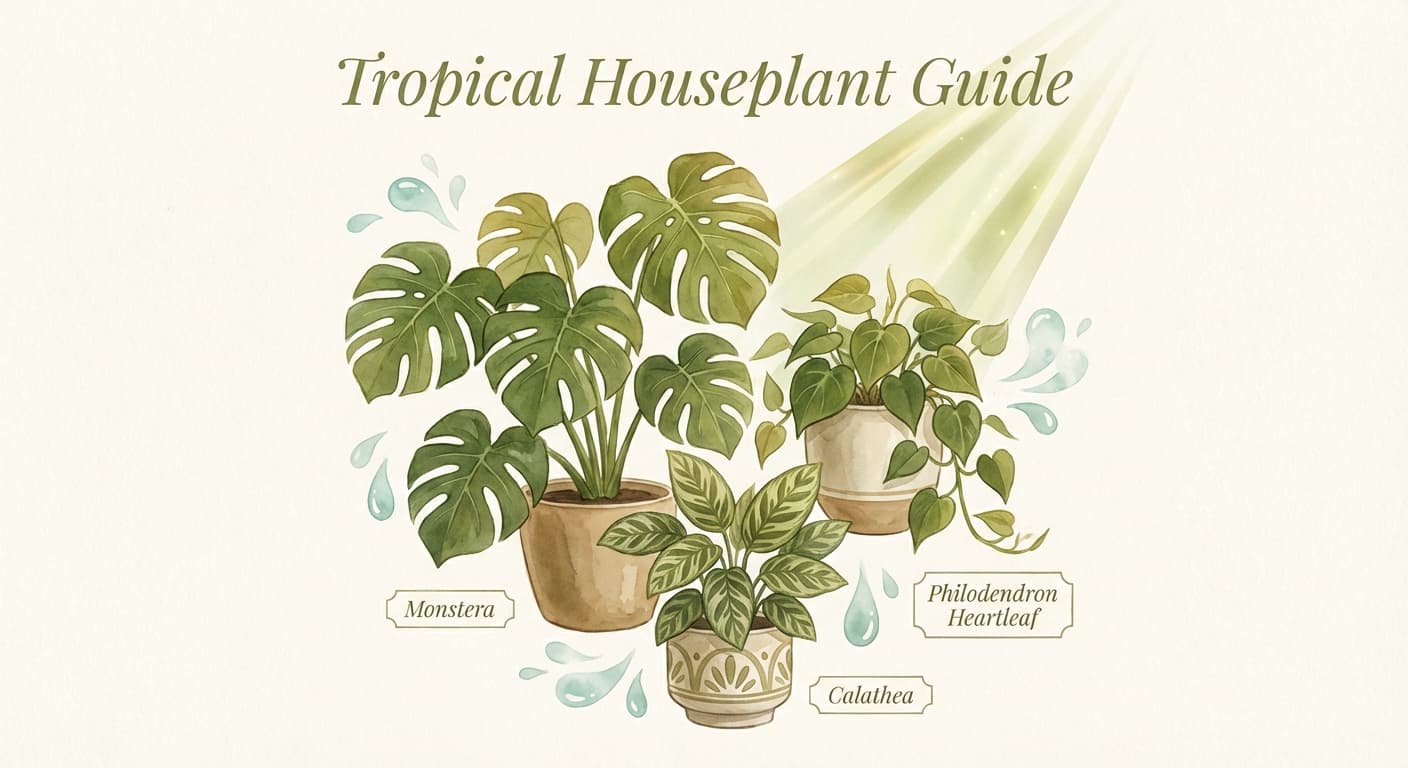
Philodendron vs. Pothos vs. Monstera
These three are often confused because they share similar care needs and sometimes similar appearances:
Philodendrons have thinner, more elongated leaves on most species. New leaves emerge from a protective sheath called a cataphyll that turns brown and papery.
Pothos (Epipremnum) has thicker, waxier leaves with a more prominent midrib groove. New leaves simply unfurl without a cataphyll.
Monstera develops fenestrations (holes and splits) that Philodendrons don't produce (with rare exceptions).
All three are excellent houseplants—distinguishing them is mostly for taxonomy enthusiasts.
Philodendron Types
Philodendrons fall into two main growth categories:
Climbing (Vining) Philodendrons
These have elongated stems that climb, trail, or sprawl. In nature, they ascend trees toward light. Indoors, they'll climb supports or trail from hanging baskets.
Characteristics:
- Flexible stems that vine
- Aerial roots at nodes
- Respond well to moss poles and supports
- Can be pruned and propagated easily
- Tend to grow faster than self-heading types
Examples: Heartleaf, Brasil, Micans, Pink Princess, Gloriosum
Self-Heading Philodendrons
These grow from a central rosette without vining. Stems are short and stout, and the plant expands outward rather than climbing.
Characteristics:
- Compact, bushy growth
- No significant vining
- Often develop a "trunk" with age
- Generally slower growing
- Make bold statement plants
Examples: Birkin, Rojo Congo, Prince of Orange, Imperial Green
15 Stunning Varieties
Beginner-Friendly Varieties
1. Heartleaf Philodendron (P. hederaceum)
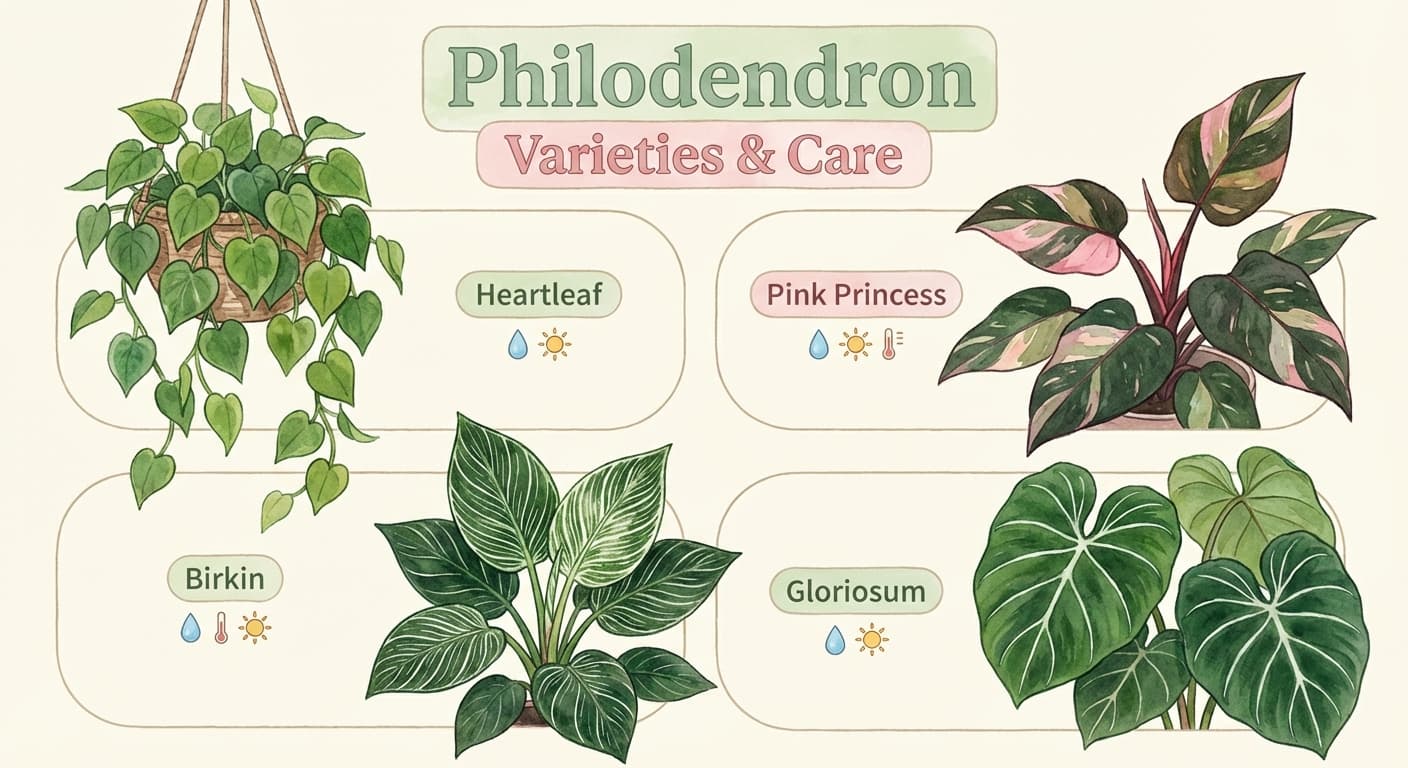
The classic starter Philodendron. Heart-shaped green leaves on vining stems that trail or climb. Extremely forgiving of low light, inconsistent watering, and average humidity.
Why grow it: Nearly indestructible, fast-growing, looks beautiful in hanging baskets or climbing a moss pole.
2. Philodendron Brasil
A striking variegated form of heartleaf with lime green and yellow stripes down each leaf. Just as easy as the all-green version but with more visual interest.
Why grow it: Beginner-friendly variegation that doesn't revert easily. Brightens any corner.
3. Philodendron Birkin
Self-heading variety with dark green leaves striped with cream/white pinstripes. Compact growth makes it suitable for desks and small spaces.
Why grow it: Stunning variegation on an easy-care plant. No climbing support needed.
4. Philodendron Lemon Lime
Neon yellow-green heartleaf variety. The same easy care but with eye-catching color that brightens dim spaces.
Why grow it: Color pop without extra care requirements.
Intermediate Varieties
5. Philodendron Micans
Velvety, iridescent heart-shaped leaves that shift color in different lights—bronze, green, and purple tones. Vining habit.
Why grow it: Unique texture and color, relatively easy care, stunning in trailing displays.
6. Philodendron Prince of Orange
Self-heading variety where new leaves emerge bright orange, aging to salmon, then green. The color show is continuous as new leaves appear.
Why grow it: Constant color variation from a single plant. Compact and manageable.
7. Philodendron Rojo Congo
Large, paddle-shaped leaves emerge burgundy-red and mature to deep green. Self-heading with a bold, architectural presence.
Why grow it: Statement plant that's more forgiving than it looks. Great for floor displays.
8. Philodendron Moonlight
Self-heading variety with fluorescent lime-green leaves. New growth is even brighter, almost glowing.
Why grow it: Incredible neon color that stays vibrant in bright light.
9. Philodendron Xanadu
Self-heading with deeply lobed leaves that fan outward. Forms a dense, symmetrical mound. Actually reclassified to Thaumatophyllum but commonly sold as Philodendron.
Why grow it: Architectural shape, interesting leaf form, handles cooler temps better than most.
10. Philodendron Brandtianum (Silver Leaf)
Heart-shaped leaves with silver markings over olive green. Vining habit but slower growing than heartleaf.
Why grow it: Elegant silver pattern that stands out in collections.
Collector Varieties
11. Philodendron Pink Princess
The Instagram star. Dark green leaves splashed with bubblegum pink variegation. Vining habit. The variability of pink coloring makes each plant unique.
Why grow it: The most sought-after variegated Philodendron. Stunning when variegation is strong.
Caution: Variegation is unstable—can revert to all green. Needs bright light to maintain pink. Expensive.
12. Philodendron White Princess
Similar to Pink Princess but with white variegation instead of pink. Equally variable and sought-after.
Why grow it: Dramatic white splashes contrast beautifully against dark foliage.
13. Philodendron Gloriosum
Large, velvety, heart-shaped leaves with bright white veins. Crawling (terrestrial) growth pattern rather than climbing.
Why grow it: Absolutely stunning foliage. Different growth habit adds interest to collections.
Note: Grows along the ground, not upward. Needs shallow, wide pot.
14. Philodendron Verrucosum
Velvety leaves with iridescent coloring and hairy petioles (stems). One of the most beautiful Philodendrons but also most demanding.
Why grow it: Otherworldly beauty that's worth the extra effort for dedicated growers.
Note: Needs higher humidity (60%+) than most Philodendrons.
15. Philodendron Melanochrysum
Large, elongated velvety leaves that are nearly black with gold crystalline sparkles. Climbing habit.
Why grow it: Dark, dramatic foliage unlike anything else. The "black gold" Philodendron.
Note: Benefits from higher humidity and support for climbing.
Universal Care Guide
Most Philodendrons share similar care requirements. These guidelines apply across the genus with minor variety-specific adjustments.
Light Requirements
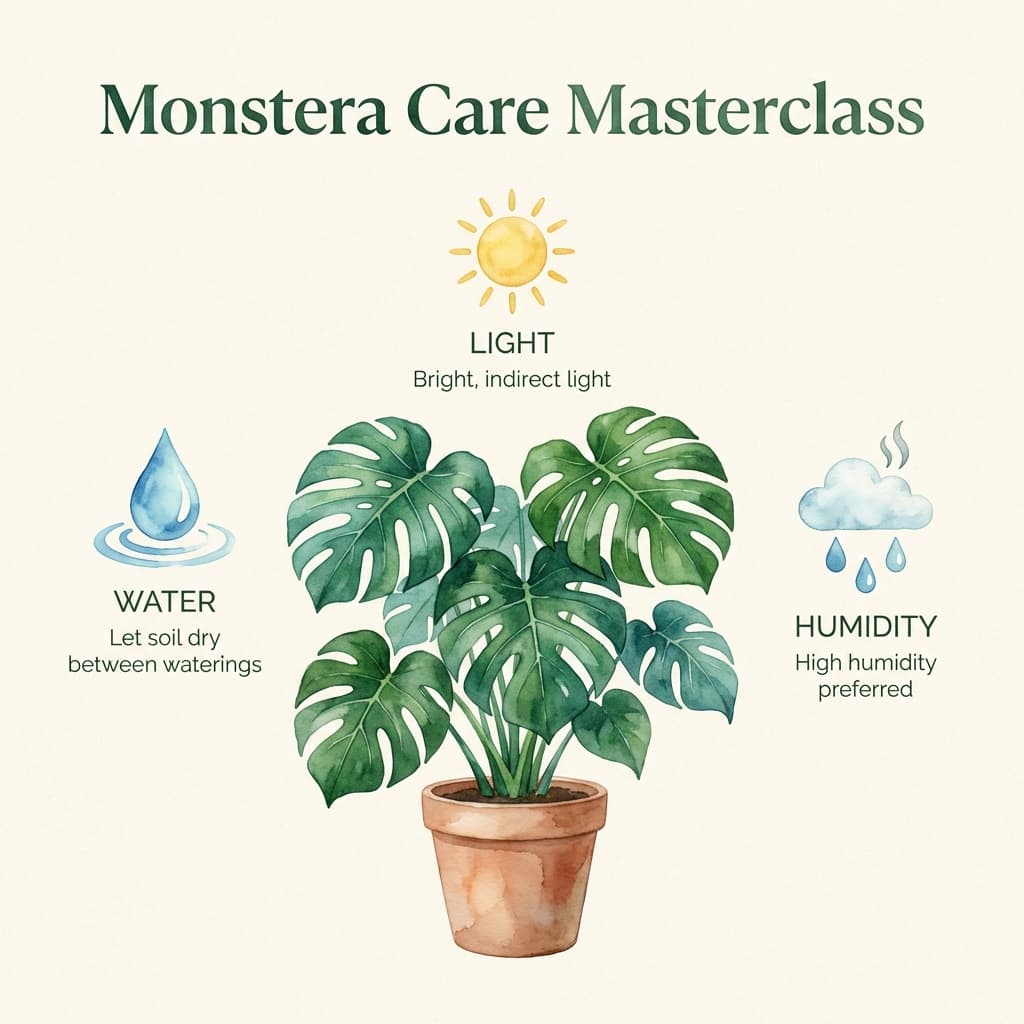
Ideal: Bright indirect light—near windows but out of direct sun.
Tolerates: Medium to low light (growth slows but plants survive).
Avoid: Extended direct sunlight (burns leaves).
Philodendrons are more flexible about light than many tropicals. They evolved in the forest understory where light levels vary. This adaptability makes them excellent houseplants.
Variegated varieties (Pink Princess, Brasil, Birkin) need more light to maintain their coloring. In low light, they may revert toward solid green.
Watering
When to water: When the top 1-2 inches of soil feel dry.
How to water: Thoroughly, until water drains from the bottom. Don't let plants sit in standing water.
Philodendrons are forgiving of occasional underwatering but will develop root rot if kept constantly wet. When in doubt, wait another day.
Signs of trouble:
- Yellow lower leaves: Often overwatering
- Wilting with dry soil: Needs water
- Brown leaf tips: Usually humidity or water quality
For complete watering guidance, see our tropical plant watering guide.
Humidity and Temperature
Humidity: Most Philodendrons tolerate average household humidity (40-50%) well. They prefer 50-60% but don't demand it like Calathea.
Exceptions: Velvet-leaved varieties (Micans, Verrucosum, Melanochrysum) prefer higher humidity (60%+).
Temperature: 65-85°F (18-29°C). Avoid cold drafts and temperatures below 55°F.
Soil and Potting
Soil: Well-draining mix with good aeration.
Recipe:
- 2 parts potting soil
- 1 part perlite
- 1 part orchid bark
Pots: Use containers with drainage holes. Size pot to root ball—don't overpot.
Repotting: Every 1-2 years in spring, or when roots fill the pot.
Fertilizing
Feed monthly during growing season (spring through early fall) with balanced liquid fertilizer at half strength. Stop in winter when growth slows.
Propagation
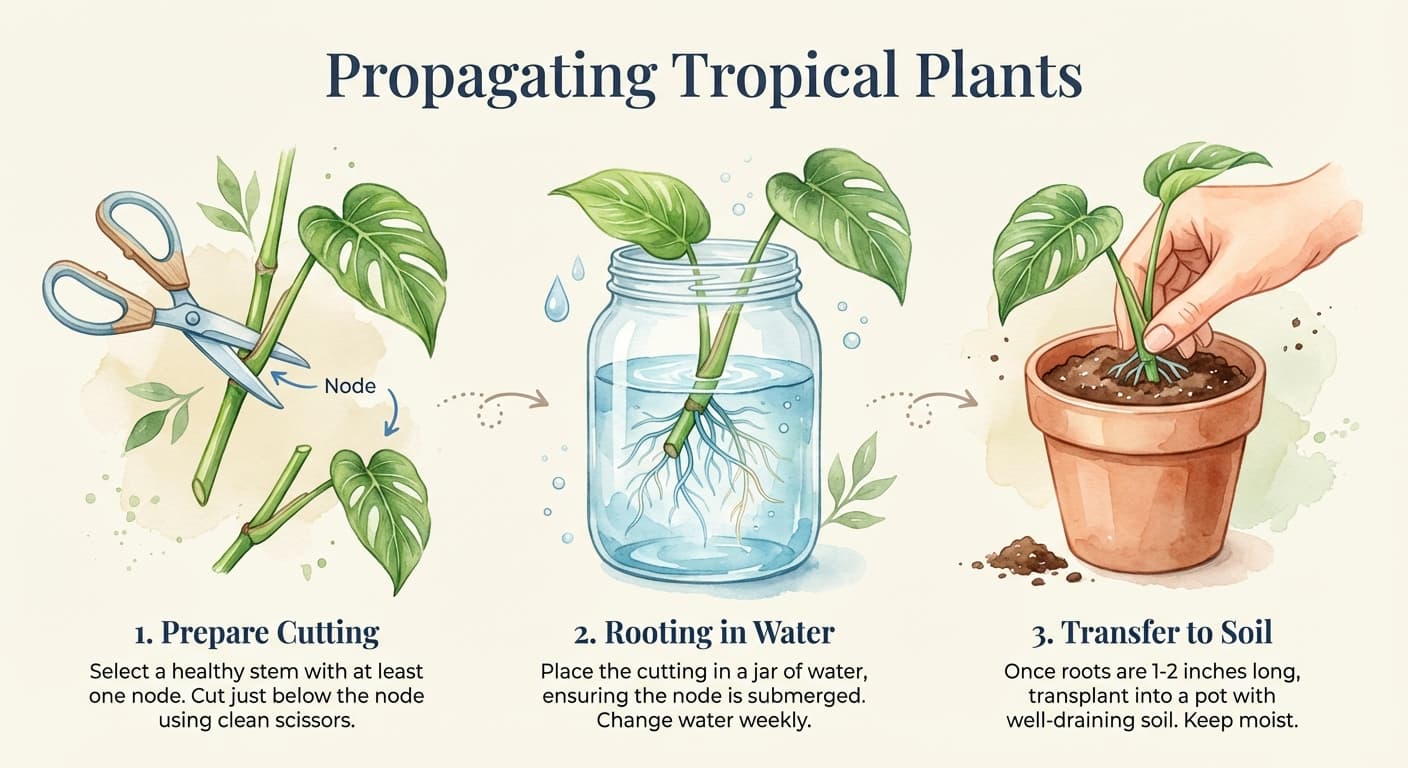
Philodendrons are among the easiest houseplants to propagate. The vining types are especially straightforward.
Stem Cuttings in Water
- Select a cutting: Choose a healthy stem with 2-3 nodes (the bumps where leaves and roots emerge)
- Cut below a node: Use clean, sharp scissors
- Remove lower leaves: Keep only 1-2 leaves at the top
- Place in water: Submerge nodes, keep leaves above water
- Wait: Change water weekly. Roots appear in 2-4 weeks
- Pot up: When roots are 2-3 inches long, plant in soil
Stem Cuttings in Soil
Same process but plant directly in moist soil. Keep humid (cover with plastic bag) until established. Slightly slower but avoids transplant adjustment.
Division (Self-Heading Types)
Some self-heading varieties can be divided if they've developed multiple growth points:
- Remove from pot
- Gently separate root masses
- Pot divisions separately
- Keep moist until established
For complete propagation techniques, see our tropical plant propagation guide.
Common Problems
Yellow Leaves
Lower leaves turning yellow: Often natural aging—plants shed old leaves. Remove cleanly.
Multiple leaves yellowing: Usually overwatering. Check soil drainage and root health.
Brown Leaf Tips
Causes: Low humidity, tap water minerals, underwatering, fertilizer burn.
Solutions: Increase humidity, use filtered water, maintain consistent moisture, flush soil if over-fertilized.
Leggy Growth
Cause: Insufficient light.
Solution: Move to brighter location. Prune leggy stems and propagate cuttings.
Drooping Leaves
With dry soil: Needs water. Will perk up after watering.
With wet soil: Possible root rot. Check roots, repot if necessary.
Loss of Variegation
Cause: Insufficient light (for variegated varieties).
Solution: Increase light. Prune fully-green growth to encourage variegated new leaves.
Pests
Philodendrons can attract:
- Mealybugs: White cottony masses
- Spider mites: Fine webbing, stippled leaves
- Scale: Brown bumps on stems
- Thrips: Silver streaks on leaves
Treat with neem oil, insecticidal soap, or appropriate pesticides. Quarantine affected plants.
For complete problem-solving, see our tropical plant troubleshooting guide.
Building a Collection
Starting Out
Begin with forgiving varieties to build confidence:
- Heartleaf or Brasil (practically bulletproof)
- Birkin (easy with interesting variegation)
- Micans (slightly more rewarding than heartleaf)
Expanding
Once you've succeeded with beginners:
- Add a self-heading variety for different growth habit
- Try a larger-leaved climber
- Experiment with different variegation patterns
Collector Level
For dedicated growers:
- Source rarer varieties from reputable sellers
- Consider a humidity cabinet for demanding species
- Connect with plant communities for trades and knowledge
- Focus on optimal conditions rather than just survival
Display Ideas
Hanging baskets: Perfect for trailing varieties (Heartleaf, Brasil, Micans)
Moss poles: Climbing varieties develop larger leaves when given support
Shelf displays: Mix heights and leaf shapes for visual interest
Statement plants: Large self-heading varieties as floor plants
Frequently Asked Questions
Are Philodendrons easy to grow?
Yes—they're among the most forgiving houseplants. Most tolerate low light, irregular watering, and average humidity. Perfect for beginners.
How much light do Philodendrons need?
Bright indirect light is ideal, but most tolerate medium to low light. Variegated varieties need more light to maintain coloring.
Are Philodendrons toxic to pets?
Yes. Philodendrons contain calcium oxalate crystals that cause irritation if chewed. Keep away from curious pets.
How often should I water my Philodendron?
When the top 1-2 inches of soil feel dry—typically every 7-14 days depending on conditions.
Why is my Philodendron turning yellow?
Most commonly overwatering or natural aging of lower leaves. Check soil moisture and root health.
Do Philodendrons need humidity?
Most tolerate average humidity (40-50%), though they prefer higher (50-60%). Velvet-leaved varieties need 60%+ humidity.
How do I make my Philodendron bushier?
Prune the main stems to encourage branching. Plant multiple cuttings in one pot for a fuller appearance.
Can Philodendrons climb?
Vining types are natural climbers and produce larger leaves when given support like a moss pole. Self-heading types don't climb.
What's the easiest Philodendron for beginners?
Heartleaf Philodendron (or its Brasil variant) is the most forgiving—tolerates neglect, low light, and irregular watering.
Why is my Pink Princess losing variegation?
Insufficient light is the usual cause. Increase brightness. Prune all-green growth to encourage variegated new leaves.
Key Takeaways
Philodendron success comes down to:
- Matching variety to conditions: Choose varieties suited to your light and humidity levels
- Proper watering: Let soil dry partially between waterings, avoid soggy conditions
- Appropriate light: Bright indirect for best growth, but most tolerate less
- Support for climbers: Vining types reward you with larger leaves when climbing
- Propagation: Easy propagation lets you share and expand your collection
With hundreds of species to explore, Philodendrons offer a lifetime of variety without the drama of more demanding tropicals. Start with one, and before you know it, you'll have a collection.
For complete tropical plant care, return to our Complete Guide to Tropical Houseplants.