This guide contains affiliate links. We may earn a small commission if you purchase through our links, at no extra cost to you.
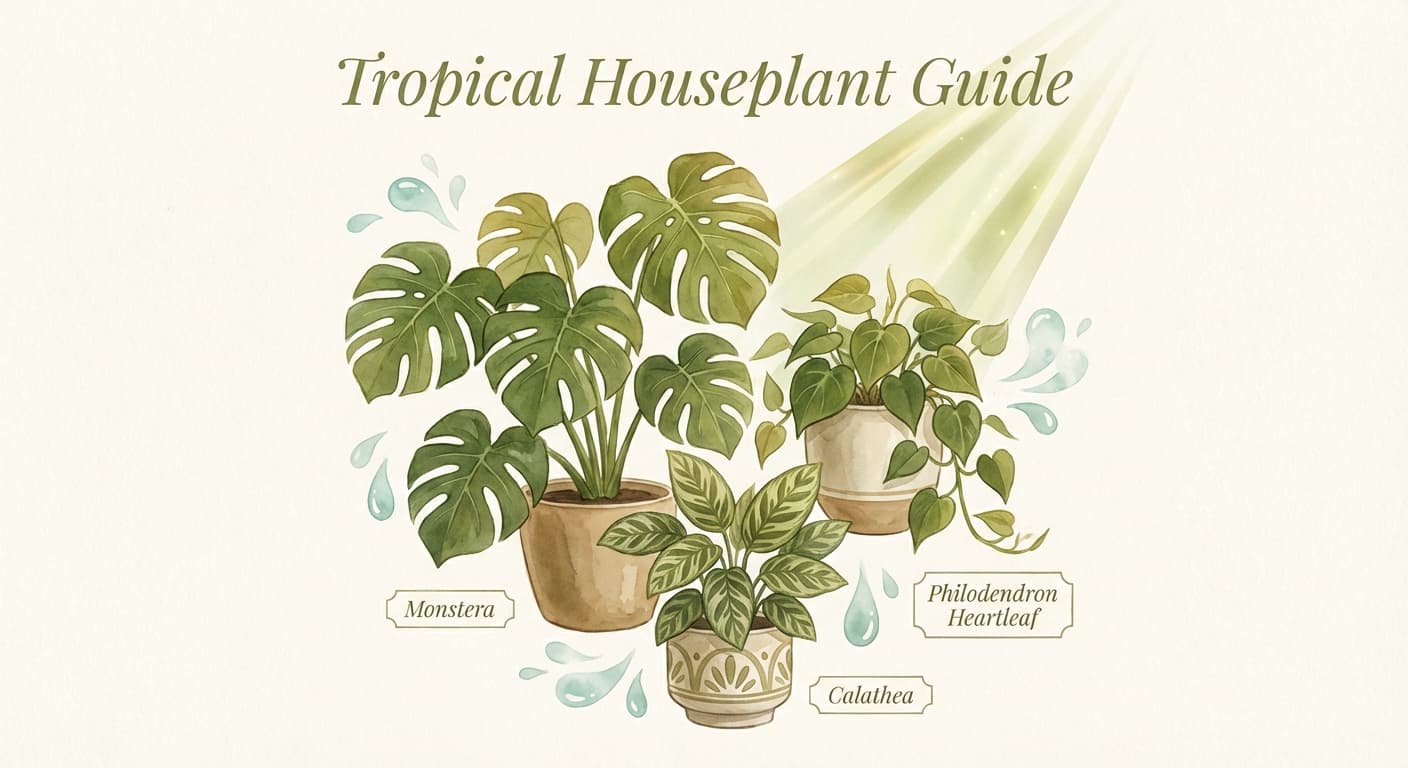
This guide is part of our comprehensive Tropical Houseplant Guide.
Calathea and Maranta (the true Prayer Plants) produce some of the most stunningly patterned foliage in the plant kingdom. Bold stripes, intricate feathering, purple undersides, and colors that seem almost artificial in their vibrancy. They're irresistible.
They're also notorious for being difficult.
Walk into any plant-focused online community, and you'll find countless posts about crispy Calathea leaves, curling Prayer Plants, and the frustration of watching beautiful foliage decline despite careful attention. These plants have earned their "diva" reputation.
But here's the secret: Calathea and Prayer Plants aren't actually hard to grow. They're just specific. They need particular conditions that many homes don't naturally provide. Once you understand and deliver what they need, these plants thrive beautifully.
Let's crack the code.
Table of Contents
- Understanding the Prayer Plant Family
- The Humidity Factor
- Water Quality Matters
- Light Requirements
- Watering Properly
- Temperature and Drafts
- Soil and Potting
- Popular Varieties
- Prayer Plant Movement
- Common Problems
- Frequently Asked Questions
Understanding the Prayer Plant Family
First, let's clarify some taxonomy:
Marantaceae is the plant family containing several genera commonly called "Prayer Plants":
- Calathea (now largely reclassified to Goeppertia): The largest group, including most patterned varieties sold as houseplants
- Maranta: The original "Prayer Plant" with varieties like Maranta leuconeura
- Stromanthe: Similar care to Calathea, includes the stunning Triostar
- Ctenanthe: Another closely related genus
All share similar care requirements and the characteristic "prayer" movement—leaves that fold upward at night and open during the day.
For simplicity, this guide uses "Calathea" and "Prayer Plants" somewhat interchangeably since their care needs are nearly identical.
Why They're "Difficult"
These plants evolved in the stable, humid understory of tropical rainforests. They expect:
- Consistent high humidity (60-80%)
- Soft, mineral-free water
- Filtered light without direct sun
- Stable warm temperatures
- Moist but well-draining soil
Most homes provide: dry air, hard tap water, inconsistent temperatures, and either too much or too little light. The gap between natural habitat and typical home conditions is why these plants struggle.
The Humidity Factor
Humidity is make-or-break for Calathea. This is the single most important care factor.
The Requirement
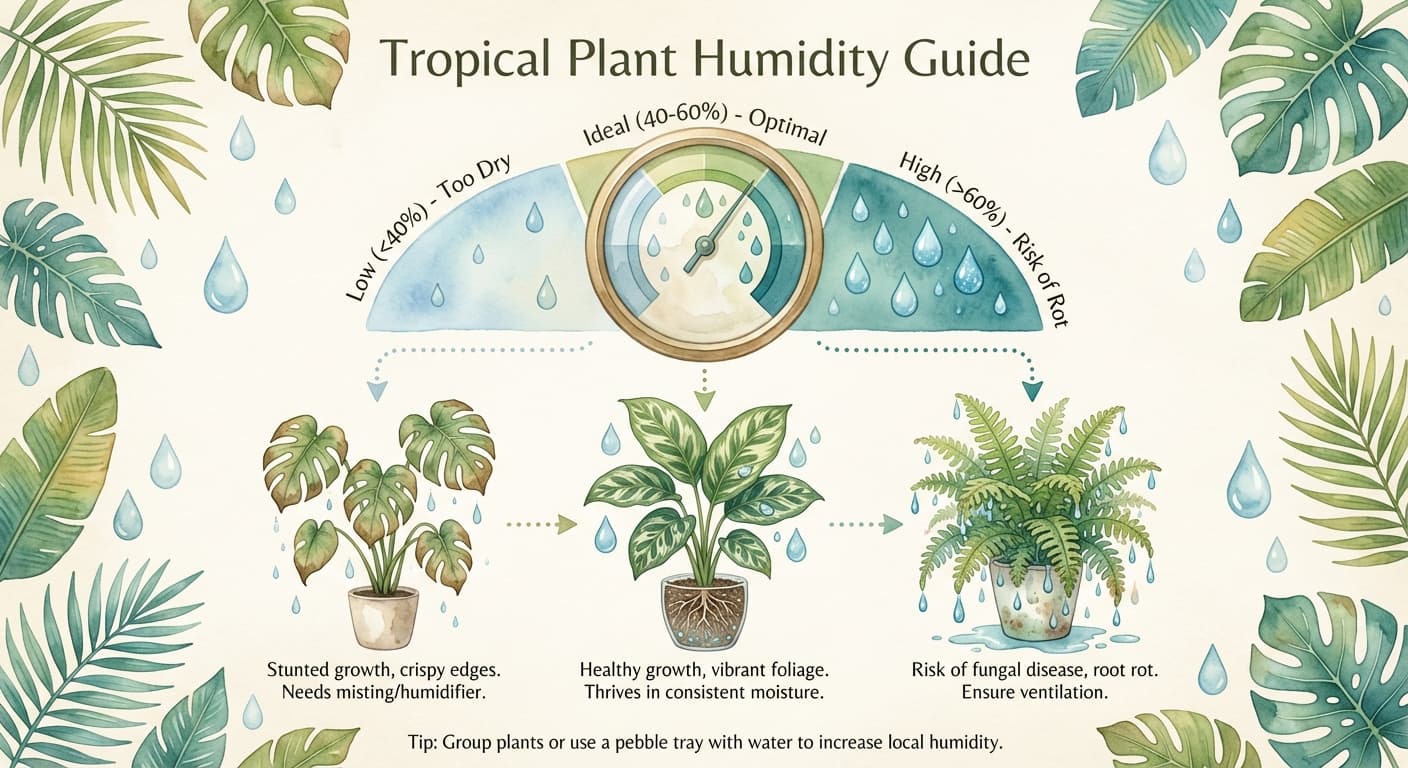
Minimum: 50% humidity (plants survive but show stress) Ideal: 60-70% humidity Optimal: 70%+ (how they grow in the wild)
Most homes hover around 30-50% humidity, dropping to 20-30% in winter with heating. This is below survival threshold for many Calathea.
What Low Humidity Does
Within days to weeks of low humidity:
- Leaf edges turn brown and crispy
- Tips dry out
- Leaves may curl inward
- New growth emerges damaged
- Overall plant health declines
The damage is cumulative. Plants may survive brief humidity dips but suffer progressive damage over time.
Solutions That Actually Work
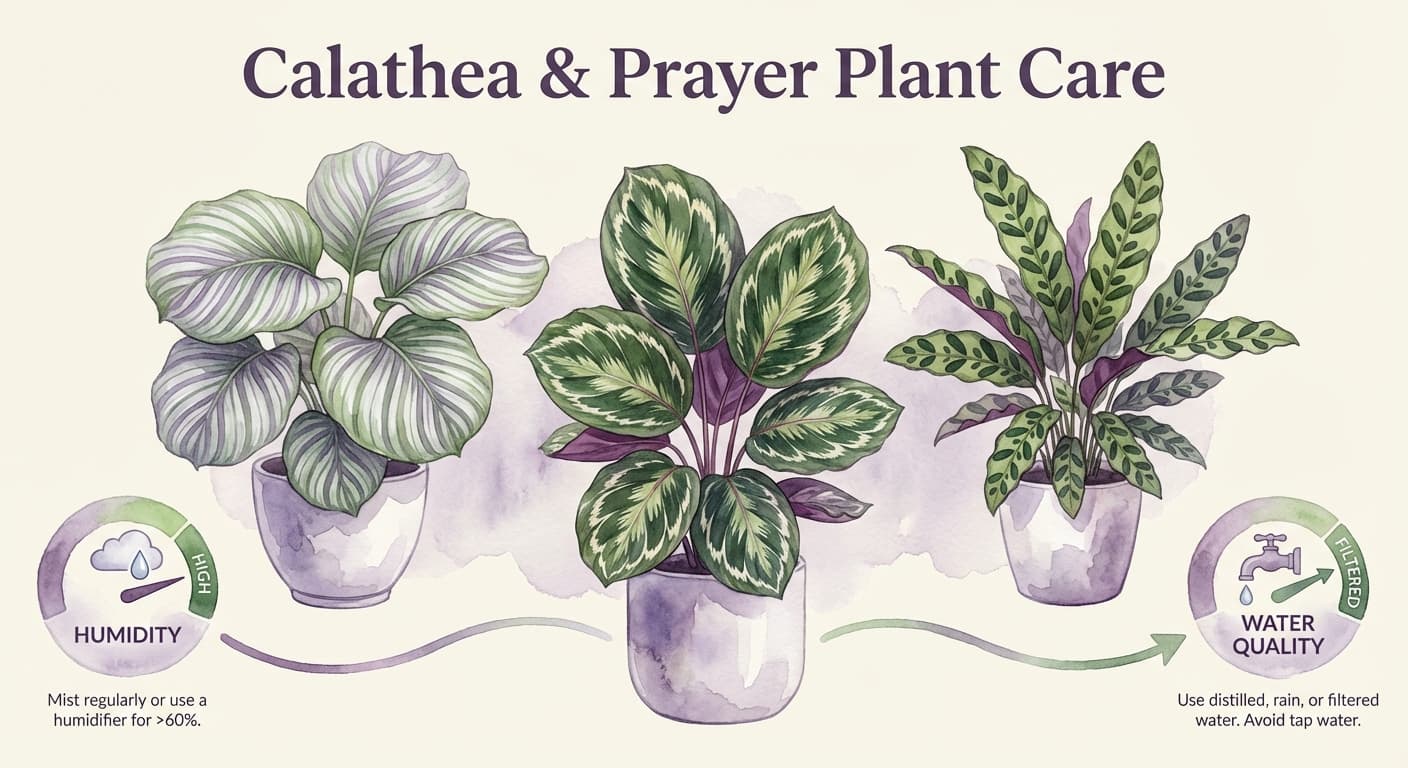
Humidifiers (highly effective): Run a cool-mist humidifier near your Prayer Plants. Aim for 60%+ consistently. This is the most reliable solution and worth the investment for multiple Calathea.
Enclosed cabinets (highly effective): IKEA greenhouse cabinets or similar enclosed spaces maintain very high humidity. Ideal for collections of humidity-demanding plants.
Bathrooms (moderately effective): If your bathroom has a window with decent light, it's often the best room for Calathea. Daily showers provide humidity spikes, and humidity generally stays higher than living areas.
Grouping plants (mildly effective): Clustered plants raise local humidity through transpiration. Helps but usually isn't sufficient alone for Calathea.
What Doesn't Work
Misting: Water on leaves evaporates within minutes, barely affecting ambient humidity. Worse, wet leaves can encourage fungal problems. Misting is largely useless for Calathea humidity needs.
Pebble trays: Studies show these raise humidity only a few percent in the immediate vicinity. Better than nothing but nowhere near sufficient for humidity-demanding plants.
For detailed humidity strategies, see our humidity guide.
Water Quality Matters
Calathea and Prayer Plants are notoriously sensitive to tap water. This catches many growers by surprise.
The Problem with Tap Water
Many municipal water supplies contain:
- Fluoride: Added for dental health, but toxic to Calathea
- Chlorine: Used for disinfection
- Chloramine: Alternative to chlorine (doesn't evaporate)
- Dissolved minerals: From hard water sources
Fluoride is the main culprit. It accumulates in leaf tips and edges, causing the characteristic brown, crispy damage that makes Calathea frustrating to grow.
How to Know If Water Quality Is the Issue
If you're meeting humidity requirements but still seeing crispy edges and tips, water quality is likely involved.
Signs pointing to water sensitivity:
- Brown tips appear on otherwise healthy plants
- Damage accumulates gradually over weeks
- Humidity is adequate (50%+)
- Watering routine is appropriate
Water Solutions
Best options:
- Distilled water: No minerals, no fluoride. Available at grocery stores.
- Reverse osmosis (RO) water: Very pure, from RO filter systems.
- Rainwater: Naturally soft and chemical-free (collect in clean containers).
Acceptable options:
- Filtered water (Brita, etc.): Removes chlorine but NOT fluoride. Better than tap but not ideal for sensitive species.
- Tap water left overnight: Allows chlorine to off-gas. Doesn't remove fluoride or chloramine.
Bottom line: For Calathea specifically, distilled or RO water makes a noticeable difference if your tap water is hard or fluoridated.
Light Requirements
Calathea's light needs are often misunderstood. They prefer lower light than many tropical plants.
Ideal Light
Medium indirect light is best—the kind found:
- Several feet from bright windows
- In north-facing rooms (Northern Hemisphere)
- Under diffusing curtains near south or west windows
This mimics their natural habitat on the shaded forest floor.
Too Much Light
Calathea are shade plants. Too much light causes:
- Faded or washed-out patterns
- Curling leaves
- Brown, crispy patches (sunburn)
- Loss of vibrant coloration
Direct sunlight—even brief exposure—can damage leaves. If your Calathea sits near a window, ensure it never receives direct sun.
Too Little Light
In very low light:
- Growth slows significantly
- Plants may become leggy
- New leaves may be smaller
Unlike many plants, Calathea don't stretch dramatically toward light—they just decline quietly.
The Goldilocks Zone
Picture a spot where you could comfortably read a book but it's not bright enough to need sunglasses. That's ideal Calathea light.
Watering Properly
Calathea want consistently moist soil but never soggy conditions.
The Moisture Sweet Spot
Keep soil lightly moist like a wrung-out sponge. Unlike many tropicals that prefer drying between waterings, Calathea dislike drying out. Their thin leaves lose water quickly and show drought stress rapidly.
Check soil: When the top half-inch feels just barely dry, it's time to water.
Don't let them fully dry: Unlike Monstera or Philodendron, waiting until soil dries an inch or two deep stresses Calathea.
Watering Technique
Bottom watering works beautifully for Calathea:
- Place pot in a basin of water (distilled/RO)
- Let soil absorb moisture for 20-30 minutes
- Remove when top feels moist
- Drain thoroughly
This ensures even moisture without wetting leaves or crown.
Top watering is fine too—just water slowly and avoid getting water on leaves.
Signs of Watering Problems
Underwatered:
- Curling leaves
- Wilting or drooping
- Crispy edges (combined with low humidity effect)
- Leaves feel thin or papery
Overwatered:
- Yellow leaves
- Mushy stems at base
- Root rot
- Fungus gnat presence
Temperature and Drafts
Calathea are sensitive to temperature fluctuations and cold drafts.
Ideal Temperature
Preferred range: 65-80°F (18-27°C) Minimum: 60°F (16°C) Maximum: 85°F (29°C)
They prefer consistent temperatures. Wild swings stress plants.
Drafts and Cold Spots
Avoid placing Calathea:
- Near exterior doors (cold drafts when opened)
- By single-pane windows in winter
- In direct path of AC vents
- Near heating vents (hot, dry air)
Cold damage shows as wilting, brown patches, or leaf drop. It can occur with temperatures above "freezing" if exposure is prolonged.
Soil and Potting
Soil Mix
Calathea need soil that retains moisture while draining well—seemingly contradictory but achievable:
Good mix:
- 2 parts peat or coco coir (moisture retention)
- 1 part perlite (drainage)
- 1 part orchid bark or coarse material (aeration)
Or purchase a quality African Violet or aroid mix—both work well.
Avoid standard potting soil alone; it often stays too wet and compacts over time.
Pot Selection
Material: Plastic pots retain moisture better, which Calathea prefer. Terracotta dries quickly and may stress moisture-loving plants in dry environments.
Size: Choose pots only slightly larger than root balls. Calathea have relatively small root systems; large pots hold excess moisture.
Drainage: Always use pots with drainage holes.
Repotting
Repot every 1-2 years in spring. Signs it's time:
- Roots circling the pot
- Water running straight through
- Plant looking rootbound
Be gentle—Calathea roots are sensitive. Avoid disturbing roots more than necessary.
Popular Varieties
Calathea orbifolia
Huge round leaves with silver-green stripes. One of the most stunning but also most humidity-demanding varieties. Not for beginners.
Calathea medallion
Round leaves with dark green and pale green patterns, burgundy undersides. Moderate difficulty—good intermediate choice.
Calathea lancifolia (Rattlesnake Plant)
Long, lance-shaped leaves with distinctive dark spots. One of the more forgiving Calathea varieties.
Calathea roseopicta varieties
Includes Dottie (dark leaves with pink outlines) and Rosey (pink center patterns). Moderate care requirements.
Calathea makoyana (Peacock Plant)
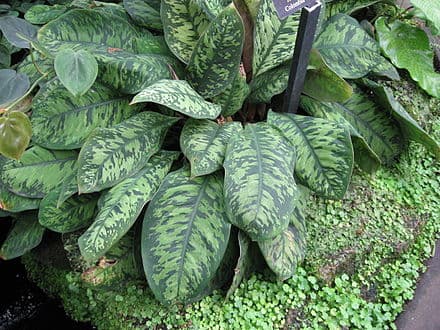
Pale green leaves with darker green "peacock" patterns. Classic variety, moderate difficulty.
Maranta leuconeura (Prayer Plant)
The original Prayer Plant. Red-veined (Erythroneura) or green varieties. More forgiving than most Calathea—good starter plant for the family.
Stromanthe Triostar
Pink, white, and green variegated leaves with pink undersides. Stunning but demanding. Needs high humidity and careful water.
Ctenanthe burle-marxii
Herringbone patterns in green and silver. Somewhat more tolerant than true Calathea.
Prayer Plant Movement
One of the most charming features of this family is their daily movement—leaves that fold upward at night and open during the day.
Why They Move
This movement (called nyctinasty) is driven by changes in light:
- Daytime: Leaves open horizontally to maximize light capture
- Nighttime: Leaves fold upward into a "prayer" position
The movement is controlled by tiny hinges (pulvini) at the base of each leaf.
Is My Plant Moving?
A healthy Calathea shows pronounced daily movement. If leaves aren't moving:
- Plant may be stressed
- Light levels might be very low (the plant doesn't "see" day/night difference)
- Plant could be in decline
Observing movement is a good health indicator. Time-lapse videos of healthy Calathea are mesmerizing.
Common Problems
Brown, Crispy Edges and Tips
The #1 Calathea complaint.
Primary causes:
- Low humidity (most common)
- Water quality issues (fluoride, chlorine)
- Inconsistent watering
Solutions:
- Increase humidity to 60%+
- Switch to distilled or RO water
- Keep soil consistently moist (not soggy)
Damaged tissue won't recover, but new growth will be healthy once conditions improve.
Curling Leaves
Causes:
- Underwatering
- Low humidity
- Too much light
- Cold or drafts
Solutions:
- Check soil moisture—may need water
- Boost humidity
- Move to shadier spot
- Eliminate draft exposure
Yellow Leaves
Causes:
- Overwatering
- Root rot
- Natural aging of oldest leaves
Solutions:
- Check soil drainage and moisture
- Inspect roots for rot
- If just oldest leaves, may be normal
Faded or Washed-Out Patterns
Cause: Too much light
Solution: Move to shadier location. Patterns will be more vibrant in new growth.
Limp, Drooping Leaves
Causes:
- Underwatering
- Overwatering (root rot)
- Cold damage
- Transplant shock
Solutions:
- Check soil moisture and root health
- Ensure warm temperatures
- For transplant shock, maintain humidity and wait
Brown Spots
Causes:
- Sunburn (crispy spots)
- Fungal or bacterial issues (soft spots)
- Cold damage
Solutions:
- Move away from direct light
- Improve air circulation for fungal issues
- Protect from cold
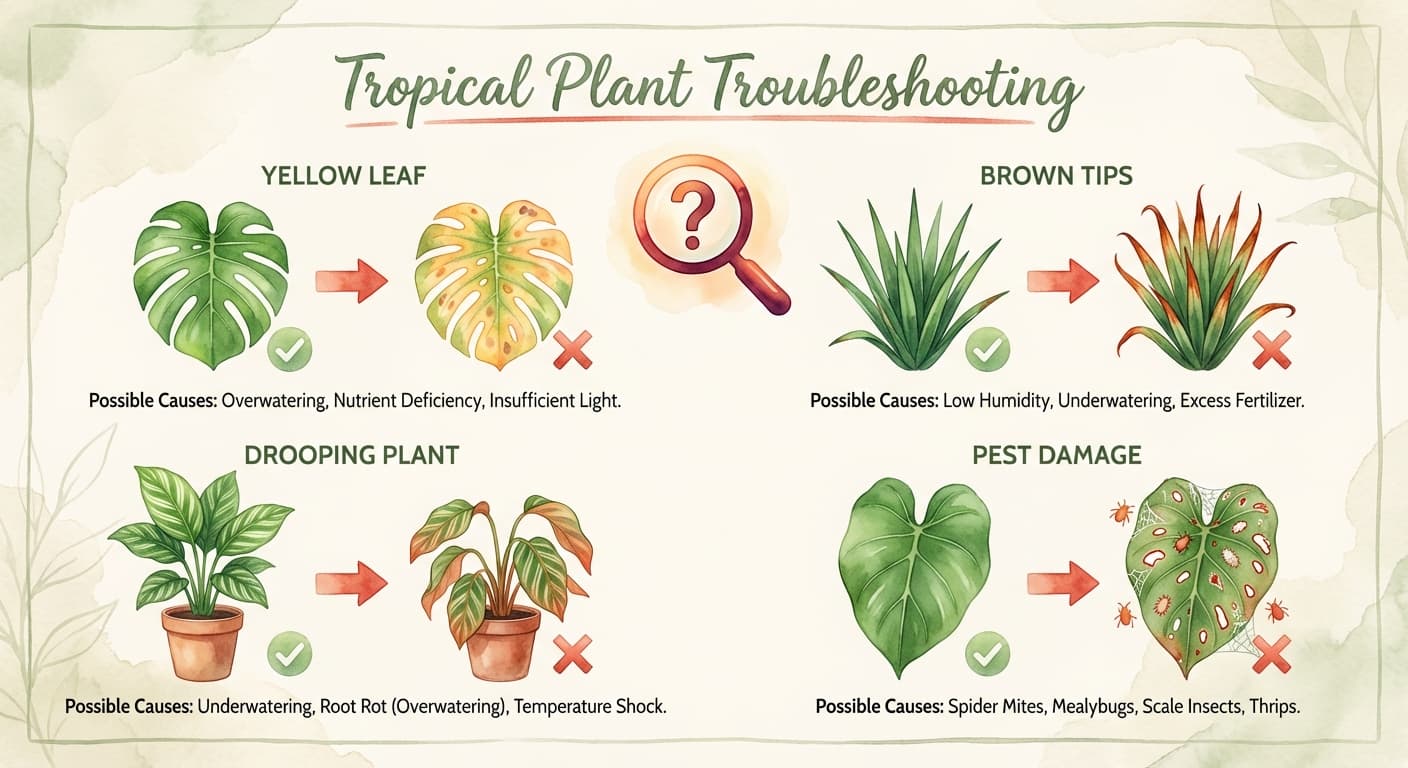
For complete troubleshooting, see our tropical plant troubleshooting guide. Note that Calathea are also susceptible to thrips—see our thrips guide and comprehensive Pest Mastery Guide if you notice silvery streaks or black specks on leaves.
Frequently Asked Questions
Why do my Calathea leaves have brown edges?
Low humidity is the primary cause. Calathea need 60%+ humidity—most homes provide 30-50%. Water quality (fluoride) also contributes. Use a humidifier and switch to distilled water.
Are Calathea hard to grow?
They're specific rather than hard. Once you provide high humidity, appropriate water, and filtered light, they thrive. They're "difficult" because most homes don't naturally meet their needs.
Can Calathea live in low light?
Yes—they prefer lower light than many houseplants. Medium indirect light is ideal. Very low light slows growth but won't kill them. Direct sun is the real danger.
Should I mist my Calathea?
Misting doesn't significantly raise humidity and can promote leaf spots. Use a humidifier instead for consistent humidity.
Why isn't my Calathea moving?
Lack of daily leaf movement suggests stress, insufficient light variation, or declining health. Check all care factors.
Are Calathea pet-safe?
Yes! Calathea and the Marantaceae family are non-toxic to cats and dogs, making them excellent choices for pet owners.
How often should I water Calathea?
When the top half-inch of soil feels barely dry—possibly every 4-7 days depending on conditions. Don't let them fully dry out like you would with Monstera.
What water should I use for Calathea?
Distilled, reverse osmosis, or rainwater. Tap water—especially if fluoridated—causes brown tips over time.
Why are my Calathea leaves curling?
Usually underwatering or low humidity. Check soil moisture first; if moist, humidity is likely the issue.
Can Calathea recover from crispy leaves?
Damaged portions won't heal, but new growth will be healthy once you correct the conditions. Remove severely damaged leaves to redirect the plant's energy.
Success Mindset
Calathea success requires shifting from "what's wrong with my plant?" to "what does my environment need to change?"
These plants aren't fighting you—they're simply responding honestly to their conditions. Brown edges mean humidity is low. That's not the plant being difficult; it's telling you what it needs.
The growers who succeed with Calathea are those who:
- Accept that household conditions need modification
- Invest in humidity solutions (humidifiers, cabinets)
- Use appropriate water quality
- Place plants in filtered light
- Monitor and adjust continuously
Your Calathea rewards this attention with some of the most spectacular foliage in the houseplant world. The effort is worth it.
For complete tropical plant care, return to our Complete Guide to Tropical Houseplants.