This guide contains affiliate links. We may earn a small commission if you purchase through our links, at no extra cost to you.
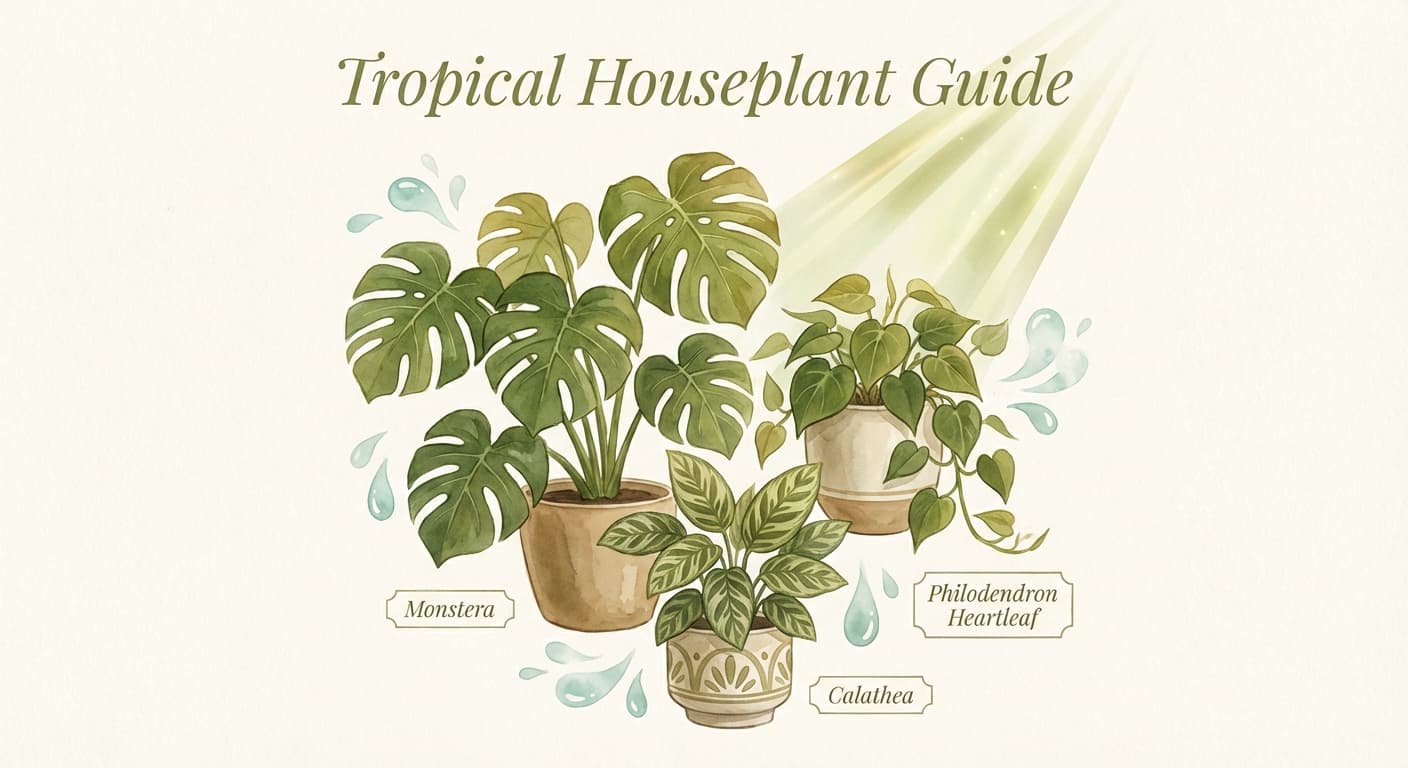
This guide is part of our comprehensive Tropical Houseplant Guide.
Something's wrong with your tropical plant. The leaves don't look right, growth has stalled, or the whole plant seems unhappy. You've googled symptoms and gotten twelve contradictory answers.
Let's fix that. This guide walks you through diagnosing and treating the most common tropical plant problems with a systematic approach. Instead of guessing, you'll learn to read symptoms, identify root causes, and apply targeted solutions.
Table of Contents
- Quick Diagnosis Flowchart
- Leaf Symptoms Guide
- Watering-Related Problems
- Humidity-Related Problems
- Light-Related Problems
- Nutrient Problems
- Pest Problems
- Environmental Stress
- When to Give Up vs. Fight On
- Frequently Asked Questions
Quick Diagnosis Flowchart
Start here to narrow down the problem:
Are leaves turning yellow?
- Yes → See Yellow Leaves
- No → Continue
Are leaf edges or tips brown and crispy?
- Yes → See Brown Edges and Tips
- No → Continue
Is the plant drooping or wilting?
- Yes → See Drooping and Wilting
- No → Continue
Are leaves spotted, discolored, or damaged?
- Yes → See Leaf Spots and Damage
- No → Continue
Is growth slow, leggy, or stunted?
- Yes → See Growth Problems
- No → Continue
Do you see pests or webbing?
- Yes → See Pest Problems
Leaf Symptoms Guide
Yellow Leaves
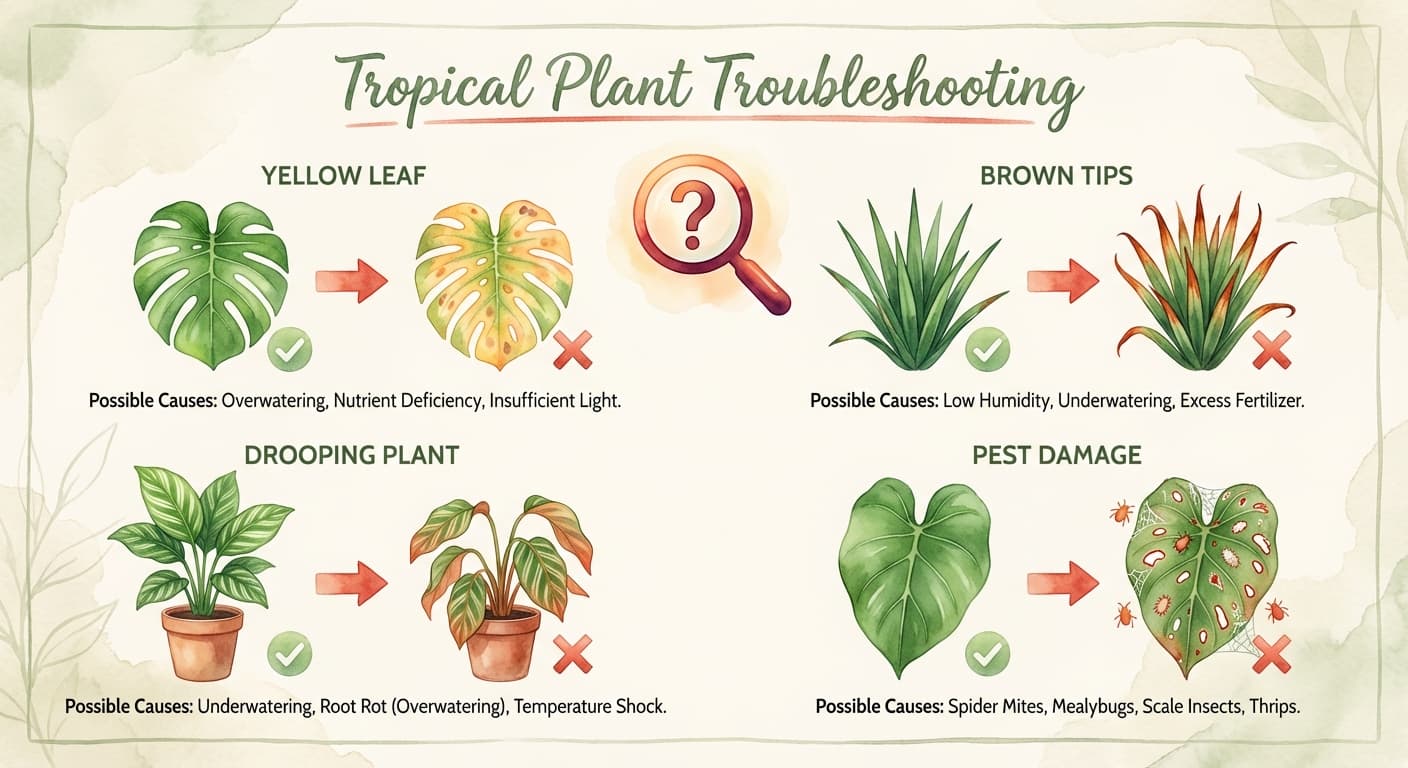
Yellow leaves are the most common symptom—and the most frustrating because multiple causes produce similar results.
Yellow lower/older leaves only:
- Most likely: Natural aging. Plants shed old leaves to redirect energy.
- Also consider: Nitrogen deficiency (if multiple lower leaves yellow rapidly)
- Action: If just one or two lower leaves occasionally, it's normal. Remove yellowed leaves cleanly.
Yellow leaves throughout the plant:
- Most likely: Overwatering or root rot
- Also consider: Underwatering (severe), light issues, root bound
- Action: Check soil moisture and roots. See Watering Problems.
Yellow leaves with green veins (interveinal chlorosis):
- Most likely: Iron or manganese deficiency
- Also consider: pH problems preventing nutrient uptake
- Action: Check soil pH, apply appropriate fertilizer, consider iron supplement.
Yellow leaves that are also soft or mushy:
- Most likely: Root rot from overwatering
- Action: Remove plant, inspect roots, trim rotted portions, repot in fresh soil.
For detailed diagnosis, see our yellow leaves guide.
Brown Leaf Edges and Tips
The most common complaint with tropical plants.
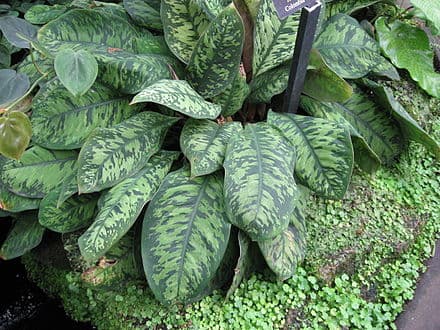
Crispy brown edges on thin-leaved plants (Calathea, ferns):
- Most likely: Low humidity
- Also consider: Water quality (fluoride/chlorine sensitivity)
- Action: Increase humidity to 60%+. Use filtered or distilled water for sensitive species. See our humidity guide.
Brown tips on thicker leaves:
- Most likely: Inconsistent watering or low humidity
- Also consider: Fertilizer burn, water quality
- Action: Establish consistent watering routine, boost humidity.
Brown patches in the middle of leaves:
- Most likely: Sunburn from direct light
- Also consider: Fungal leaf spot, chemical damage
- Action: Move away from direct sun. If spotty and spreading, suspect fungal issue.
For complete diagnosis, see our brown leaf tips guide.
Drooping and Wilting
Drooping with dry soil:
- Cause: Underwatering
- Action: Water thoroughly. Plant should perk up within hours to a day.
Drooping with wet soil:
- Cause: Root rot from overwatering
- Action: Roots are damaged and can't transport water. Remove plant, check roots, trim rotted portions, repot in fresh well-draining soil.
Drooping after repotting:
- Cause: Transplant shock
- Action: Normal temporary stress. Keep soil moist (not soggy), maintain humidity, avoid fertilizing. Recovery takes 1-2 weeks.
Drooping after moving or purchasing:
- Cause: Acclimation stress
- Action: Plants adjust to new conditions. Provide consistent care, avoid moving again.
Leaf Spots and Damage
Small brown or black spots:
- Most likely: Fungal or bacterial leaf spot
- Action: Remove affected leaves, improve air circulation, avoid wetting leaves, treat with fungicide if spreading.
Pale or bleached patches:
- Cause: Sunburn
- Action: Move to indirect light. Damaged tissue won't recover but new growth will be normal.
Holes in leaves:
- Most likely: Pest damage (caterpillars, slugs if outdoors)
- Also consider: Physical damage
- Action: Inspect for pests, particularly undersides of leaves and soil surface.
Water-soaked spots:
- Most likely: Bacterial infection
- Action: Remove affected leaves immediately, isolate plant, improve air circulation.
Growth Problems
Leggy, stretched growth:
- Cause: Insufficient light
- Action: Move to brighter location or add grow lights. You can prune leggy growth and propagate cuttings.
Small new leaves:
- Cause: Usually insufficient light, possibly root bound
- Action: Increase light, check if roots have filled the pot.
Slow or no growth:
- Possible causes: Insufficient light, wrong season (winter dormancy), root bound, nutrient deficiency
- Action: Evaluate light levels, check roots, fertilize during growing season.
Variegation reverting to green:
- Cause: Insufficient light
- Action: Variegated leaves have less chlorophyll. In low light, plants produce more green leaves for better photosynthesis. Increase light to preserve variegation.
Watering-Related Problems
Overwatering
The most common killer of tropical plants.
Symptoms:
- Yellow leaves, especially lower leaves
- Soft, mushy stems at soil level
- Soil stays wet for more than a week
- Fungus gnats hovering around soil
- Musty smell
- Root rot (brown, mushy roots when inspected)
Why it happens:
- Watering on a schedule rather than checking soil moisture
- Pots without drainage holes
- Dense, water-retentive soil
- Pots too large for the plant's root system
- Not adjusting for winter's reduced water needs
How to fix it:
- Stop watering immediately
- For mild cases, let soil dry completely before watering again
- For severe cases (soft stems, musty smell):
- Remove plant from pot
- Inspect roots, trim any brown/mushy portions with clean scissors
- Let roots air-dry briefly
- Repot in fresh, well-draining soil
- Water sparingly until plant recovers
- Adjust future watering—always check soil before watering
Prevention:
- Always check soil moisture before watering
- Use well-draining soil
- Ensure pots have drainage holes
- Size pots appropriately
- Reduce watering in winter
Underwatering
Less common than overwatering but still problematic.
Symptoms:
- Wilting, drooping leaves that perk up after watering
- Crispy brown leaf edges
- Leaves that feel thin or papery
- Soil pulling away from pot edges
- Very light pot weight
How to fix it:
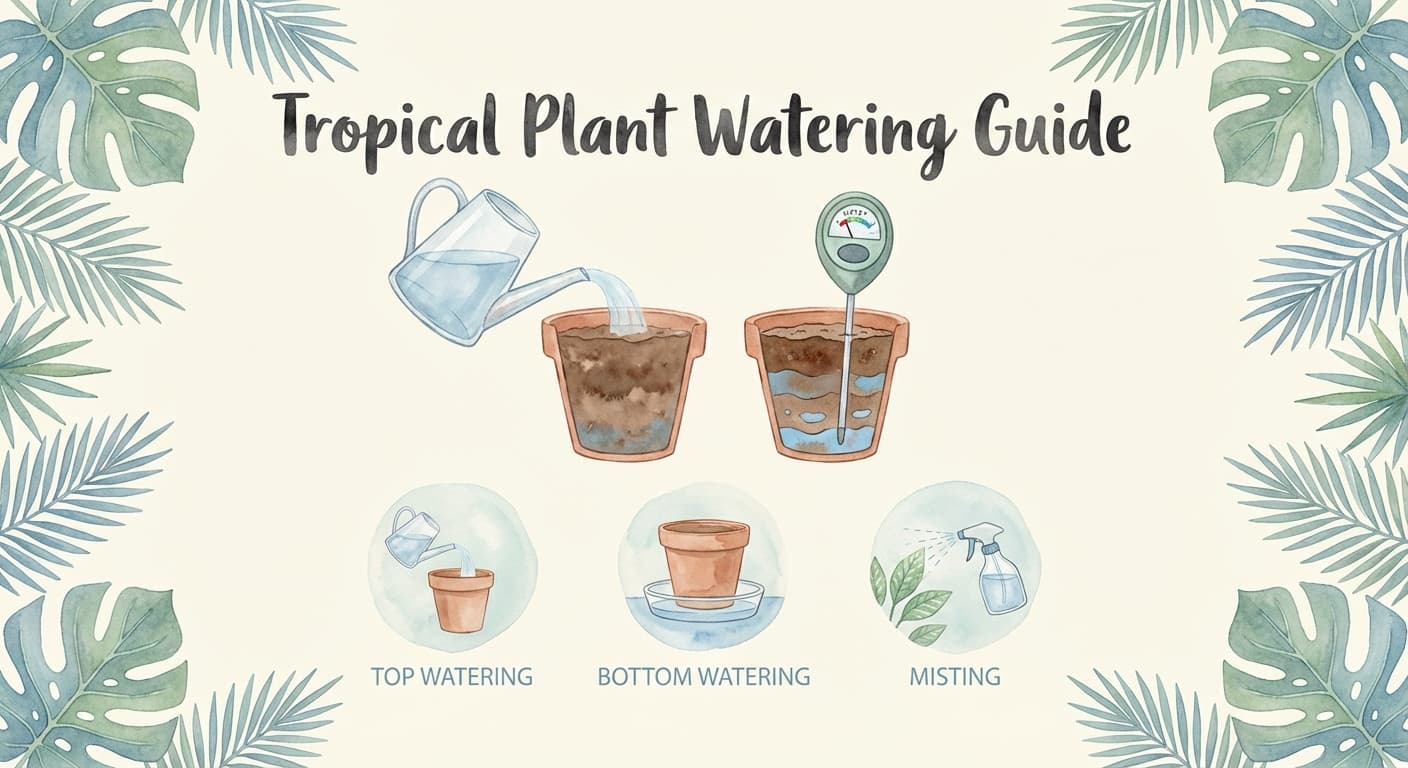
- Water thoroughly—bottom watering works well for very dry soil
- Ensure water penetrates throughout, not just running down the sides
- For severely dry soil that's become hydrophobic, soak the pot in water for 15-30 minutes
Prevention:
- Check soil moisture regularly
- Don't let tropical plants dry out completely (most species)
- Use pot materials appropriate for your watering habits
For complete watering guidance, see our watering guide.
Humidity-Related Problems
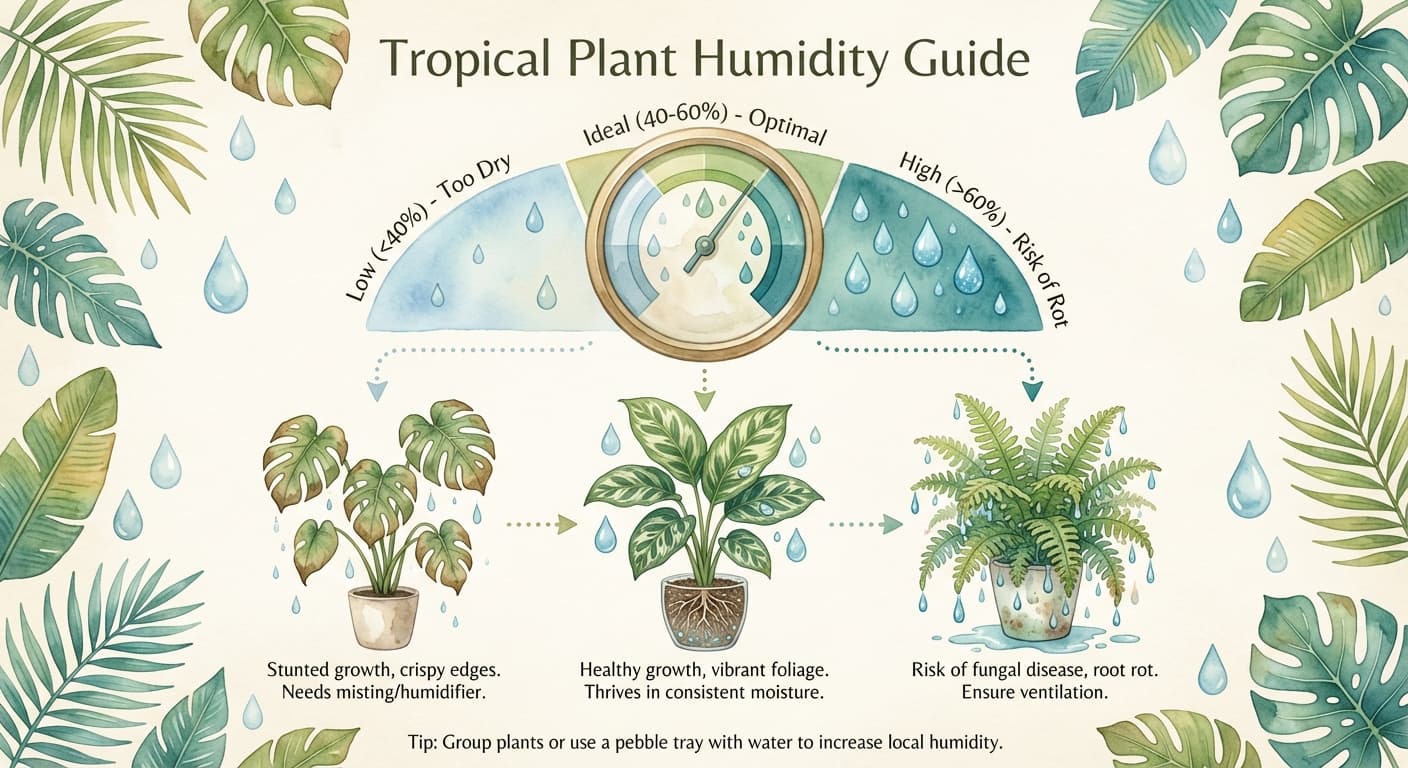
Low Humidity Damage
Symptoms:
- Brown, crispy leaf edges and tips
- Leaves curling inward
- New leaves emerging deformed or stunted
- Dried, papery aerial roots
- Increased susceptibility to spider mites
Most affected plants:
- Calathea and Maranta (Prayer Plants)
- Ferns
- Alocasia
- Thin-leaved tropicals in general
How to fix it:
- Get a hygrometer and measure actual humidity levels
- If below 50%, implement humidity solutions:
- Run a humidifier near plants
- Group plants together
- Move sensitive plants to naturally humid rooms (bathroom)
- Damaged leaf tissue won't recover, but new growth will be healthier
Prevention:
- Maintain 50%+ humidity for most tropicals, 60%+ for demanding species
- Increase humidification in winter when heating runs
- Match plants to your natural humidity levels, or commit to supplementation
For detailed humidity management, see our humidity guide.
Light-Related Problems
Insufficient Light
Symptoms:
- Stretched, leggy growth with large gaps between leaves
- Small new leaves
- Pale, washed-out color
- Variegation reverting to solid green
- Slow growth
- Leaning toward light sources
How to fix it:
- Move plant to a brighter location
- Add grow lights if natural light is insufficient
- Prune leggy growth (cuttings can be propagated)
- Rotate plants regularly for even growth
Too Much Light
Symptoms:
- Bleached or pale patches on leaves
- Brown burn spots, especially on leaves facing light
- Leaves curling away from light source
- Faded patterns on patterned plants
How to fix it:
- Move plant back from window or to indirect light
- Filter direct sun with sheer curtains
- For burned tissue: it won't recover, but new growth will be normal
- Some light-sensitive plants (Calathea) need consistently indirect light
For complete lighting guidance, see our lighting guide.
Nutrient Problems
General Nutrient Deficiency
Symptoms:
- Pale, yellowish leaves (nitrogen deficiency—most common)
- Slow growth despite good light
- Older leaves affected first
How to fix it:
- Feed with balanced liquid fertilizer during growing season
- If you haven't fertilized in months, start a regular feeding schedule
Over-Fertilization
Symptoms:
- Brown leaf edges (fertilizer burn)
- White crusty buildup on soil surface
- Wilting despite adequate water
- Stunted growth
How to fix it:
- Flush soil thoroughly with water to wash out excess salts
- Reduce fertilizer frequency and/or strength
- Always dilute fertilizer to half-strength or less
Prevention:
- Fertilize at half-strength
- Don't fertilize dormant plants
- Flush soil occasionally with plain water
Specific Deficiencies
Iron deficiency (yellow leaves with green veins on new growth):
- Apply chelated iron supplement
- Check soil pH—iron becomes unavailable at high pH
Magnesium deficiency (yellowing between veins on older leaves):
- Epsom salt solution (1 tablespoon per gallon of water) as a foliar spray
Pest Problems
Spider Mites
Signs:
- Fine webbing on leaf undersides
- Stippled, pale patches on leaves
- Dusty appearance on leaves
- Plants in dry conditions most susceptible
Treatment:
- Isolate affected plant
- Spray with strong stream of water to dislodge mites
- Apply neem oil or insecticidal soap weekly for 3-4 weeks
- Increase humidity—mites thrive in dry conditions
Thrips
Signs:
- Silver streaks or patches on leaves
- Tiny black dots (feces) on leaf surfaces
- Deformed new growth
- Tiny slender insects (hard to see)
Treatment:
- Isolate affected plant
- Use blue sticky traps to catch adults
- Apply spinosad or neem oil weekly
- Check nearby plants—thrips spread easily
Fungus Gnats
Signs:
- Small flies hovering around soil
- Larvae (tiny white worms) visible in soil
- More annoying than damaging unless severe
Treatment:
- Let soil dry out more between waterings
- Use yellow sticky traps for adults
- Apply BTI (Mosquito Bits dissolved in water) to kill larvae
- Bottom-water to keep surface soil drier
Mealybugs
Signs:
- White, cottony masses in leaf axils and on stems
- Sticky residue (honeydew) on leaves
- Weakened, yellowing plants
Treatment:
- Isolate affected plant
- Dab visible bugs with rubbing alcohol
- Spray with insecticidal soap or neem oil
- Repeat weekly until clear
Scale
Signs:
- Brown or tan bumps on stems and leaves
- Sticky residue
- Slow plant decline
Treatment:
- Scrape off visible scale with fingernail or soft brush
- Apply horticultural oil or neem oil
- Repeat treatment every 1-2 weeks
For complete pest management, see our Houseplant Pest Mastery Guide. Thrips are particularly common on tropicals—see our dedicated thrips guide.
Environmental Stress
Cold Damage
Symptoms:
- Black or brown mushy patches
- Wilting or collapse
- Leaf drop
- Occurs after cold exposure (near drafty windows, outdoor temps below 50°F)
How to fix it:
- Move plant away from cold sources
- Remove damaged tissue once extent is clear
- Keep warm and provide normal care
- Recovery depends on severity
Heat Stress
Symptoms:
- Wilting even with adequate water
- Leaf scorch
- Drooping during hot parts of the day
How to fix it:
- Move away from heat sources
- Ensure adequate water
- Provide air circulation
- Consider moving to cooler location
Acclimation Stress
Symptoms:
- Leaf drop after bringing home a new plant
- Yellowing or drooping after moving a plant
- General decline after environmental change
This is normal. Plants adjust to new conditions. Provide consistent care, avoid making additional changes, and give the plant 2-4 weeks to settle.
When to Give Up vs. Fight On
Sometimes the hard question is whether a plant is worth saving.
Keep Fighting If:
- The plant has healthy roots
- There's still some green, viable tissue
- The stem is firm (not mushy)
- You can identify and correct the cause
- The plant has sentimental or monetary value
Consider Starting Over If:
- Root rot has affected most of the root system
- The stem is soft and mushy throughout
- Less than 10-20% of foliage remains
- You've tried multiple interventions with no improvement
- The plant is common and inexpensive to replace
Salvage Options
Even dying plants may have viable portions:
Take cuttings: If any healthy stems and nodes remain, propagate them before the parent plant dies completely.
Check for offsets: Some plants produce babies that can be separated even if the main plant is failing.
Learn the lesson: Document what went wrong. Even failed plants teach us something.
Frequently Asked Questions
Why are my tropical plant's leaves turning yellow?
Most commonly overwatering. Check soil moisture and root health. Yellow lower leaves only may be normal aging. See Yellow Leaves for complete diagnosis.
Why do my Calathea leaves have crispy edges?
Low humidity is the primary cause. Calathea need 60%+ humidity. Tap water sensitivity (fluoride) can also contribute. Use a humidifier and filtered water.
My plant drooped after repotting. Is it dying?
Probably not—this is transplant shock. Keep soil moist, maintain humidity, don't fertilize. Most plants recover within 1-2 weeks.
How do I know if I'm overwatering?
Signs include: yellow leaves (especially lower), soil staying wet more than a week, fungus gnats, musty smell, soft stems. Always check soil before watering.
Why won't my plant grow?
Common causes: insufficient light, wrong season (growth slows in winter), root bound, nutrient deficiency. Evaluate each factor systematically.
My plant has spots on the leaves. What is it?
Brown/black spots may be fungal or bacterial. Pale patches suggest sunburn. Evaluate location, recent changes, and whether spots are spreading. Remove affected leaves and improve air circulation.
How do I know if my plant has pests?
Look closely at leaf undersides, stem junctions, and soil surface. Signs include webbing (spider mites), cottony masses (mealybugs), bumps on stems (scale), tiny flying insects (fungus gnats), silver streaks (thrips).
Should I cut off damaged leaves?
Yes, once damage is clearly defined. Damaged tissue won't recover. Removing it lets the plant redirect energy to new growth and improves appearance.
Key Takeaways
Successful troubleshooting requires:
- Observe carefully: Note exactly what's wrong and where symptoms appear
- Consider recent changes: New location? Repotting? Season change? These trigger many problems
- Check the basics: Water, light, humidity—most problems trace to these fundamentals
- Don't panic: One yellow leaf isn't a crisis. Plants shed leaves naturally
- Address root causes: Treating symptoms without fixing the underlying issue means problems return
- Be patient: Recovery takes time. Give interventions 2-4 weeks to show results
Most tropical plant problems are solvable once you identify the cause. Trust the process, make targeted corrections, and your plants will bounce back.
For complete tropical plant care, return to our Complete Guide to Tropical Houseplants.