This article contains affiliate links. We may earn a commission if you make a purchase through our links, at no extra cost to you.
Here's what actually happens: you buy a plant, bring it home, and realize you have nothing to care for it with. So you grab random containers, use dirt from the backyard, and wonder why things go wrong.
Or the opposite: you fall down a Pinterest rabbit hole and convince yourself you need specialized soil amendments, moisture meters with apps, and a $200 grow light setup before you can keep a single Pothos alive.
Neither approach works. You need about $30-50 worth of the right basics, and you can skip everything else until your collection actually needs it.
For the complete beginner's guide, see our houseplant toolkit.
The Three Tiers of Plant Supplies
We've organized supplies into three categories:
- Essential — You cannot successfully grow houseplants without these
- Recommended — Make plant care easier and catch problems earlier
- Nice-to-Have — Add when your collection grows or you identify specific needs
Total startup cost:
- Essentials only: $25-50
- Essentials + Recommended: $50-100
- Full setup: $100-200
Let's break down each category.
Essential Supplies (Start Here)
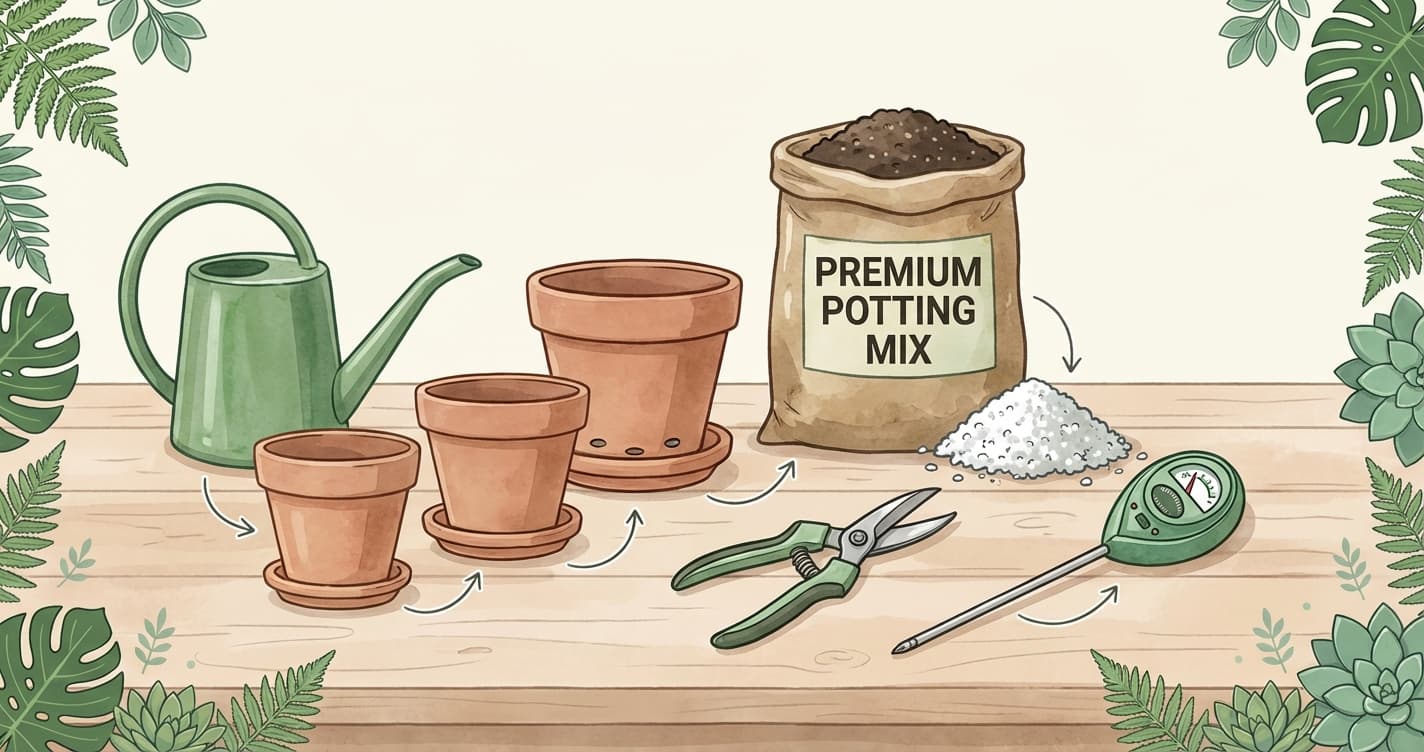
These four items are non-negotiable. Everything else is optional until your collection grows.
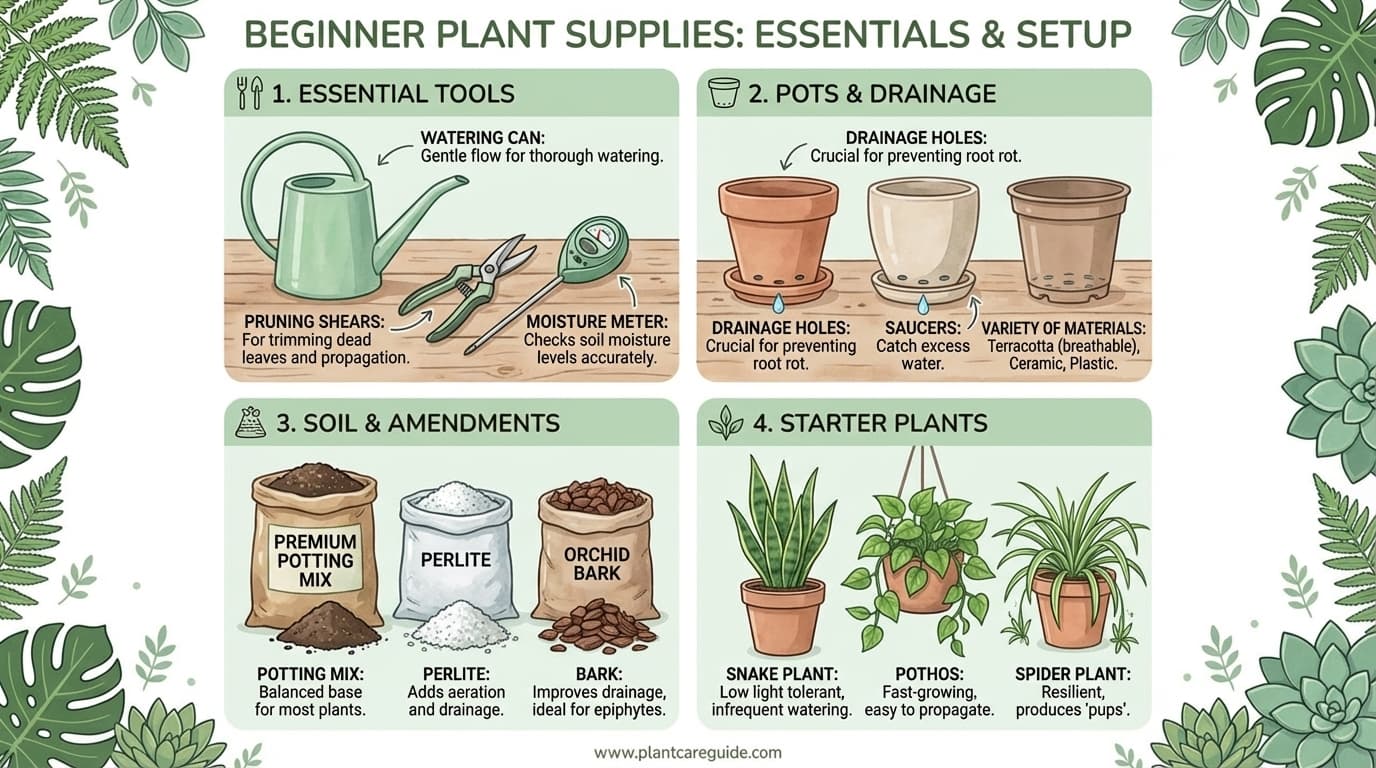
1. Pots with Drainage Holes
Here's the most common beginner mistake: buying a pretty pot without drainage holes, planting directly into it, and wondering why the plant dies three months later.
Water needs somewhere to go. Without drainage, excess water pools at the bottom, roots drown, and rot sets in. Root rot kills more houseplants than any other cause.
The smart approach: Keep plants in their original nursery pots (the plastic ones they came in—already have drainage holes) and place those inside decorative containers. You get the aesthetic you want, the drainage you need, and the ability to easily check on roots.
What actually works:
- Nursery pots — Free (came with your plant), functional, ugly but hidden inside prettier pots
- Terra cotta — Cheap, breathable, dries out faster (good for plants you tend to overwater)
- Plastic with drainage — Lightweight, inexpensive, retains moisture longer
Avoid: Decorative pots without drainage holes. Use them as outer containers only, never plant directly into them.
Budget: $5-15 for a few basic pots. Browse nursery pots
2. Quality Potting Mix
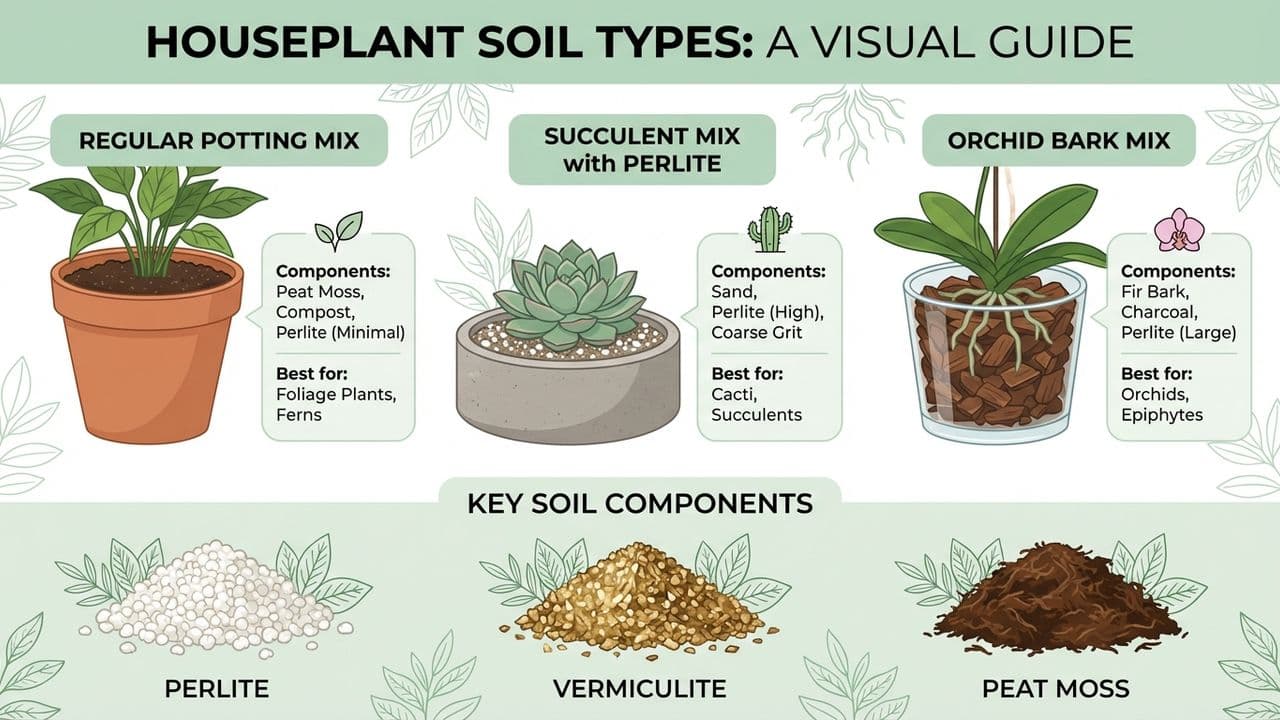
Why it's essential: Container plants need specific growing media. Garden soil, topsoil, and "dirt" from outside are too dense for pots—they compact, suffocate roots, and hold too much water.
What to buy:
- Indoor potting mix or houseplant soil
- All-purpose potting mix (for most houseplants)
- Cactus/succulent mix (for succulents, Snake Plants, ZZ Plants)
Look for mixes containing peat moss, perlite, vermiculite, or bark. These ingredients provide the drainage and aeration container plants need.
What to avoid:
- Garden soil or topsoil (too dense)
- Mixes without perlite or drainage components
- Moisture-control mixes for drought-tolerant plants
Budget: $8-15 for a bag that will pot several plants. Browse potting mixes on Amazon
For an in-depth guide to soil types, see our soil selection guide.
3. Watering Can with Long Spout
Why it's essential: You need to water at soil level, not splash water on leaves. Wet foliage promotes fungal diseases and leaf spots. A long, narrow spout gives you precision.
What to buy:
- Any watering can with a narrow, elongated spout
- 1-2 liter capacity is ideal for indoor use
What to avoid:
- Shower-head or rosette attachments (for outdoor gardens)
- Cans too large to maneuver indoors
- No spout or short spout designs
Budget: $10-20 for a functional can
Budget alternative: A clean plastic pitcher with a narrow pour spout works fine.
4. Saucers or Drip Trays
Why it's essential: You need somewhere for excess water to drain. Saucers protect your furniture and floors while collecting drainage.
Important: Empty saucers 30 minutes after watering. Plants shouldn't sit in standing water—it's just as dangerous as no drainage.
What to buy:
- Clear plastic saucers (affordable, let you see water levels)
- Ceramic saucers matching your pots
- Bamboo or wood trays (elevate with risers to prevent water damage)
Budget: $5-15 for a few saucers. Browse plant saucers on Amazon
Essential Supplies Checklist
| Item | Budget Pick | Cost |
|---|---|---|
| Pots with drainage | Plastic nursery pots | $5-10 |
| Potting mix | All-purpose indoor mix | $8-15 |
| Watering can | Basic long-spout can | $10-20 |
| Saucers | Clear plastic trays | $5-10 |
| Total | $28-55 |
Recommended Supplies
These items aren't strictly necessary, but they make plant care significantly easier—especially while you're learning.
5. Moisture Meter
Why we recommend it: Knowing when to water is the biggest challenge for beginners. A moisture meter eliminates guesswork by showing exactly how wet the soil is at root level.
How to use:
- Insert the probe 2-3 inches into the soil
- Read the gauge (usually 1-10 scale)
- Water when it reads "dry" (1-3) for most plants
Budget: $10-15
Check moisture meters on Amazon
Eventually optional: With experience, you'll learn to judge moisture by pot weight or soil appearance. But a meter accelerates that learning.
6. Pruning Shears or Sharp Scissors
Why we recommend it: Clean cuts heal faster than torn or crushed stems. You'll use these for removing dead leaves, taking cuttings for propagation, and shaping overgrown plants.
What to buy:
- Small bypass pruners (scissors-style blades)
- Dedicated plant scissors
- Clean, sharp craft scissors work too
Key point: Whatever you use, keep it sharp and clean. Dull blades crush stems; dirty blades spread disease.
Budget: $10-25 for quality pruners. Browse pruning shears on Amazon
7. Spray Bottle
Why we recommend it: Useful for several purposes:
- Cleaning dusty leaves
- Applying pest treatments
- Misting air plants
- Spot watering small pots
What to buy:
- Fine-mist spray bottle (adjustable nozzle is a plus)
- Glass bottles are prettier; plastic works fine
Budget: $5-10. Browse spray bottles on Amazon
Note on misting: Contrary to popular belief, misting doesn't significantly raise humidity for most plants. It's useful for cleaning and pest treatment, not humidity supplementation.
8. Hygrometer
Why we recommend it: This small device measures humidity levels in your home. Most houseplants prefer 40-60% humidity. A hygrometer helps you:
- Identify if low humidity is causing problems
- Find the best spots for humidity-loving plants
- Know when to run a humidifier
Budget: $10-15 for a basic digital hygrometer. Browse hygrometers on Amazon
Learn more about managing indoor humidity in our humidity guide.
Recommended Supplies Checklist
| Item | Purpose | Cost |
|---|---|---|
| Moisture meter | Know when to water | $10-15 |
| Pruning shears | Clean cuts, propagation | $10-25 |
| Spray bottle | Cleaning, pest control | $5-10 |
| Hygrometer | Monitor humidity | $10-15 |
| Total | $35-65 |
Nice-to-Have Supplies
Add these as your collection grows or when you identify specific needs.
9. Fertilizer
When you need it: Plants deplete nutrients from potting soil over time. After 2-3 months in the same pot (or when growth slows during growing season), they benefit from fertilizer.
What to buy:
- Balanced liquid fertilizer (like 10-10-10 or 20-20-20)
- Half the recommended strength for most houseplants
When to skip it: New plants and recently repotted plants don't need fertilizer for several months—fresh soil contains nutrients.
Budget: $10-15 for a bottle lasting years. Browse liquid fertilizers on Amazon
10. Humidifier
When you need it: If you're growing tropical plants (Calathea, ferns, Alocasia) or live in a dry climate, a humidifier helps maintain the 50%+ humidity these plants prefer.
What to buy:
- Cool-mist humidifiers work best for plants
- Position near your plant grouping
When to skip it: Most beginner plants (Pothos, Snake Plant, ZZ Plant) tolerate normal household humidity. Only invest once you branch into humidity-demanding species.
Budget: $25-50 for a small room humidifier. Browse humidifiers on Amazon
For winter humidity strategies, see our winter care guide.
11. Grow Light
When you need it: If your home lacks natural light—north-facing windows, basement apartments, interior offices—a grow light extends your plant options.
What to buy:
- LED grow lights are efficient and long-lasting
- Look for full-spectrum bulbs
- Timer-equipped models automate light schedules
When to skip it: If you have windows with decent natural light, you don't need grow lights. Choose low-light plants instead of adding artificial light.
Budget: $25-75 depending on size and features. Browse grow lights on Amazon
For detailed grow light recommendations, see our grow lights guide.
12. Perlite and Amendments
When you need it: When you start mixing custom soil blends for specific plants, or when you need to improve drainage in heavy commercial mixes.
Common amendments:
- Perlite — Improves drainage and aeration
- Orchid bark — Adds chunky structure for aroids
- Pumice — Similar to perlite, heavier
- Coco coir — Peat alternative, holds moisture
When to skip it: Standard potting mix works for most beginner plants. Custom mixes are for when you get into finicky plants or propagation.
Budget: $5-15 per bag
13. Plant Support (Stakes, Moss Poles)
When you need it: When growing climbing plants like Monstera, Pothos, or Philodendron that you want to train upward rather than trail.
What to buy:
- Moss poles (traditional climbing support)
- Bamboo stakes (simple and affordable)
- Coir poles (moss alternative)
When to skip it: Not needed for non-climbing plants or if you prefer trailing growth.
Budget: $10-25 per pole
Nice-to-Have Checklist
| Item | When to Add | Cost |
|---|---|---|
| Fertilizer | After 2-3 months | $10-15 |
| Humidifier | For tropical plants | $25-50 |
| Grow light | Low-light spaces | $25-75 |
| Amendments | Custom soil mixing | $5-15 |
| Plant support | Climbing plants | $10-25 |
What You Can Skip (For Now)
These products aren't bad—they're just unnecessary for beginners. Add them later if your collection grows and you identify specific needs.
Leaf shine products — They can clog the pores plants breathe through (stomata). A damp cloth does the same job without the risk. If you want shiny leaves, use a diluted mixture of water and a tiny bit of dish soap instead.
Dedicated plant apps — Many experienced plant people don't use them. Your phone's camera (for before/after photos) and notes app (for watering records) work fine. If apps appeal to you, try one, but don't feel you need it. See our plant apps review.
Self-watering pots — Useful eventually, but learning when to water is a fundamental skill. Self-watering pots bypass that learning. Master the basics first, then automate if you want.
Multiple fertilizers — One balanced fertilizer (like 10-10-10) works for most houseplants. The specialized products for different species are marketing-driven. Maybe useful for advanced growers; unnecessary for beginners.
Heat mats — Only needed for propagating seeds or certain tropical cuttings. Skip unless you're doing specific propagation projects.
Root stimulators and growth boosters — The science on these is mixed at best. Proper watering, light, and occasional fertilizer do more than any additive. Your money is better spent on another plant.
Complete Starter Kit Shopping List
Here's everything organized into a ready-to-shop checklist:
Must Buy (Before Your First Plant)
- Pot with drainage hole (or nursery pot + cache pot)
- Indoor potting mix
- Watering can with long spout
- Saucer/drip tray
Buy Soon (First Month)
- Moisture meter
- Pruning shears or scissors
- Spray bottle
Buy Later (As Needed)
- Hygrometer
- Fertilizer
- Humidifier (if growing tropicals)
- Grow light (if low natural light)
Where to Buy Supplies
Garden centers and nurseries: Best selection, knowledgeable staff, can assess quality in person. Find one near you.
Big box stores (Home Depot, Lowe's): Good for basics like potting soil and pots. Selection varies by location.
Amazon and online retailers: Convenient for specific items like moisture meters and grow lights. Read reviews carefully.
Dollar stores: Surprisingly good for spray bottles, saucers, and basic gardening tools. Quality varies but price is right.
Your First Plant Shopping Trip
Ready to put your starter kit together? Here's the ideal sequence:
- Assess your space — Note your light conditions and where plants will live
- Choose your first plant — See our guide to best first houseplants
- Gather essentials — Pot, soil, watering can, saucer
- Set up at home — Prepare the spot before bringing plants in
- Add plant — Choose a healthy specimen from a local nursery
For help matching plants to your specific conditions, see how to choose your first houseplant.
Frequently Asked Questions
Can I use pots without drainage holes?
Not recommended. If you love a pot without drainage, use it as a decorative cache pot with a nursery pot inside. Never plant directly into a drainless container.
Do I need different soil for different plants?
Most houseplants do fine in standard indoor potting mix. Exceptions: succulents and cacti need fast-draining cactus mix; orchids need specialized orchid bark. When in doubt, standard mix with added perlite works for most.
How much should I spend on my first setup?
$30-50 gets you started with quality essentials. You can grow houseplants successfully without spending more until your collection expands.
Should I buy supplies before or after getting my plant?
Before. Have everything ready so you can pot your plant properly as soon as you bring it home. Unprepared setups lead to improvised solutions that often harm plants.
Start This Weekend
You don't need everything on this list before buying your first plant. The essentials take 20 minutes to gather from any hardware store. The recommended items can wait until your second or third plant.
Here's the sequence that works:
Before your first plant:
- Pot with drainage (or keep the nursery pot)
- Bag of potting mix
- Watering can or pitcher
- Saucer
Within the first month:
- Moisture meter (accelerates learning)
- Pruning shears
- Spray bottle
When you need them:
- Everything else
Ready to choose your plant?
- Best first houseplants — our top picks
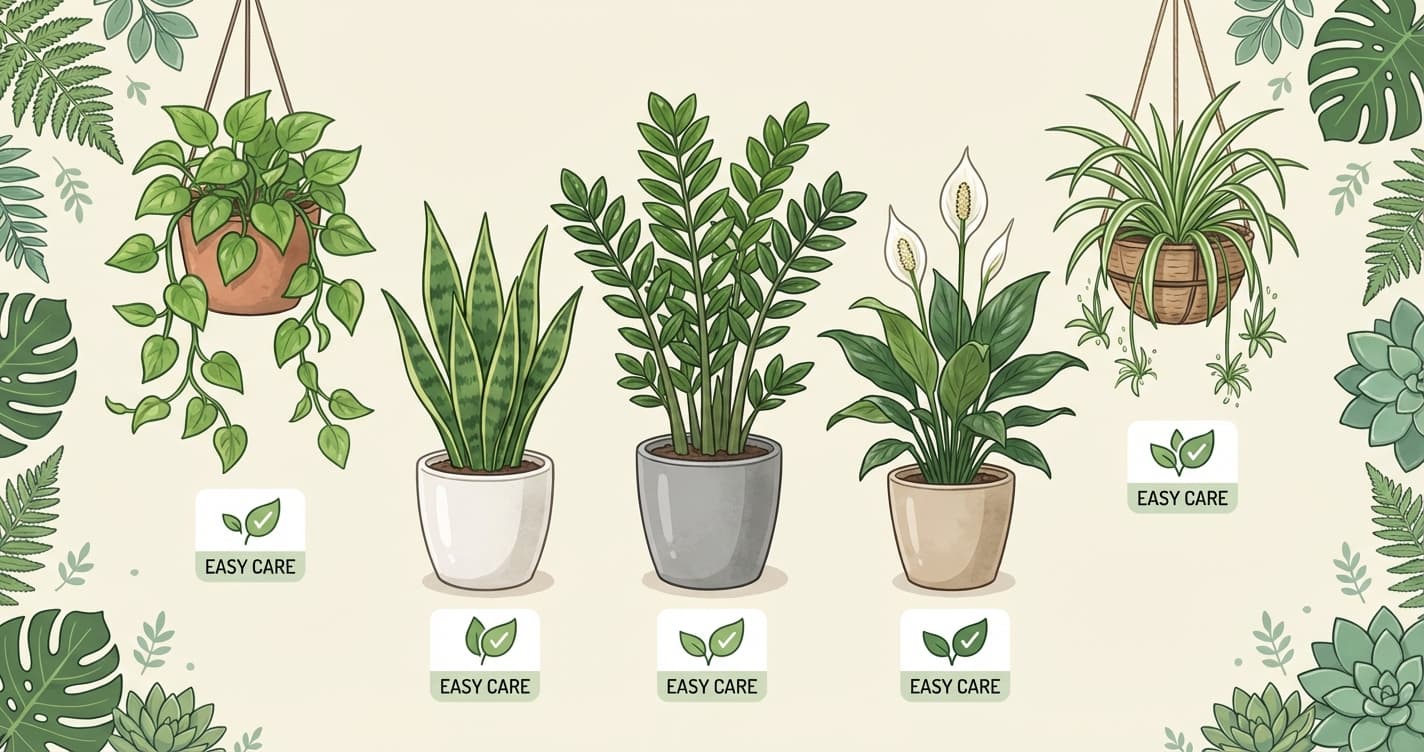
- Pothos vs Snake Plant vs ZZ Plant — compare the top three
- Find a local nursery — support local and get better specimens
You'll make mistakes—everyone does. But with the right basics in place, your plants can survive your learning curve. That's the whole point.