This guide contains affiliate links. We may earn a small commission if you purchase through our links, at no extra cost to you.
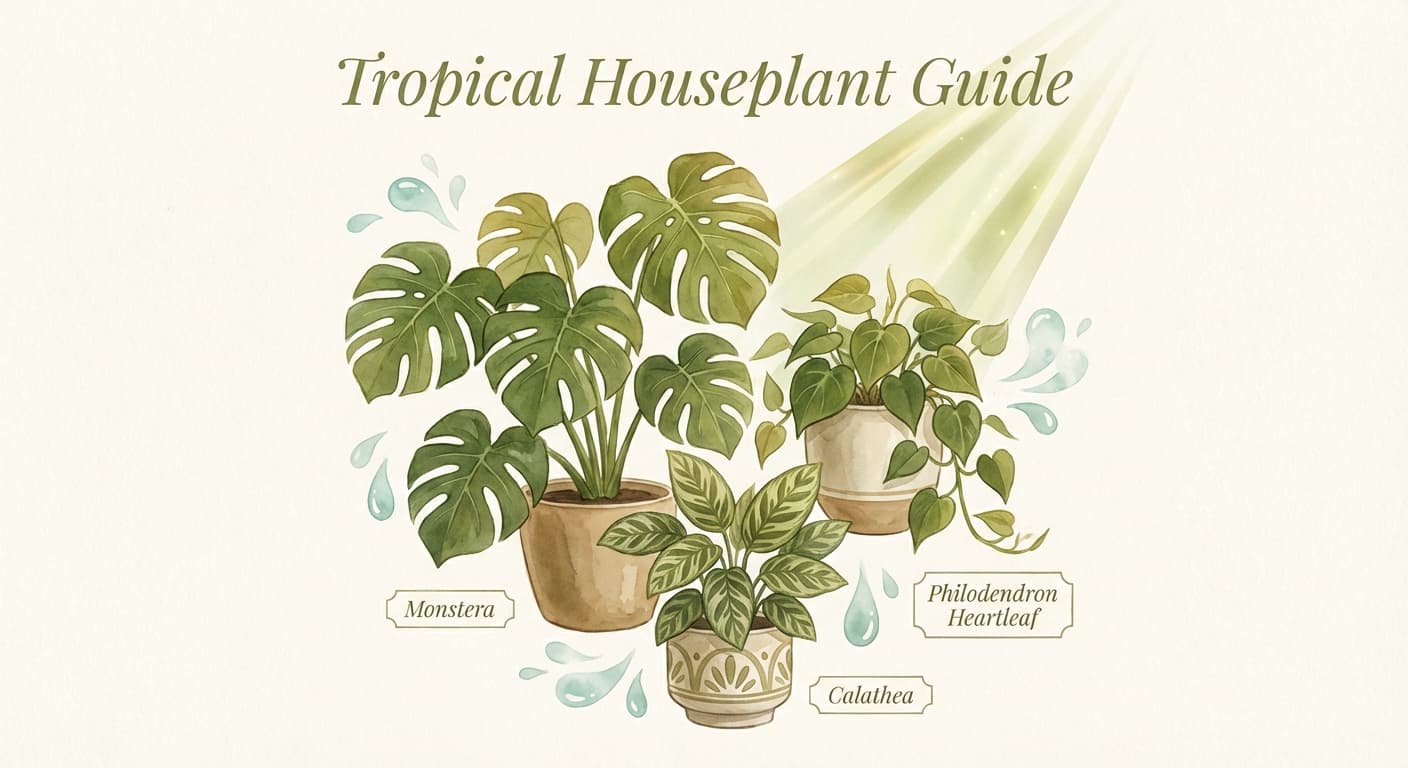
This guide is part of our comprehensive Tropical Houseplant Guide.
"Water when the top inch of soil is dry." You've heard this advice a hundred times. You've followed it carefully. Yet somehow your Monstera's leaves are yellowing, your Calathea looks perpetually stressed, and you're convinced you just can't figure out watering.
Here's the problem: that generic advice treats all tropical plants the same, ignores the dozens of factors that affect how quickly soil dries, and assumes soil moisture at one depth tells the whole story. No wonder so many people struggle.
Tropical plant watering isn't actually difficult once you understand what's really going on. Let's move beyond rote advice and develop genuine watering intuition.
Table of Contents
- Why Tropical Watering Is Different
- Factors That Affect Watering Frequency
- Moisture-Loving vs. Drought-Tolerant Tropicals
- How to Check Soil Moisture
- Watering Methods Deep Dive
- Water Quality Considerations
- Seasonal Watering Adjustments
- Troubleshooting Watering Problems
- Species-Specific Watering Guide
- Frequently Asked Questions
Why Tropical Watering Is Different
Before diving into technique, understand why tropical plants have different watering needs than other houseplants.
The Rainforest Reality
In tropical rainforests, rain falls frequently—sometimes daily—but drainage is excellent. The forest floor is a spongy layer of decomposing organic matter that holds moisture while allowing excess water to drain quickly. Roots sit in consistently moist but well-aerated soil, not waterlogged muck.
This creates the tropical plant paradox: they want consistent moisture but absolutely require good drainage. Soggy soil kills tropical plants faster than almost anything else because it suffocates roots and invites rot.
Why "Once a Week" Fails
Watering schedules fail because they ignore reality. How quickly your soil dries depends on:
- Pot size and material
- Soil composition
- Room humidity and temperature
- Season and light levels
- The plant's growth rate
- Whether heating or AC is running
A Monstera in a terracotta pot might need water twice a week in summer. The same plant in a plastic pot in winter might need water every two weeks. "Once a week" couldn't possibly be right in both situations.
The Goal: Consistent Moisture
For most tropical plants, the goal is soil that stays lightly moist—like a wrung-out sponge. Damp but not wet. Not soggy, not bone dry. The soil at root depth should have moisture available without being saturated.
Some tropicals prefer slightly drier conditions between waterings (more on that below), but the "wrung-out sponge" baseline applies to the majority.
Factors That Affect Watering Frequency
Understanding these factors helps you anticipate when watering is needed rather than following a rigid schedule.
Pot Size
Smaller pots dry faster because there's less soil to hold moisture. A 4-inch pot might need water every 3-4 days. A 12-inch pot might go 10-14 days between waterings.
Larger pots hold more moisture and dry more slowly. This seems like a benefit, but larger pots also risk staying too wet if the plant's root system hasn't grown into all the soil.
Pot Material
Terracotta is porous—water evaporates through the sides as well as the top. Terracotta pots dry 50-100% faster than plastic. Great for preventing overwatering, but may dry too quickly in dry climates or for moisture-loving plants.
Plastic retains moisture longer since water can only escape through drainage holes and evaporation from the soil surface. Better for humidity-loving tropicals and forgetful waterers.
Ceramic (glazed) behaves similarly to plastic—non-porous sides retain moisture.
Soil Composition
Dense, heavy soil holds water longer and dries slowly. Standard potting soil often falls into this category and can stay wet too long for tropical plants.
Chunky, well-draining soil with perlite, bark, and other amendments dries faster because air moves through it and water drains quickly. Tropical plants generally prefer this type of mix.
The same watering frequency that works perfectly with one soil mix might cause root rot with another.
Environmental Factors
Humidity: Higher humidity slows evaporation from soil and reduces plant water loss through transpiration. In humid conditions, plants need less frequent watering.
Temperature: Warmer temperatures increase evaporation and plant metabolism, requiring more frequent watering. Cooler temperatures slow everything down.
Light: Plants in bright light photosynthesize more actively and use more water. Low-light plants use less water and soil stays moist longer.
Air circulation: Good airflow increases evaporation. Plants near fans or vents may need water more often.
Seasonal Changes
Growing season (spring-fall): Active growth means higher water needs. Plants drink more and soil dries faster.
Dormant season (winter): Reduced growth, shorter days, and lower light mean dramatically reduced water needs. Many tropical plants need half or less of their summer watering frequency in winter.
Moisture-Loving vs. Drought-Tolerant Tropicals
Not all tropical plants want the same moisture level. Here's how to categorize your collection:
Moisture-Loving Tropicals
These plants want consistently moist soil and should never fully dry out:
| Plant | Moisture Preference |
|---|---|
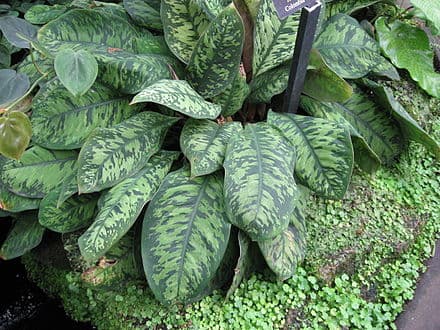
| Calathea / Maranta | Consistently moist, never dry |
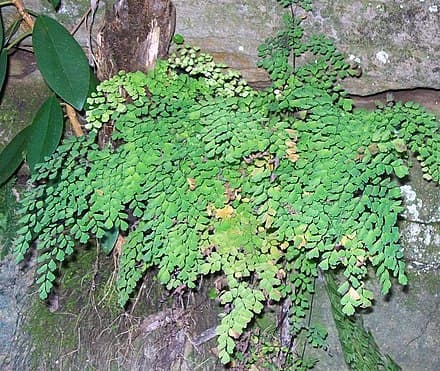
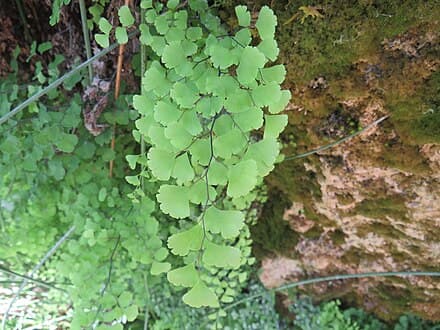
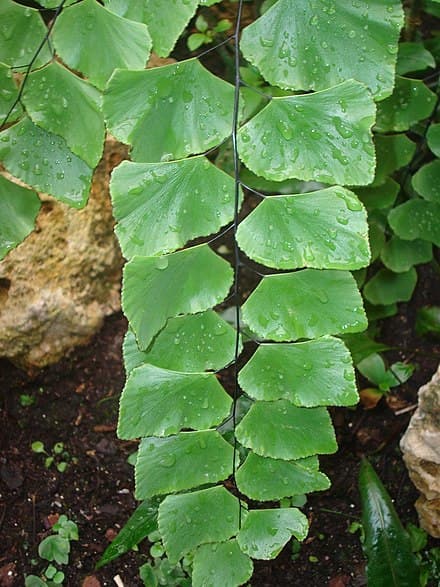
| Ferns (most) | Evenly moist at all times |
| Fittonia | Moist, wilts dramatically if dry |
| Alocasia | Moist during growth, drier in dormancy |
| Peace Lily | Prefers moist but signals when dry |
For these plants, water when the top half-inch to inch feels just barely dry. Don't wait for deeper drying.
Moderate Moisture Tropicals
These plants prefer to dry slightly between waterings:
| Plant | Moisture Preference |
|---|---|
| Monstera | Let top 1-2 inches dry |
| Philodendron | Top 1-2 inches dry |
| Bird of Paradise | Top 2 inches dry |
| Anthurium | Top inch dry |
| Dieffenbachia | Top 1-2 inches dry |
This is the "standard" tropical watering approach—let the top portion dry while keeping deeper soil moist.
Drought-Tolerant Tropicals
These plants store water or have adaptations for dry periods:
| Plant | Moisture Preference |
|---|---|
| Snake Plant | Let dry completely |
| ZZ Plant | Let dry completely |
| Ponytail Palm | Dry between waterings |
| Succulents | Dry completely |
| Dracaena | Top half of pot dry |
These plants rot easily if kept too moist. When in doubt, wait.
How to Check Soil Moisture
Forget schedules—check moisture before every watering.
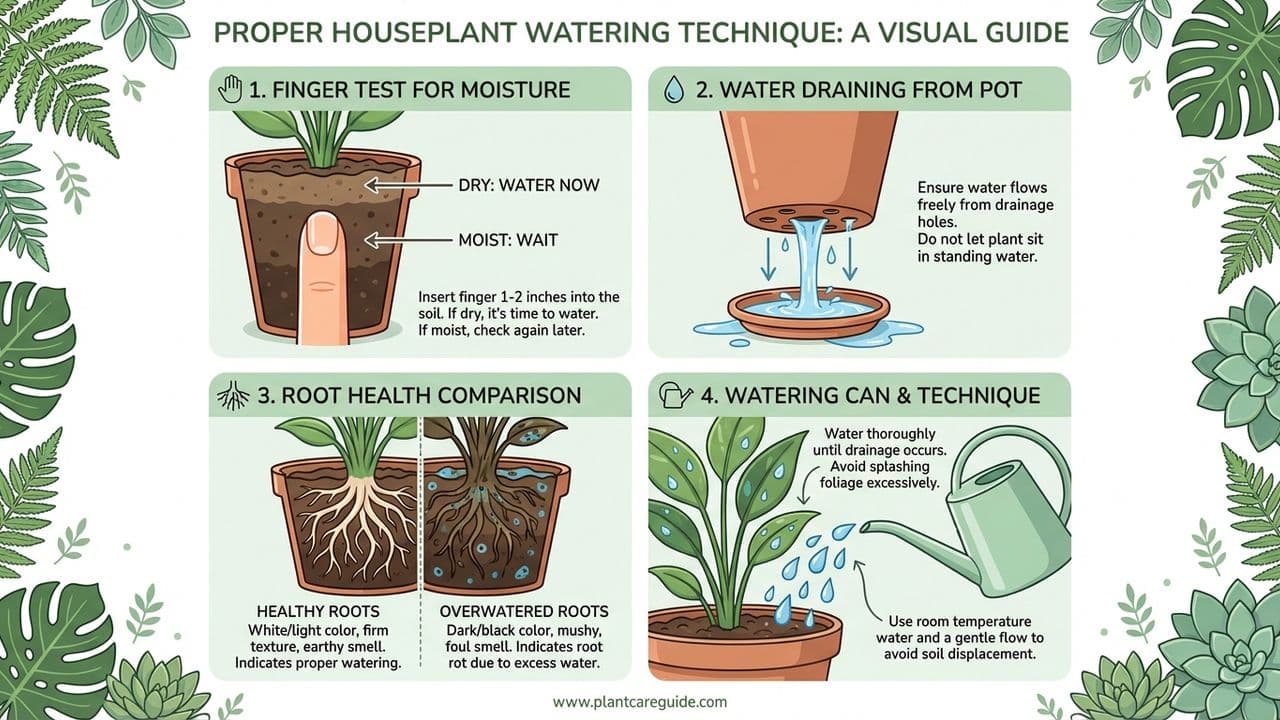
The Finger Test
The most reliable method for most situations:
- Insert your finger 1-2 inches into the soil (or deeper for large pots)
- Assess moisture at that depth
- If dry, water. If moist, wait.
This works because surface soil dries first while deeper soil stays moist longer. Checking at depth tells you what roots are actually experiencing.
Limitations: Difficult with large pots, dense root balls, or plants where you can't easily reach the soil.
The Lift Test
With practice, pot weight becomes an intuitive indicator:
- Lift your pot right after watering—note how heavy it feels
- Check the weight before your next watering
- Learn the difference between "wet heavy," "moist," and "dry light"
This becomes surprisingly accurate once you've practiced with each pot. It works well for hanging plants and large pots where the finger test is awkward.
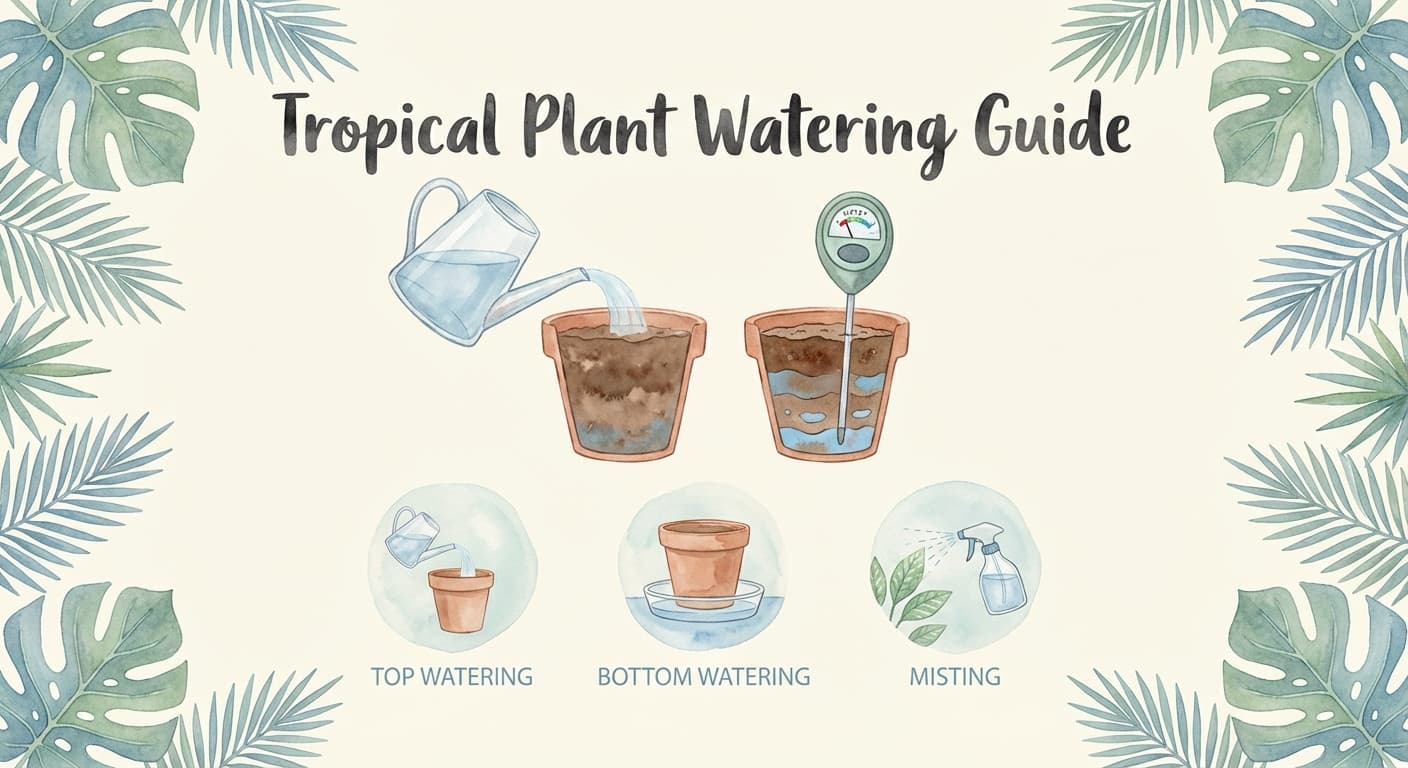
Moisture Meters
Electronic probes that measure soil moisture:
Pros:
- Reach deeper than fingers
- Give numerical readings
- Helpful for large pots
Cons:
- Cheap ones are unreliable
- Need calibration
- Measure at probe tip only (not whole pot)
If using a meter, insert the probe into the root zone (middle depth of the pot), not just near the surface. Take readings in multiple spots.
Wooden Chopstick Method
Insert a plain wooden chopstick into the soil for a few minutes, then remove:
- Dark, damp chopstick = soil is moist
- Clean, dry chopstick = soil is dry
Simple, cheap, and effective for checking deeper soil moisture without electronics.
Watering Methods Deep Dive
How you water matters almost as much as when.
Top Watering
The standard approach—pouring water onto the soil surface.
How to do it right:
- Water slowly, covering the entire soil surface (not just one spot)
- Continue until water flows from drainage holes
- Empty saucers after 30 minutes—plants shouldn't sit in standing water
Advantages:
- Simple and quick
- Flushes out salt buildup from fertilizer
- You can see when soil is saturated
Disadvantages:
- Water can run down the sides without saturating the root ball (especially with dry, compacted soil)
- Risk of wetting leaves or crown on some plants
Bottom Watering
Placing the pot in a basin of water and letting soil absorb moisture from below.
How to do it:
- Fill a basin or sink with water
- Set pot in water (water level should reach partway up the pot)
- Wait 15-30 minutes until the top of the soil feels moist
- Remove and let drain completely
Advantages:
- Ensures thorough, even moisture
- No risk of wetting sensitive crowns
- Encourages roots to grow downward
- Excellent for plants with hydrophobic (water-repellent) soil
Disadvantages:
- More time-consuming
- Doesn't flush salt buildup (alternate with occasional top watering)
- Not practical for large pots
Best for: Calathea, African Violets, any plant with a sensitive crown, plants with dried-out soil that repels water.
Soaking
Full immersion for severely dry or hydrophobic soil:
- Submerge the entire pot in water
- Let it soak until bubbles stop rising (15-30 minutes)
- Remove and drain thoroughly
This rehydrates bone-dry soil that resists top watering. Use occasionally, not regularly.
Ice Cube Watering (Don't)
You may have heard advice to water with ice cubes for "slow release." This is generally not recommended for tropical plants:
- Cold water shocks tropical roots
- Provides inconsistent moisture
- Doesn't deliver enough water for most tropicals
Stick with room-temperature water and proper watering methods.
Water Quality Considerations
Water chemistry matters more for some tropical plants than others.
Tap Water Concerns
Chlorine: Most municipal water contains chlorine for disinfection. While most plants tolerate it, you can let tap water sit overnight to allow chlorine to dissipate.
Chloramine: Some water systems use chloramine instead, which doesn't evaporate like chlorine. If your water has chloramine and you're concerned, filtered water is the solution.
Fluoride: This is the main problem chemical for tropical plants. Fluoride causes brown leaf tips in sensitive species—particularly:
- Dracaena
- Calathea
- Spider Plant
- Ti Plant
Fluoride doesn't evaporate or filter out easily. If you have high-fluoride water and sensitive plants, use distilled, reverse osmosis, or rainwater.
Hard water (high minerals): Mineral buildup shows as white crusting on soil or pot edges. Very hard water can cause nutrient lockout over time. Most tropicals tolerate moderate hardness, but consider filtered water for sensitive species.
Safe Water Options
| Water Type | Pros | Cons | Best For |
|---|---|---|---|
| Tap (let sit) | Free, easy | Doesn't remove fluoride | Most tropicals |
| Filtered (Brita, etc.) | Removes chlorine, some minerals | Doesn't remove fluoride | Most tropicals |
| Distilled | Pure, no minerals | Expensive, no beneficial minerals | Sensitive species |
| Reverse osmosis | Very pure | System cost, wastes water | Sensitive species |
| Rainwater | Free, soft | Collection needed, contamination risk | All plants |
For most tropical houseplants, tap water is fine. Reserve premium water for fluoride-sensitive species that show repeated tip burn.
Seasonal Watering Adjustments
Your watering routine should change with the seasons.
Summer (Peak Water Needs)
- Warmth and light drive active growth
- Plants drink more
- Soil dries faster
- You may water 2-3x more frequently than winter
Watch for wilting on hot days—some plants may need more frequent checking.
Winter (Reduced Needs)
- Growth slows dramatically
- Lower light means less photosynthesis
- Shorter days reduce water uptake
- Heating dries air but plants still use less water
The winter watering trap: Many people continue their summer watering routine into winter, leading to overwatering and root rot. Expect to water half as often (or less) in winter.
Check soil moisture before watering—it may stay moist for 2-3 weeks in winter when the same pot dried in a week during summer.
Transition Seasons
Spring and fall require attention as conditions change:
Spring: Plants wake up and water needs gradually increase. Increase watering frequency as you see new growth emerging.
Fall: Water needs decrease as days shorten. Gradually reduce frequency as growth slows.
Troubleshooting Watering Problems
Signs of Overwatering
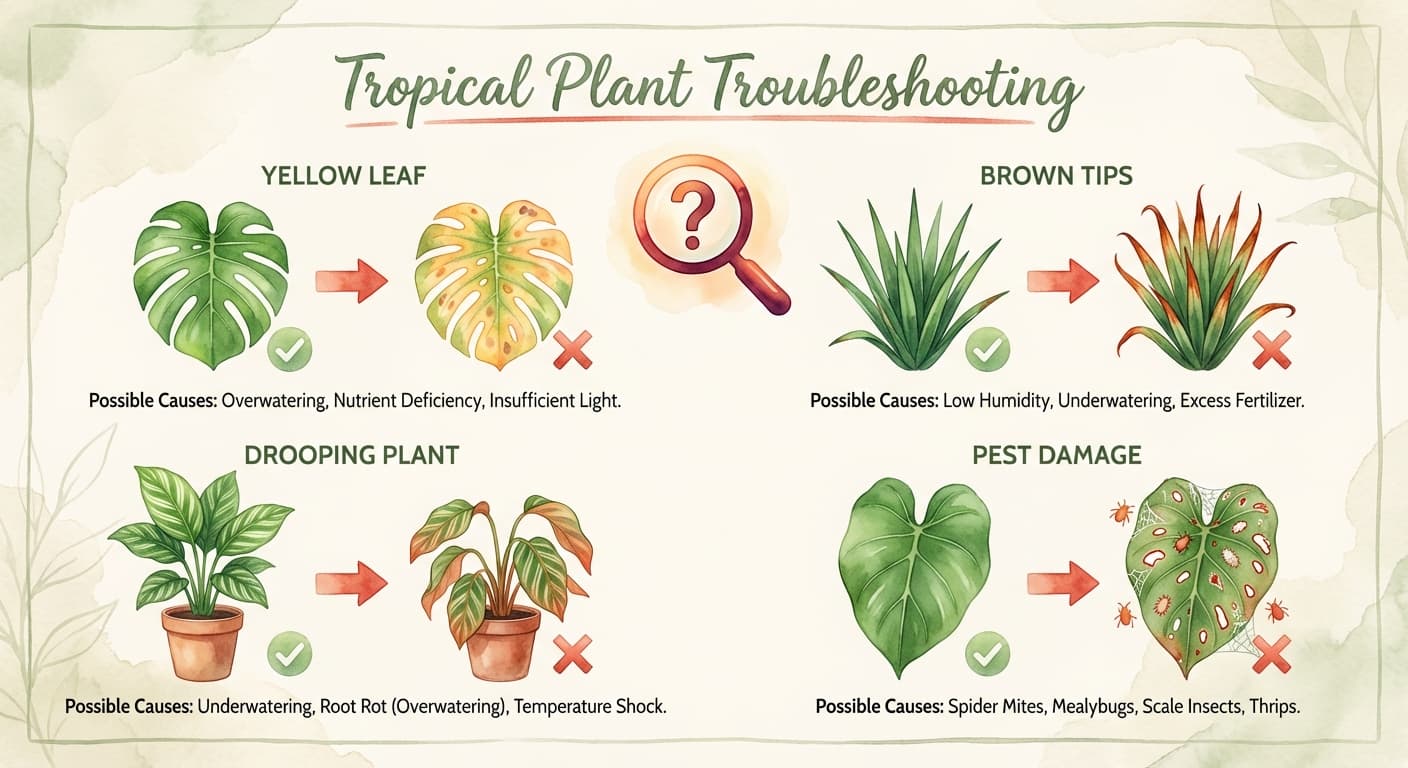
Yellow leaves (especially lower leaves): Classic overwatering symptom. Roots drowning in water can't transport nutrients, leading to yellowing and leaf drop.
Soft, mushy stems: Root rot progressing upward. Urgent intervention needed.
Fungus gnats: These tiny flies lay eggs in consistently moist soil. Their presence indicates soil is staying wet too long.
Musty smell: Rotting roots or moldy soil. Remove plant and inspect roots.
Drooping despite wet soil: Damaged roots can't transport water even when it's available. Check for root rot.
What to do:
- Stop watering immediately
- Check roots—remove and inspect if symptoms are severe
- Trim any brown, mushy roots
- Repot in fresh, well-draining soil if root rot is present
- Adjust future watering to allow appropriate drying
Signs of Underwatering
Wilting, drooping leaves that perk up after watering: The plant needs water more frequently.
Crispy, brown leaf edges: Chronic underwatering damages leaf tissue. Also caused by low humidity—see our humidity guide to rule that out.
Soil pulling away from pot edges: Bone-dry soil shrinks and separates from the pot.
Very light pot weight: The soil has dried completely.
Slow or stunted growth: Chronic mild underwatering limits growth even without dramatic symptoms.
What to do:
- Water thoroughly—bottom watering works well for very dry soil
- Check roots to ensure they're healthy (not dried out and dead)
- Evaluate watering frequency and check soil more often
Dealing with Hydrophobic Soil
Soil that's dried out completely can become hydrophobic—water beads up and runs down the sides without penetrating.
Signs:
- Water pools on surface then runs through quickly
- Soil remains dry despite watering
- Soil has pulled away from pot sides
Solutions:
- Bottom water to force absorption from below
- Add a drop of dish soap to water (acts as a surfactant)
- Soak the pot until fully rehydrated
- Consider adding wetting agents to future soil mixes
Species-Specific Watering Guide
Quick reference for popular tropical plants:
Monstera
Preference: Let top 1-2 inches dry between waterings Notes: Tolerates slight underwatering better than overwatering. Yellow lower leaves often indicate too much water. See our Monstera care guide for complete details.
Calathea / Maranta
Preference: Keep consistently moist, never fully dry Notes: Very sensitive to both drying out and water quality. Brown tips often indicate fluoride sensitivity—use filtered or distilled water. Detailed care in our Calathea guide.
Philodendron
Preference: Let top 1-2 inches dry Notes: Generally forgiving. Climbing types may need slightly more consistent moisture than self-heading varieties. See our Philodendron guide.
Bird of Paradise
Preference: Let top 2-3 inches dry Notes: More drought-tolerant than many tropicals. Overwatering causes root rot quickly. Prefers thorough watering followed by drying.
Alocasia
Preference: Consistently moist during growth, drier in dormancy Notes: Active growth requires steady moisture. When dormant (dropping leaves in winter), reduce watering significantly. Don't panic—dormancy is normal.
Peace Lily
Preference: Keep moist but will signal when dry Notes: Dramatic wilting tells you exactly when it needs water. Wilts quickly but recovers well. Don't let it wilt repeatedly—it causes stress.
Pothos
Preference: Let top inch dry Notes: Extremely forgiving. Tolerates both slight overwatering and underwatering. Wilts dramatically when dry but bounces back quickly.
Frequently Asked Questions
How often should I water tropical plants?
There's no universal answer—it depends on your plant, pot, soil, and environment. Check soil moisture before each watering rather than following a schedule.
Why are my tropical plant's leaves yellowing?
Most commonly overwatering, which damages roots and prevents nutrient uptake. Check soil moisture and root health. See our troubleshooting guide for complete diagnosis.
Should I water tropical plants with ice cubes?
No. Tropical plants prefer room-temperature water. Cold water shocks roots and can cause damage.
Can I use tap water for tropical plants?
Most tropicals tolerate tap water fine. Sensitive species (Calathea, Dracaena, Spider Plant) may develop brown tips from fluoride—use filtered or distilled water for these.
How do I know if I'm overwatering?
Yellow leaves (especially lower ones), fungus gnats, musty smell, soft stems, and soil that never dries are all overwatering signs.
Why is water running straight through my pot?
The soil has likely become hydrophobic from drying out completely. Bottom water or soak the pot to rehydrate the soil.
Should I water less in winter?
Yes, often dramatically less. Reduced light and growth mean plants use less water. Check soil before watering—it may stay moist 2-3x longer than in summer.
Is bottom watering better than top watering?
Both work well. Bottom watering ensures thorough moisture and is great for sensitive plants. Top watering is faster and flushes salt buildup. Alternate between methods.
Key Takeaways
Successful tropical plant watering comes down to a few principles:
- Check before watering: Touch the soil. Lift the pot. Never water on autopilot.
- Know your plant: Moisture lovers vs. drought tolerants need different approaches.
- Consider all factors: Pot, soil, season, and environment all affect watering frequency.
- Adjust seasonally: Winter needs are often half or less of summer needs.
- Thorough is better than frequent: Water deeply and let the soil dry appropriately rather than giving frequent small amounts.
- When in doubt, wait: Most tropical plants recover from slight underwatering more easily than overwatering.
Master these principles, and watering becomes intuitive rather than anxiety-inducing.
For complete tropical plant care, return to our Complete Guide to Tropical Houseplants.